

For most first-time visitors, 7 to 10 days in Morocco offers the best balance. Seven days can connect an imperial city, the Atlas Mountains and the Sahara if you accept a few longer travel days. Ten days provides a more comfortable pace and leaves room for destinations such as Chefchaouen or Essaouira.
The right answer to how many days in Morocco you need also depends on your arrival airport, travel style and interest in the desert. A three- or four-day visit works best when focused around one city, while five days requires careful route choices. With fourteen days, you can combine northern Morocco, the imperial cities, the Sahara and Atlantic coast without changing accommodation every night. You can use our Trip Planner to plan your itinerary around those choices.
This guide compares realistic Morocco itineraries for different trip lengths, including what comfortably fits, what may feel rushed and which route works best for each type of traveler.
How many days in Morocco is enough?
Use this comparison as a starting point. The best choice depends on your arrival city, preferred pace and whether the Sahara is essential to your trip. You can also plan your Morocco trip budget before settling on a trip length.
| Trip length | What realistically fits | Best suited to |
|---|---|---|
| 3–4 days | Marrakech with the Atlas Mountains or Essaouira; alternatively, a fast three-day Merzouga route with long drives. | Short, focused trips. |
| 5 days | A focused Sahara journey between Marrakech and Fes, or one city combined with nearby valleys and day trips. | Travelers prioritizing the desert. |
| 7 days | Marrakech, Ait Ben Haddou, Dades Valley, Merzouga and Fes, with a few longer travel days. | First-time visitors wanting the classic route. |
| 10 days | Imperial cities, the Sahara and either Chefchaouen or the Atlantic coast, with more comfortable pacing. | Travelers wanting a balanced first trip. |
| 14 days | Northern Morocco, imperial cities, the Sahara, Atlas Mountains and Atlantic coast with rest time. | Families and slower-paced travelers. |
Is 3 or 4 days enough in Morocco?
Three or four days can be enough for a focused introduction to Morocco, but the route needs to remain simple. It is better to experience one region properly than spend most of a short visit changing cities.
- Stay around Marrakech: Explore the city and add the Atlas Mountains, Essaouira or another nearby day trip.
- Prioritize the Sahara: A three-day journey to Merzouga is possible from Marrakech or Fes, although it includes several long driving periods.
- Choose a one-way route: Traveling from Marrakech to Fes—or Fes to Marrakech—through the Sahara avoids returning along the same road.
What can you see in Morocco in 5 days?
Five days gives you more flexibility, but the itinerary should still have one clear focus. It works particularly well for travelers who want to include the Sahara or connect two major cities without trying to cover the entire country.
Realistic five-day route options
- Marrakech to Fes through the Sahara: Cross the High Atlas, visit Ait Ben Haddou, continue through the Dades Valley and spend time near the dunes of Merzouga before finishing in Fes.
- Fes to Marrakech through the Sahara: Follow the same regions in reverse, with the route ending in Marrakech rather than returning to Fes.
- Northern Morocco: Combine Tangier, Chefchaouen and Fes without adding the long journey south to the Sahara.
- Marrakech and nearby regions: Spend time in the city and add the Atlas Mountains, Essaouira or another nearby experience at a more relaxed pace.
Five days is not enough for Chefchaouen, Fes, the Sahara and Marrakech together unless you accept very limited sightseeing and long periods on the road.
Is 7 days enough for Morocco?
Yes. Seven days is enough for a classic first trip if you are comfortable with an active pace. A one-way itinerary works best because it avoids returning along the same roads and gives you more time in each destination.
 Example seven-day Morocco itinerary
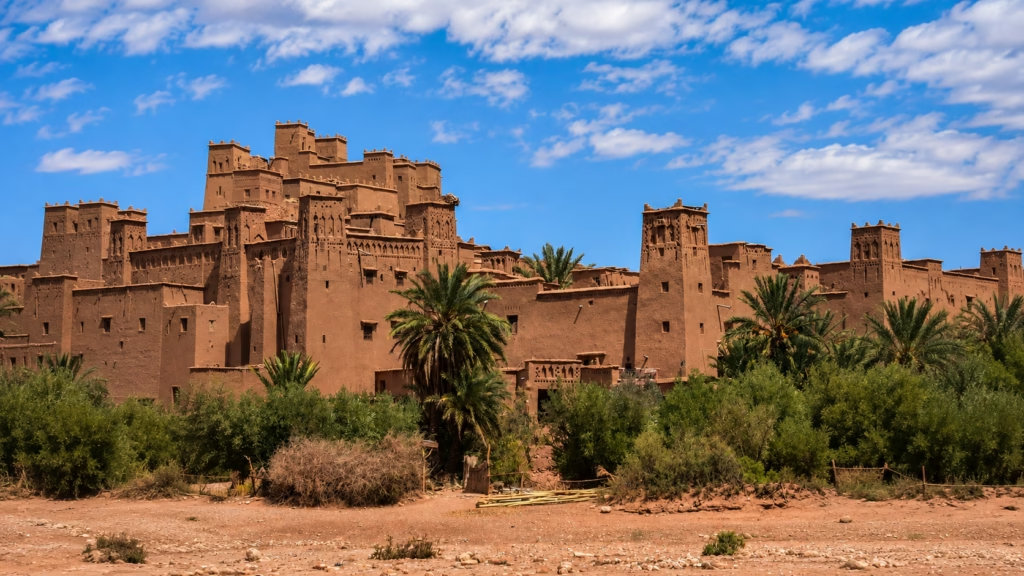 Example seven-day Morocco itinerary
- Day 1: Arrive in Marrakech and explore at an easy pace.
- Day 2: Cross the High Atlas, visit Ait Ben Haddou and continue toward the Dades Valley.
- Day 3: Travel through the Todra Gorge area and continue to Merzouga.
- Day 4: Spend more time around Merzouga and the Sahara.
- Day 5: Travel from Merzouga to Fes. This is normally the longest driving day.
- Day 6: Explore Fes and its medina.
- Day 7: Departure or onward travel.
Why 10 days works well for a first Morocco trip
For many first-time visitors, ten days offers the best balance between variety and comfort. You can connect northern Morocco, the imperial cities and the Sahara while keeping enough time for meaningful sightseeing.
Example ten-day Morocco route
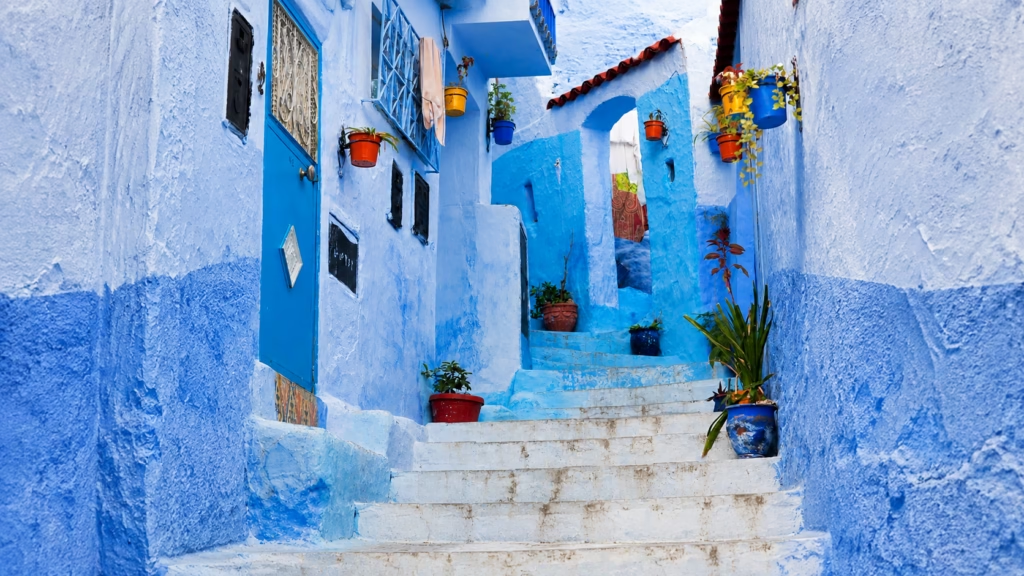
- Days 1–2: Arrive in Casablanca, visit Rabat and continue toward Chefchaouen.
- Days 3–4: Travel to Fes and allow a full day to explore the medina.
- Days 5–6: Cross toward Merzouga and spend time experiencing the Sahara.
- Day 7: Continue through the Todra Gorge area and stay in the Dades Valley.
- Days 8–10: Visit Ait Ben Haddou on the route to Marrakech, then allow time for Marrakech before departure.
Ten days also gives you some flexibility to slow the route down. Depending on your arrival and departure airports, you can replace Chefchaouen with Essaouira or add another night in Fes, Merzouga or Marrakech.
Is two weeks too long in Morocco?
No. Fourteen days is a strong choice for travelers who want to see several regions without changing accommodation every night. It provides space for northern Morocco, the imperial cities, the Sahara, the Atlas Mountains and the Atlantic coast.
Example two-week Morocco route
- Days 1–2: Casablanca and Rabat.
- Days 3–4: Chefchaouen and the Rif Mountains.
- Days 5–6: Fes and its historic medina.
- Days 7–8: Travel to Merzouga and spend additional time around the Sahara.
- Day 9: Todra Gorge and the Dades Valley.
- Day 10: Ait Ben Haddou and the High Atlas route.
- Days 11–12: Marrakech.
- Days 13–14: Essaouira or additional time in Marrakech, depending on your departure plans.
The extra days can also be used for later starts, rest time, longer lunches or two-night stays in the places that interest you most. This is particularly helpful for families and travelers who prefer a slower pace.
How your arrival city affects the trip length
Two Morocco trips with the same number of days can feel very different depending on the arrival and departure cities. A route that starts in one city and finishes in another usually uses the available time more efficiently.
- Arriving in Marrakech: Works well for the High Atlas, Ait Ben Haddou, the southern valleys, the Sahara and Essaouira.
- Arriving in Fes: Makes it easier to combine the Fes medina with a one-way Sahara route that finishes in Marrakech.
- Arriving in Casablanca: Fits well with Rabat and broader routes through northern and central Morocco. More days are useful if the trip also includes the Sahara.
- Arriving in Tangier: Suits Chefchaouen, Tetouan and Fes. Reaching the Sahara and Marrakech requires a longer itinerary.
For an overview of trains, coaches, taxis and rental cars, see the Moroccan National Tourist Office’s guide to getting around Morocco.
How much driving should you expect?
Morocco is larger than many first-time visitors expect. Travel time is affected by mountain roads, towns, traffic and sightseeing stops, so a route may take longer than the distance on a map suggests.
Travel days that require careful planning
- Fes to Merzouga: This is commonly one of the longest days on a north-to-south itinerary, although the landscapes change considerably along the route.
- Merzouga to Marrakech: Completing this journey in one day creates a very long transfer. Dividing it with an overnight stay around Dades or Ouarzazate makes the route more comfortable.
- Northern Morocco to the Sahara: Combining Tangier or Chefchaouen with the desert requires enough days to avoid several consecutive long transfers.
- Atlas Mountain routes: Curving mountain roads and worthwhile stops can make the day slower than expected.
Frequently asked questions
How many days are recommended for a first trip to Morocco?
Seven to ten days works well for most first-time visitors. Choose seven days for an active classic route or ten days for more sightseeing time and fewer rushed transfers.
Is five days enough to visit Morocco?
Yes, if the route has one clear focus. Five days can work for a one-way Sahara journey, northern Morocco or Marrakech combined with nearby destinations.
Can you visit the Sahara in three days?
Yes, but expect long periods on the road. A one-way route between Marrakech and Fes generally uses the time better than returning to the starting city.
Should I start in Casablanca, Marrakech, Fes or Tangier?
Choose according to the regions you most want to see. Marrakech and Fes work well for Sahara routes, Tangier suits northern Morocco, and Casablanca is useful for broader itineraries that include Rabat.
Should arrival and departure days count in the itinerary?
Yes, but count them according to the flight schedule. A late arrival or early departure provides little usable sightseeing time.
Is fourteen days too long in Morocco?
No. Two weeks allows a slower route with more two-night stays and enough time to combine the north, imperial cities, Sahara, Atlas Mountains and Atlantic coast.
Choose a Morocco route that fits your time
Once you know how long you can travel, choose a route that matches your arrival city, preferred pace and the regions you most want to experience. If your dates fall around Easter, our Morocco Easter travel guide covers spring timing and itinerary ideas.
- Still choosing your travel dates? Read our month-by-month guide to the best time to visit Morocco.
- For a short one-way Sahara journey, explore our three-day Fes to Marrakech desert route.
- For a broader first trip, compare our nine-day Casablanca to Marrakech itinerary.