

Thinking about spending Easter in Morocco? Spring is one of the easiest times of year to combine Morocco’s imperial cities, mountain scenery, Atlantic coast and—if your trip is long enough—the Sahara without the extreme summer heat.
For U.S. travelers, an Easter vacation in Morocco can also fit naturally around spring break. The important part is choosing a route that matches your arrival airport and the number of days you actually have, rather than trying to squeeze Marrakech, Fes, Chefchaouen and Merzouga into a rushed itinerary.
For 2027: Easter Sunday falls on March 28. Ramadan is expected to finish earlier in March, so Easter 2027 is not expected to overlap Ramadan. Islamic calendar dates can shift slightly with moon sighting, so travelers visiting in another year should always check the dates for that specific trip.
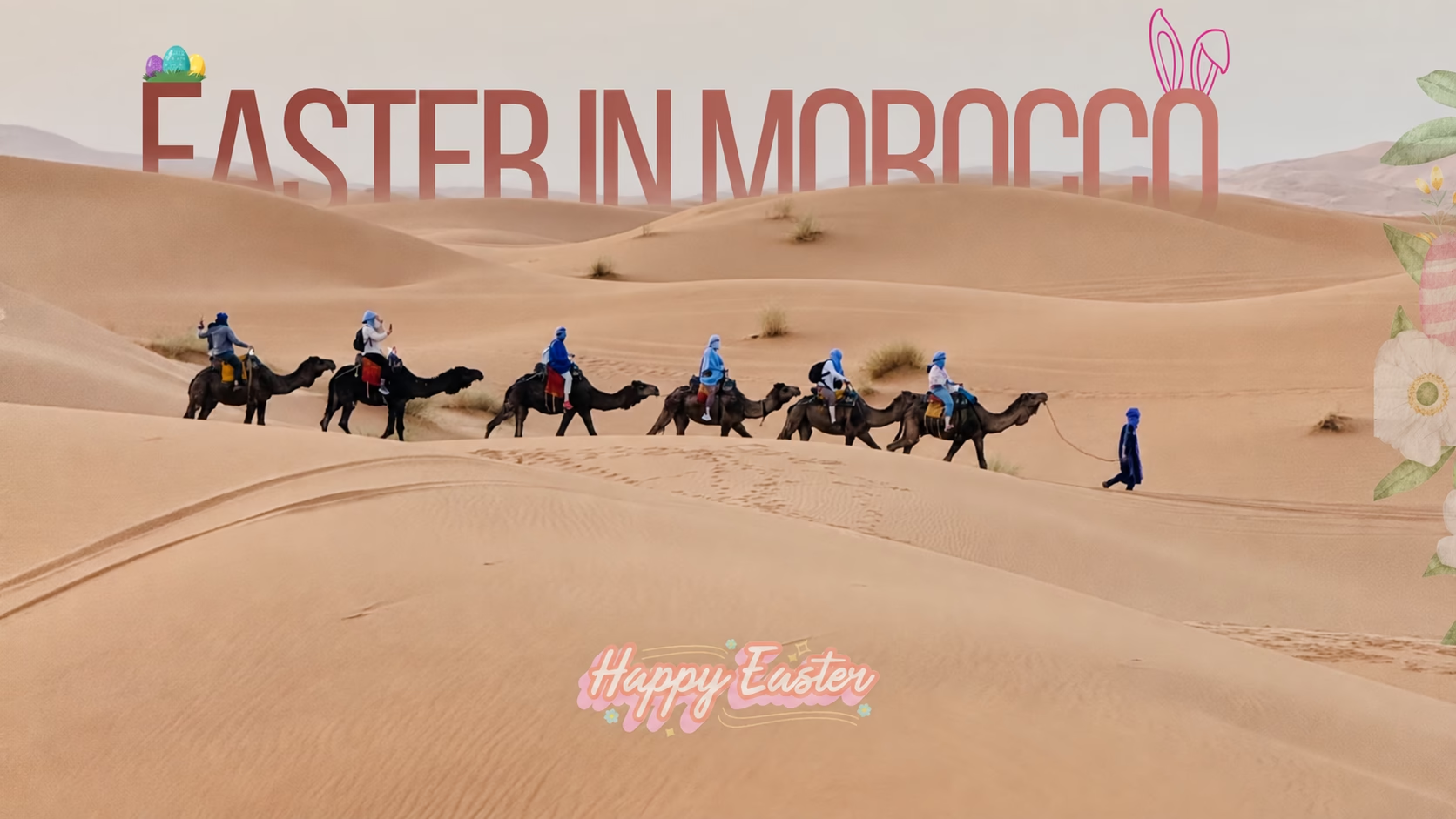
Is Easter in Morocco a Good Time to Travel?
Yes, for many travelers it is. Easter usually falls in March or April, when daytime temperatures are generally more comfortable for sightseeing than in midsummer. Spring also gives you more flexibility: city walking is pleasant, the Atlas can still look green or snow-capped at higher elevations, and desert temperatures are usually easier to handle than in July or August.
The main drawback is demand. Easter week and U.S. spring-break dates can coincide with a busy travel period. Popular riads, desert camps and private drivers may have less availability than on ordinary spring dates, especially if you wait until the last minute.
| Advantages | Things to consider |
|---|---|
| Comfortable sightseeing weather in many regions | Higher demand around Easter and school holidays |
| Good season for Marrakech, Fes and desert routes | Cool evenings still require layers |
| Spring landscapes in the north and mountains | Mountain weather can change quickly |
| Easy to combine culture, scenery and coast | A short trip still cannot realistically cover all of Morocco |
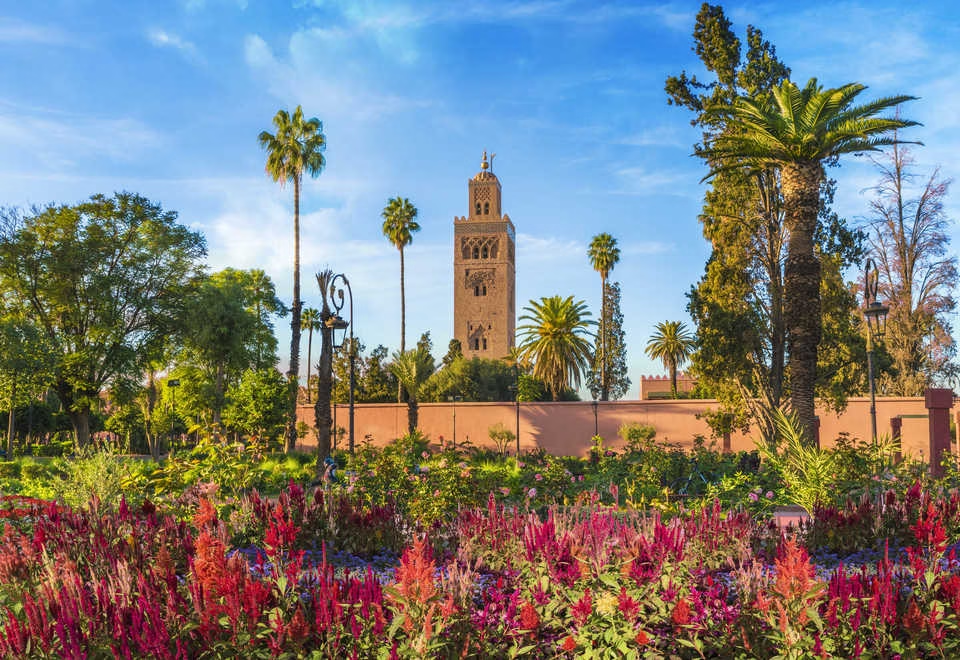
Why Spring Works Well for a Morocco Vacation
Morocco’s distances are easier to appreciate when you are not planning around summer heat. A spring route can include long scenic drives, walks through medinas and outdoor stops without making every afternoon about escaping the temperature.
If you are still deciding between March, April or another season, our month-by-month guide to the best time to visit Morocco gives a broader seasonal comparison.
The Main Tradeoffs of Traveling During Easter Week
Travelers who value choice should reserve earlier than they would for an ordinary week. The most limited pieces are often well-located riads, specific room categories, desert camps and private transportation. If your dates are fixed by school holidays, it is usually better to settle the route before choosing every individual activity.
Is Easter Celebrated in Morocco?
Morocco is a Muslim-majority country, so Easter is not a nationwide public holiday in the way it is in many Christian countries. You should not expect widespread Easter decorations, public Easter events or businesses closing simply because it is Easter Sunday.
For most visitors, that is convenient: hotels, restaurants, transport services, medina shops and tourist attractions generally operate according to their normal schedules. Individual opening hours can still vary because of the day of the week, local schedules or other holidays, so check any attraction that is essential to your trip.
What Stays Open During Easter?
In normal circumstances, tourism continues as usual. Hotels receive guests, restaurants serve meals, drivers operate and guided tours continue. Some museums, monuments or privately run businesses can have their own weekly closure or shortened hours, which is why we avoid promising a specific opening time unless it has been checked for your travel date.
What to Expect on Easter Sunday
If you are visiting as a sightseeing traveler, Easter Sunday will generally feel like another travel day in Morocco. If observing Easter is important to you, plan your religious arrangements separately from your sightseeing itinerary.
Easter Services and Churches for Travelers
Christian churches exist in several Moroccan cities, especially larger urban centers. Service times and access can change, so travelers who want to attend an Easter service should contact the relevant church directly before the trip rather than relying on an old schedule online.
Morocco Weather at Easter: What March and April Feel Like
There is no single “Morocco spring temperature.” Marrakech, the Atlantic coast, the Rif and Atlas Mountains, and the desert all feel different. For an Easter trip, think in layers rather than packing only for warm afternoons.
| Region | Typical spring feel | What to expect |
|---|---|---|
| Marrakech | Warm afternoons, cooler mornings and nights | April average highs are around the mid-20s C / upper-70s F |
| Fes | Mild days, cooler evenings | Spring showers are possible |
| Chefchaouen / North | Cooler than Marrakech | A light rain layer is useful |
| Atlas Mountains | Cool to cold with altitude | Conditions vary sharply by elevation; snow can remain high in the mountains |
| Merzouga / Sahara | Warm to hot in the afternoon, cooler after sunset | Large day-to-night temperature swing |
| Essaouira | Mild and often breezy | Usually cooler than inland Morocco |
Marrakech and Fes
Marrakech is often comfortably warm by day in April, but mornings and rooftop dinners can still feel cool. Fes tends to be cooler and can receive more spring rain, so a lightweight waterproof layer is more useful there than many first-time visitors expect.
Chefchaouen and Northern Morocco
Chefchaouen’s mountain setting makes it noticeably cooler than southern Morocco. Spring is beautiful for walking the blue medina and surrounding hills, but it is not a guaranteed hot-weather destination.
Atlas Mountains
Altitude matters more than the month. A sunny morning in Marrakech does not tell you what conditions will feel like in a high Atlas village or on a mountain trail. Bring warmer layers and proper footwear if the mountains are a serious part of your itinerary.
Merzouga and the Sahara
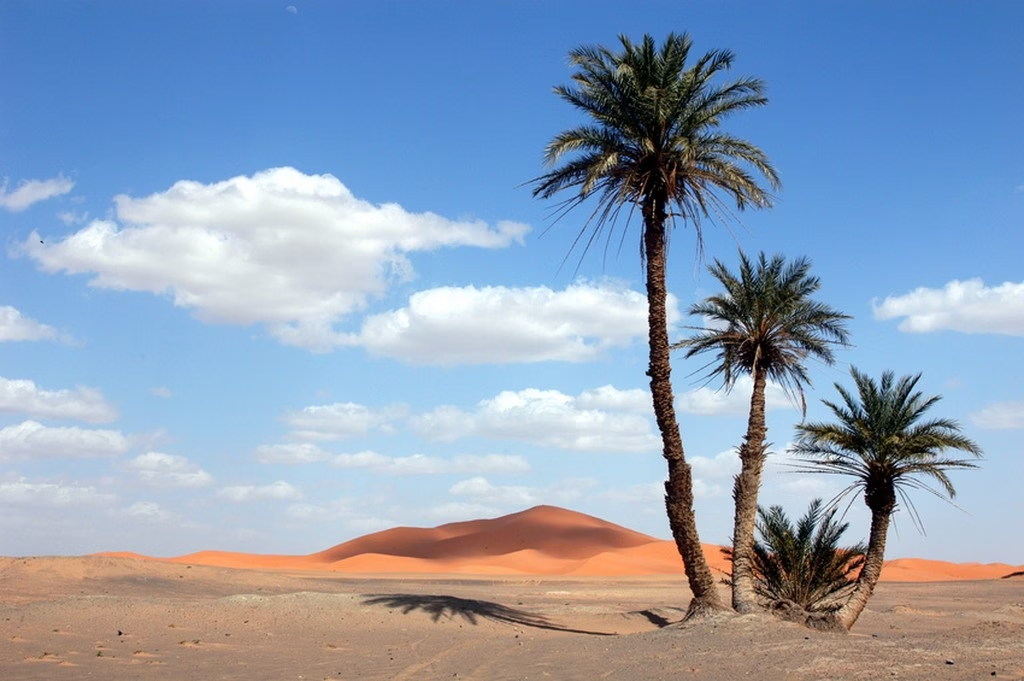
Spring is one of the more comfortable periods for Merzouga. Afternoon temperatures can still become hot, while sunrise, sunset and late-night camp hours can feel much cooler. A scarf, light jacket and sun protection all earn their place in the same suitcase.
Essaouira and the Atlantic Coast
Essaouira is milder and breezier than Marrakech. That makes it a good choice for travelers who want seafood, ocean air and a slower pace, but anyone expecting a guaranteed hot beach holiday may find the Atlantic coast cooler than anticipated.
Flying to Morocco From the United States for Easter
For many Americans, Casablanca is the easiest gateway because Mohammed V International Airport connects well with the rest of Morocco. Royal Air Maroc currently operates nonstop New York JFK–Casablanca service, with a flight time of roughly seven hours. Other U.S. gateways and connecting options vary by date and airline, so always compare the schedule for your exact Easter week rather than assuming a route operates every day.
Direct vs. Connecting Flights
A nonstop flight is attractive if it reduces total travel time, but the best flight is not always the one with the fewest segments. If your itinerary begins in Marrakech, Fes or Tangier, compare the total door-to-door travel time of flying to Casablanca and continuing overland or domestically against taking a one-stop itinerary directly to your starting city.
Our Morocco from North America travel guide goes deeper into flight planning and first-time arrival logistics.
How Long Does It Take to Fly From the USA to Morocco?
From New York to Casablanca, a nonstop flight is about seven hours. From many other U.S. cities, total travel time is longer because you will usually connect in the United States, Europe or another hub. Leave enough time for the first day to be a soft landing rather than scheduling a major cross-country drive immediately after an overnight journey.
Casablanca, Marrakech, Fes or Tangier: Which Airport Makes Sense?
Casablanca works well for longer first-time routes and travelers using a nonstop transatlantic option. Marrakech is ideal when your trip focuses on southern Morocco, the Atlas, Essaouira or a Marrakech-to-Fes desert route. Fes can make an efficient starting point for northern Morocco or a one-way desert crossing toward Marrakech. Tangier is strongest when Chefchaouen and northern Morocco are priorities.
Planning Around U.S. Spring Break and Easter Dates
U.S. spring-break calendars vary by school district, college and university, so there is no single American spring-break week. If your dates are fixed, book your international flights first and then build the Moroccan route around those arrival and departure times.
Easter Week Crowds and What to Book Early
Easter is not a Moroccan public holiday, but it is an international travel period. That can raise demand in places popular with overseas visitors even though local life continues normally.
When Easter Gets Busy in Morocco
Marrakech, popular Sahara camps, Chefchaouen and high-demand riads can feel busier during holiday weeks. The effect is not identical everywhere, and it changes by year, but fixed-date travelers have less flexibility if a preferred property sells out.
Flights, Riads, Desert Camps and Private Transportation
Prioritize the parts that are hardest to replace: international flights, your first and last nights, any specific high-demand riad, and a desert camp if Merzouga is central to the trip. Restaurants and ordinary sightseeing can usually be planned later.
What to Do if Your First-Choice Dates Are Full
Do not ruin the itinerary just to keep one hotel. A similar riad in the same area, shifting a desert night by one day, or reversing a one-way route can preserve the quality of the trip better than adding long drives.
Best Places to Visit in Morocco at Easter
Marrakech for Culture, Food and Easy Day Trips
Marrakech suits shorter Morocco Easter vacations because you can stay several nights without constantly repacking. The medina, gardens, food experiences and nearby Atlas foothills offer variety even if you skip the Sahara.
Fes for History and the Medina
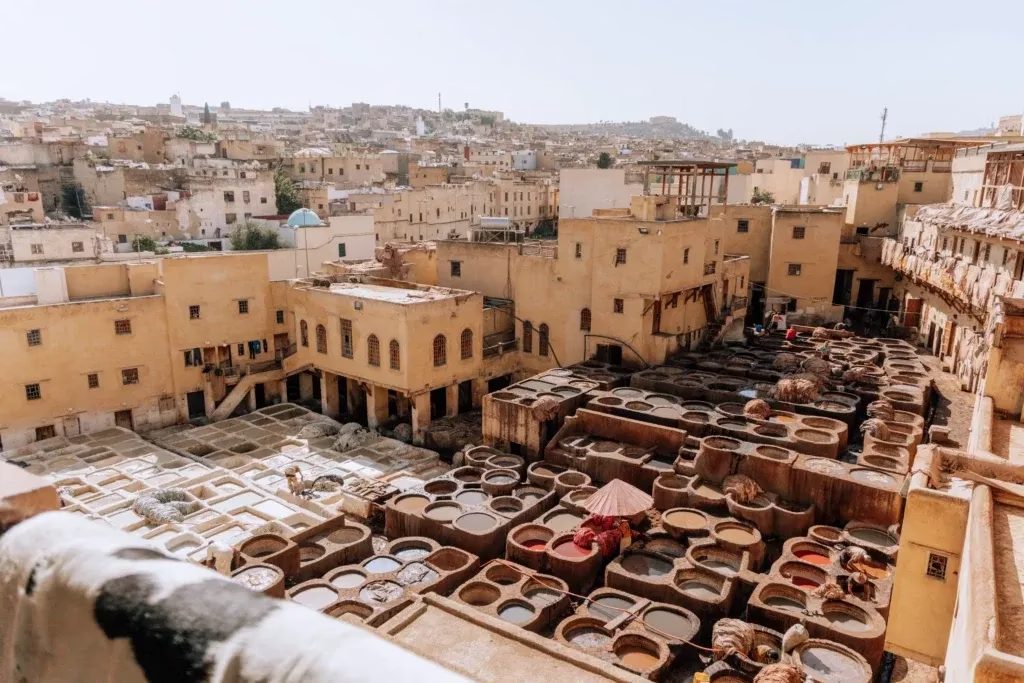
Fes is an excellent spring city for travelers interested in architecture, crafts and history. Give the old medina proper time rather than treating Fes as a sleeping stop between Chefchaouen and the desert.
Chefchaouen and Northern Morocco
Chefchaouen combines well with Tangier and Fes, particularly on 7-day or longer routes. For a five-day trip from Marrakech, however, adding Chefchaouen usually creates unnecessary travel.
Atlas Mountains for Spring Landscapes
The Atlas can be an easy day trip from Marrakech or part of a longer crossing toward Ouarzazate and the southeast. Travelers who want hiking should plan around actual trail and altitude conditions, not just the forecast in Marrakech.
Merzouga and the Sahara in Spring
Merzouga makes sense when you have enough time to enjoy the journey there. From Marrakech, a desert route is better treated as a multi-day circuit or one-way journey than as a rushed out-and-back. From Fes, Merzouga can form a natural bridge toward Marrakech.
Essaouira for a Slower Atlantic Coast Stay
Essaouira is one of the easiest ways to slow down a Marrakech-based trip. Two nights work especially well for travelers who prioritize food, the coast and a break from long road days.
Morocco Easter Itineraries: 5 to 14 Days
The right Morocco Easter itinerary depends more on geography than on a list of famous places. The routes below are examples, not fixed packages. They can be adjusted around your arrival city, departure city, pace and interests.
| Trip length | Best approach | Example route |
|---|---|---|
| 5–6 days | Choose one region or one efficient one-way route | Marrakech + Atlas + Essaouira, or Marrakech–Merzouga–Fes |
| 7–8 days | Combine two or three major regions | Tangier–Chefchaouen–Fes–Merzouga–Dades–Marrakech |
| 9–10 days | Complete first-time route with proper city time | Casablanca–Chefchaouen–Fes–Merzouga–Dades–Marrakech |
| 11–14 days | Slow the pace and add 2-night stays | Add Essaouira, extra Fes/Marrakech time or a second desert night where it fits naturally |
5–6 Days: Keep the Route Focused
With five or six days, the best trip is often the one that leaves something out. From Marrakech, choose either a relaxed Marrakech–Atlas–Essaouira vacation or a carefully paced desert journey. A 5-day Marrakech to Fes desert route can work well when your flights allow a one-way finish instead of returning to Marrakech.
From Casablanca, six days can connect Fes and the Sahara to Marrakech, but it is a faster trip. From Tangier, six days can work toward Fes and Marrakech, with the Sahara only if you accept longer driving days. From Fes, a desert crossing toward Marrakech is geographically efficient.
7–8 Days: Cities, Mountains and Optional Sahara
Seven or eight days gives you more room to combine regions without turning every day into a transfer. From Tangier, Chefchaouen and Fes fit naturally before heading south. The 8-day Tangier to Marrakech route is a useful example of how northern Morocco, the Sahara and Marrakech can connect in one direction.
From Marrakech, travelers who do not care about the desert can spend meaningful time in Marrakech, the Atlas and Essaouira instead. Not every Easter holiday in Morocco needs dunes.
9–10 Days: A More Complete Morocco Route
Nine or ten days is one of the strongest lengths for a first trip. From Casablanca, you can create a natural loop or one-way route through northern Morocco, Fes, the Middle Atlas, Merzouga, the Dades region and Marrakech. Our 9-day Casablanca to Marrakech tour shows one practical version.
If you would rather travel from Fes, a longer Fes-to-Marrakech route can include the desert at a more comfortable pace rather than treating Merzouga as a quick overnight.
11–14 Days: Slower Travel and Longer Stays
The biggest advantage of 11 to 14 days is not collecting more city names. Use the time for full sightseeing days, two-night stays and a slower transition between regions. Add Chefchaouen when it fits naturally from Tangier or Casablanca; add Essaouira when the Atlantic coast matters; spend two nights around Merzouga if desert landscapes, photography or local culture are priorities.
Choosing Your Route From Casablanca, Marrakech, Tangier or Fes
Casablanca: strongest for longer first-time circuits and transatlantic arrivals. Marrakech: strongest for short breaks, Atlas/coast combinations and southern routes. Tangier: strongest for Chefchaouen and north-to-south itineraries. Fes: excellent for historic-city travel and efficient one-way desert routes toward Marrakech.
If you are unsure how many days to allocate, see how many days you need in Morocco before deciding how much of the country to include.
What to Pack for Easter in Morocco
Pack for temperature changes, not just the warmest forecast on your phone. Spring can give you a sunny afternoon, a cool rooftop dinner and a chilly early-morning departure on the same day.
- Light layers that can be added or removed easily
- A warmer sweater or light jacket for evenings
- Comfortable closed walking shoes for medinas and uneven streets
- A lightweight rain layer, especially for northern Morocco
- Sun protection: sunglasses, sunscreen and a hat
- A scarf or light wrap, useful for wind, sun and respectful dress
- A small day bag and reusable water bottle
- For the desert: lip balm, moisturizer and something warm for after sunset
Clothing for Warm Days and Cool Nights
There is no need for formal clothing for ordinary sightseeing. Comfortable, breathable pieces with shoulders and knees reasonably covered are practical and culturally easy in most places. Morocco is accustomed to international visitors, but very revealing clothing can attract unwanted attention and may feel out of place in conservative settings.
What to Pack for the Sahara and Atlas Mountains
For the Sahara, prioritize sun protection and layers. For the Atlas, add warmth and footwear appropriate to your planned activity. A casual village visit and a serious mountain hike require very different equipment.
Useful Spring Travel Items Americans Sometimes Overlook
Bring a plug adapter suitable for Morocco’s common European-style outlets, keep a copy of your passport details accessible, and avoid relying on one payment method. A small amount of cash is useful even if you plan to use cards at hotels and larger businesses.
Practical Morocco Travel Tips for Americans
Entry Requirements for U.S. Passport Holders
U.S. citizens currently do not need a tourist visa for visits of 90 days or less. Your passport must meet current entry requirements, so check the latest U.S. State Department guidance and Moroccan guidance again shortly before departure rather than relying on a blog article months in advance.
Moroccan Currency, Cards and Cash
Morocco uses the Moroccan dirham (MAD). Cards are common in many hotels, restaurants and larger businesses, while cash remains useful in medinas, smaller shops, cafes, markets and rural areas. ATMs are widely available in cities. Avoid carrying large amounts of cash unnecessarily.
Morocco–USA Time Difference and Jet Lag
Morocco is several hours ahead of the continental United States. The exact difference changes during the year because U.S. daylight-saving dates and Morocco’s clock adjustments do not always line up. Check the time difference for your actual dates, especially if you have remote work, airport transfers or calls scheduled back home.
Cultural Differences First-Time American Visitors Should Know
Moroccan hospitality can be warm and social, bargaining is normal in many traditional markets, and daily life may feel more relaxed about timing than some U.S. travelers expect. Ask before photographing people closely, dress respectfully in religious or conservative settings, and remember that mosques are generally not open to non-Muslim visitors unless specifically designated otherwise.
Planning a Private Easter in Morocco Trip
A private itinerary makes the most sense when your flights, pace or interests do not fit a fixed group route. Two travelers arriving in Casablanca for ten days should not automatically receive the same plan as a family arriving in Marrakech for six.
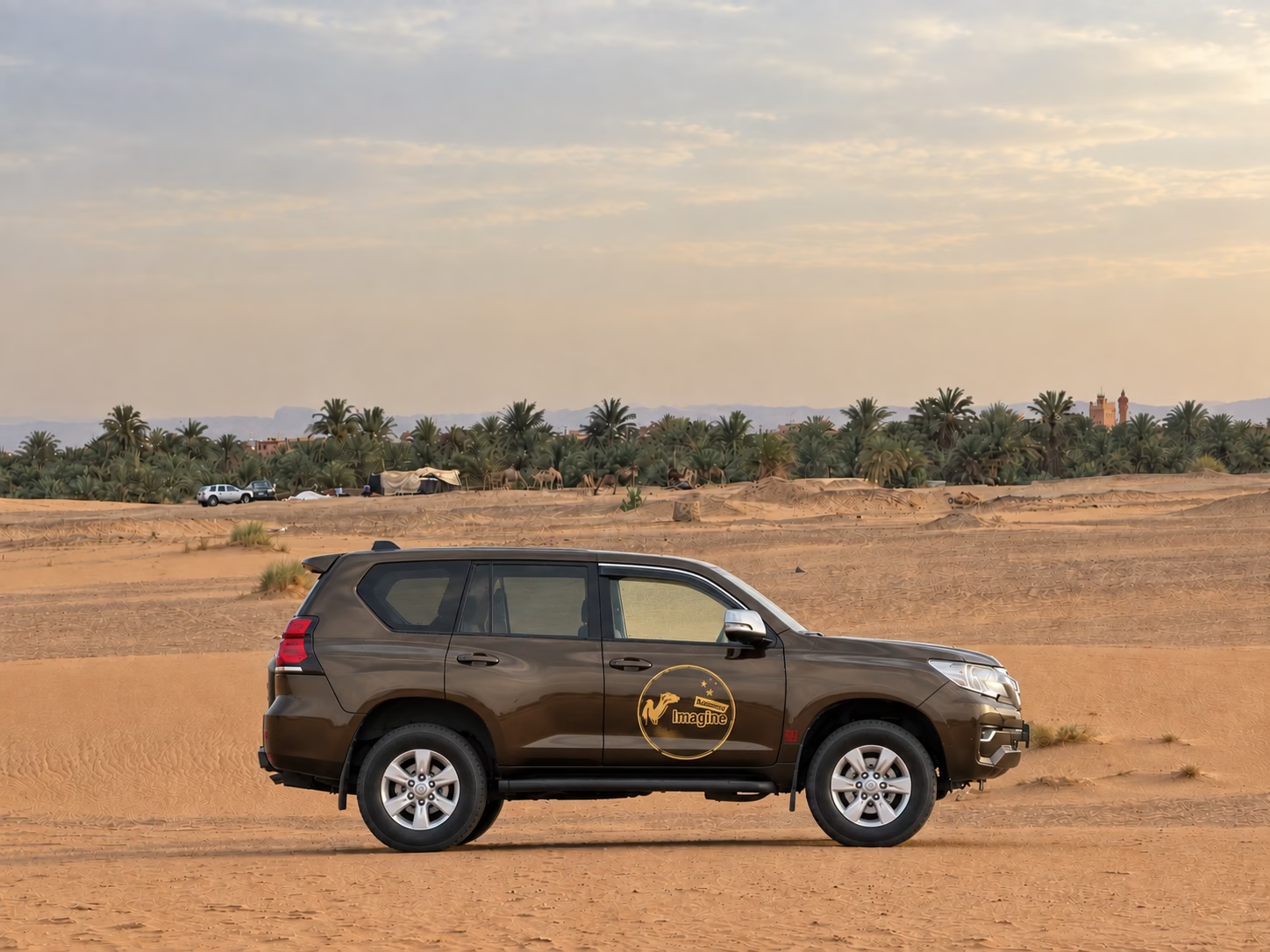
At Imagine Morocco, itineraries can be adjusted around your arrival city, preferred finish, exact number of days, Sahara preference, travel pace and interests. You can use our Morocco Trip Planner to build a starting route before asking us to customize it.
When a Private Itinerary Makes Sense
It is especially useful for one-way routes, families, photographers, travelers who want two-night stays, or anyone combining Morocco with fixed international flight dates. The point is flexibility—not simply adding more stops.
Build a Route Around Your Arrival City, Days and Interests
Start with the geography. Decide where you arrive, where you want to finish and which two or three experiences matter most. Then build the route between them. This is usually more successful than beginning with a list of ten places and trying to force them into seven days.
Frequently Asked Questions About Easter in Morocco
Is Morocco open on Easter Sunday?
Generally, yes. Easter is not a Moroccan national public holiday, so tourism businesses normally continue operating. Individual attractions and restaurants can still follow their usual weekly schedules.
Is Morocco crowded during Easter?
Some destinations can be busier because Easter is an international holiday period and can overlap school vacations. Marrakech, well-known riads and popular Sahara camps are the places where fixed-date travelers are most likely to notice reduced availability.
Is March or April better for Morocco?
Both can work well. March is generally cooler; April is warmer inland. The better month depends on whether your priorities are cities, hiking, desert travel or the coast—and of course when Easter and your spring break fall that year.
Is the Sahara too hot at Easter?
Usually not compared with summer, which is why spring is popular for desert travel. Warm afternoons are still possible, and nights can feel much cooler, so pack for both.
Are nights cold in Morocco during spring?
They can be, especially in the mountains, desert and northern Morocco. Even Marrakech can feel cool after a warm afternoon. Layers are more useful than one heavy coat.
How far in advance should I book an Easter trip?
If your dates are fixed by school holidays, earlier is better for international flights, distinctive riads, desert camps and private transportation. There is no universal deadline because demand changes by year and destination.
What should travelers wear in Morocco in spring?
Comfortable, modest casual clothing works well for most travelers. Light trousers, longer skirts or dresses, T-shirts and light layers are practical. You do not need to dress like a local, but respectful clothing is appreciated in conservative areas and religious settings.
How many days do Americans need for a Morocco vacation?
Seven to ten days is a strong range for many first-time visitors. Five or six days can be excellent if you focus on one region, while 11 to 14 days lets you slow down and combine more of the country without constant packing and driving.
Plan Your Easter Vacation in Morocco
Easter can be an excellent time for Morocco when the route matches the length of your holiday. For a short spring break, stay focused. With a week or more, you can connect regions more naturally. With 11 to 14 days, use the extra time to slow down rather than simply adding destinations.
Start with the trip planner to create your Morocco route. If the suggested itinerary is close to what you want, Imagine Morocco can then adjust it around your flights, accommodation preferences, pace and interests.