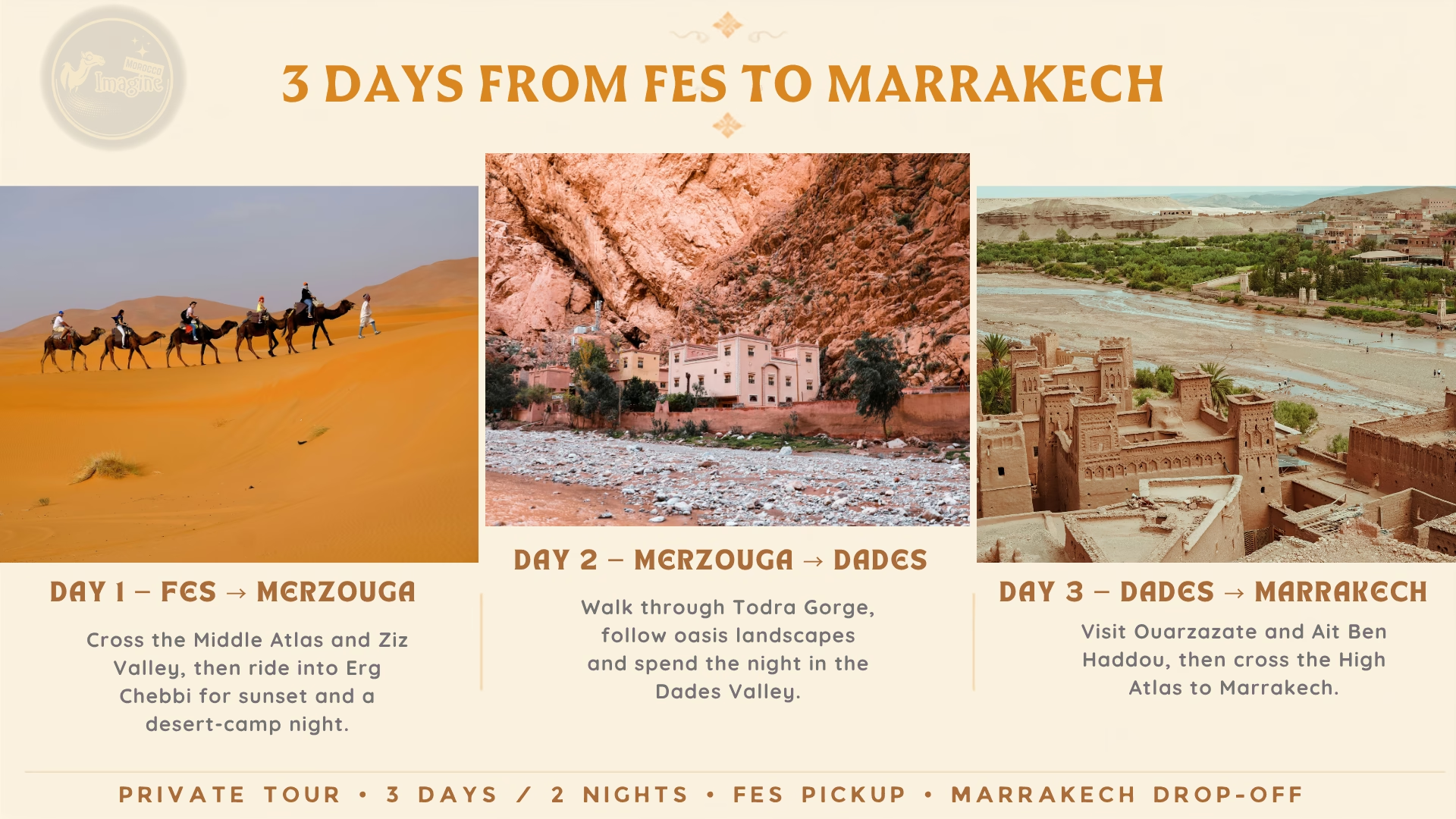
Travel from Morocco’s cultural capital to the vibrant city of Marrakech on this 3 days desert tour from Fes to Marrakech via Merzouga. Instead of taking the direct highway between the two imperial cities, this one-way journey crosses the Middle Atlas Mountains, the Ziz Valley, the Sahara dunes, dramatic gorges and the High Atlas.
The tour includes a camel trek across Erg Chebbi, one night in a Merzouga desert camp and one night in the Dades Valley. You will also visit Todra Gorge, the Valley of Roses, Ouarzazate and the UNESCO-listed Ksar of Ait Ben Haddou before arriving in Marrakech.
This is an excellent option for travellers who need transportation from Fes to Marrakech but also want to experience the Sahara. However, it covers approximately 1,050 kilometres in three days, so travellers should expect a fast-paced journey with long but scenic driving sections.
| Tour information | Details |
|---|---|
| Duration | 3 days and 2 nights |
| Starting point | Fes |
| Finishing point | Marrakech |
| Departure | Approximately 7:30–8:00 AM |
| Arrival in Marrakech | Approximately 7:00–8:00 PM |
| First night | Merzouga desert camp |
| Second night | Hotel or riad in Dades Valley |
| Transportation | Private air-conditioned 4×4 or minivan |
| Meals | Two breakfasts and two dinners |
| Tour style | Private and customizable |
| Total distance | Approximately 1,050 km |
| Main experience | Erg Chebbi camel trek and desert camp |

Your 3 days desert tour from Fes to Marrakech begins with collection from your hotel, riad, Fes airport or the nearest location accessible by vehicle. An early departure is recommended, particularly during winter when the days are shorter and sunset in Merzouga occurs earlier.
Leaving Fes, travel south across the Saiss plains and into the Middle Atlas Mountains. Your first stop will be Ifrane and its Middle Atlas landscapes, a peaceful mountain town known for its alpine-style architecture, gardens and cooler climate.
Continue towards the cedar forests near Azrou. Here, you can take a short walk beneath the trees and may see Barbary macaques living in the surrounding forest. Visitors should observe the animals from a respectful distance and avoid feeding or touching them.
The road continues through Timahdite and the open mountain landscapes around the Middle Atlas. Stop for lunch in Midelt or Zaida before crossing the Tizi n’Talghomt area and descending towards the Ziz Gorge.
As the landscape becomes drier, stop at a panoramic viewpoint overlooking the Ziz Valley. Thousands of palm trees stretch between traditional villages and rocky cliffs, marking the transition from the Atlas Mountains to the pre-Sahara.
Continue through Errachidia, Erfoud and Rissani before reaching Merzouga in the late afternoon. At the edge of the dunes, prepare a small overnight bag while your larger luggage is transferred separately to the camp.
Meet your camel guide and begin a 45-minute to one-hour trek across the Erg Chebbi dunes. Stop on a high dune to watch the sunset before continuing to the camp. Travellers who prefer not to ride a camel can reach the camp by 4×4.
After settling into your private tent, enjoy a Moroccan dinner followed by local music around the campfire when weather conditions permit.
Approximate distance: 460–480 km
Estimated driving time: 7–8 hours, excluding stops
Meals: Dinner
Overnight: Erg Chebbi desert camp
Wake before breakfast if you would like to watch the sunrise over the dunes. Because sunrise conditions depend on the weather, it should be presented as an opportunity rather than a guaranteed spectacle.
After breakfast, return to Merzouga by camel or 4×4 and meet your driver. The journey continues towards Rissani, an important town in Tafilalet with a strong connection to Morocco’s historic trans-Saharan trade.
When the traditional market is operating and the schedule allows, you can take a short walk through its lively sections selling dates, spices, livestock, household products and local crafts. This visit depends on the day of the week and cannot be guaranteed every morning.
Continue through Erfoud, an area known for dates and fossil-rich stone, before travelling west through Touroug and Tinjdad. Instead of stopping only for lunch, this itinerary includes time to observe how the scenery changes from open desert plains to fertile palm oases.
Arrive in Tinghir, where a large palm grove follows the river beneath traditional villages and kasbahs. Continue into Todra Gorge and take a short walk beside the river under its impressive canyon walls. The walk is easy and provides a welcome break from the vehicle.
After lunch, travel towards Boumalne Dades. Depending on the available time and hotel location, you may stop at the unusual rock formations commonly called the Monkey Fingers or continue to a viewpoint overlooking the winding road of the Dades Gorge.
Dinner and overnight accommodation will be provided in a hotel or traditional guesthouse in the Dades Valley.
Approximate distance: 260–290 km
Estimated driving time: 4–5 hours, excluding visits
Meals: Breakfast and dinner
Overnight: Traditional Kasbah-style hotel or riad in Dades Valley
After breakfast, leave the Dades Valley and travel through Kelaat M’Gouna, a town associated with Morocco’s rose-growing region. Rose products are widely sold here, but at Imagine Morocco, shopping stops remain optional rather than being included as compulsory visits.
Continue through the Valley of Roses towards the Skoura palm oasis, where earthen kasbahs, cultivated gardens and traditional irrigation systems form a different landscape from the Sahara.
The journey continues to Ouarzazate, often described as Morocco’s gateway to the desert. A photographic stop near the Kasbah of Taourirt can be included, while entrance to the film studios remains optional.
Travel next to the Ksar of Ait Ben Haddou, a UNESCO World Heritage Site and one of southern Morocco’s best-preserved examples of earthen architecture. You will have time to cross the riverbed or bridge and walk through the fortified village. A local guide can be arranged for travellers who want a more detailed historical explanation.
After lunch, the standard route joins the main road and crosses the High Atlas Mountains through Tizi n’Tichka Pass. When the weather, road conditions and daylight allow, a more distinctive alternative follows the Ounila Valley towards Telouet before joining the High Atlas road.
The Ounila route passes colourful mountains, small villages and former caravan landscapes that many rushed three-day itineraries miss. Because it is a slower mountain road, the final decision should be made according to the day’s timing and conditions.
After crossing the High Atlas, descend towards Marrakech. Arrival is generally expected between 7:00 and 8:00 PM. If your riad is inside a pedestrian section of the Medina, the driver will take you to the nearest accessible drop-off point.
Approximate distance: 330–360 km
Estimated driving time: 6–7 hours, excluding visits
Meals: Breakfast
Drop-off: Marrakech hotel, riad or nearest accessible point
Expect a scenic but fast-paced journey covering approximately 1,050 km across Morocco. You will travel through the Middle Atlas Mountains, Ziz Valley, Erg Chebbi dunes, Todra Gorge, Dades Valley and the High Atlas before reaching Marrakech.
The tour includes long driving sections balanced with viewpoints, short walks, meal breaks and cultural stops. Highlights include a sunset camel trek or optional 4×4 transfer, a night in a Sahara camp and another night in the Dades Valley. As weather, road conditions and sunset times vary, departure and arrival times may change slightly.
Travelling via Merzouga transforms a simple transfer between two cities into a complete Morocco desert adventure. Instead of taking the direct route, you will discover the Sahara dunes, Todra Gorge, Dades Valley, ancient kasbahs and the High Atlas Mountains.
This itinerary was designed by the Imagine Morocco team, including team members who live in and come from the Merzouga region. Their experience travelling these roads over many years helped create an itinerary based on realistic driving times, seasonal conditions and the details visitors normally discover only after booking.
The route does not fill the days with unnecessary shopping stops or make unrealistic promises about exact sunset, sunrise or arrival times. Before booking, Imagine Morocco can also arrange a phone or video call to explain the route, accommodation categories and activities in greater detail.
This tour covers approximately 1,050 kilometres. The first and third days include long drives, but the journey is divided by viewpoints, meals, short walks and sightseeing stops.
Winter departures may need to start earlier because sunset in Merzouga occurs sooner. Your exact collection time should be confirmed one day before departure.
Large suitcases can remain in the vehicle or be transferred separately to the camp. Carry a small bag containing toiletries, medication, warm clothing and anything required during the night.
Camel riding is optional. Travellers who are uncomfortable riding can reach the same camp by 4×4 and enjoy dinner, music and the overnight experience with the rest of the group.
Many Marrakech riads are located inside pedestrian lanes. Your driver will drop you at the nearest accessible point and can help coordinate with your riad when required.
Bring comfortable shoes, sunscreen, sunglasses and layered clothing. Winter nights can be cold in the desert, while summer afternoons may be extremely hot.
Breakfast and dinner are normally included. Vegetarian and other dietary requests can usually be arranged when communicated before departure.
Carry Moroccan dirhams for lunches, drinks, optional entrance fees, local guides, tips and personal purchases. Card payment is not always available along the route.
The complete route covers approximately 1,050 kilometres. It is divided across three days with overnight stays in Merzouga and Dades Valley.
Departure is generally between 7:30 and 8:00 AM. An earlier start may be recommended during winter to reach Merzouga before sunset.
Arrival is normally between 7:00 and 8:00 PM. Weather, road conditions, traffic and sightseeing stops can affect the final time.
No. A 4×4 transfer can be arranged for travellers who prefer not to ride a camel.
No. Desert camps provide beds, bedding and blankets. Warm sleeping clothes are nevertheless recommended during winter.
Yes. The vehicle carries your luggage throughout the tour. A small overnight bag is more practical for the desert camp.
It depends on the selected category. Standard camps may use shared facilities, while upgraded camps generally offer private ensuite bathrooms.
Yes, time to explore Ait Ben Haddou is included. Entrance fees or a private local guide should be stated separately in the quotation.
Families can take this tour, but parents should consider the driving distances. A private tour provides more flexibility for children and additional comfort stops.
Yes. An additional day allows time for Khamlia, nomadic communities, a 4×4 desert circuit and a more relaxed journey towards Marrakech. 4 Days tour from Fes to Marrakech makes this happen and still spend another day in the desert.
This is a possible tour plan. If it doesn’t work for you, please let us know. Based on your hobbies and length of time, a personalized plan will be made. We offer custom tours of Morocco, click here for more details: Top Morocco Tours.
The price goes down as more people sign up for the trip. If the price stays the same, the cost of transportation will depend on how many people are going. Cost depends on how good the lodging is. Contact us to get a quote.