

Imagine Morocco · Destination guide
Dadès Valley Guide: Gorge Roads, Village Walks, and Where to Stay
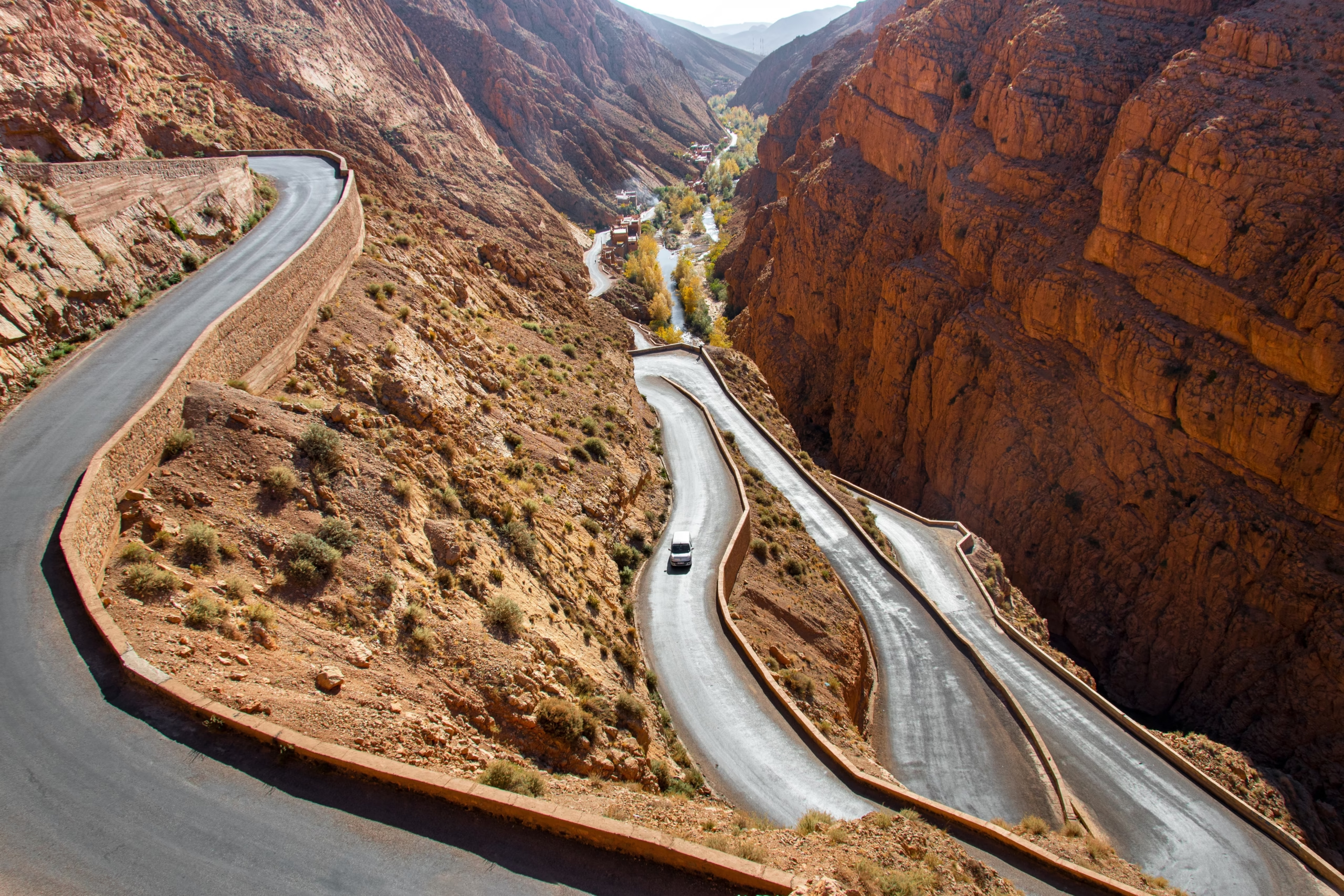
Tisdrin road, Dadès Gorge · Imagine Morocco image library
Dadès is a valley landscape rather than a single attraction: villages, cultivated fields, earthen buildings, and eroded rock follow the river north of Boumalne Dadès. It is worth more than a late arrival and early departure if walking and scenery are priorities.
At a glance
| Main appeal | Rock formations, gorge roads and village landscapes |
|---|---|
| Suggested time | 1 full local day; ideally 2 nights |
| Suitable season | Spring and fall; check weather for walks |
| How to explore | Vehicle between sights; guided walks off the road |
What to see and do in the valley
The lower valley and its villages
Begin with the contrast between cultivated land beside the river and the dry slopes above. Short walks reveal irrigation channels, paths, and houses that are easy to miss from a moving vehicle.
Ask your guesthouse to arrange a route through public paths with a local guide. Fields are working land, and an attractive doorway or courtyard is not an invitation to enter.
The Monkey Fingers formations
The rounded, eroded rock near Tamellalt and Aït Ouglif is one of the valley’s distinctive sights. A roadside view and a walk among the formations are different experiences with very different demands.
Choose a route for your ability rather than its name. Some canyon walks involve scrambling, narrow passages, or uneven ground; describe any mobility limits before agreeing to a hike.
The Tissadrine bends and viewpoints
The gorge road climbs through tightly turning bends, opening views across the valley. The photograph is appealing, but the drive should be part of enjoying the landscape rather than the sole reason for visiting.
Stop only where a vehicle can pull fully clear of traffic. A café terrace may offer a more comfortable view than the roadside; ask about access or ordering before using a private terrace.
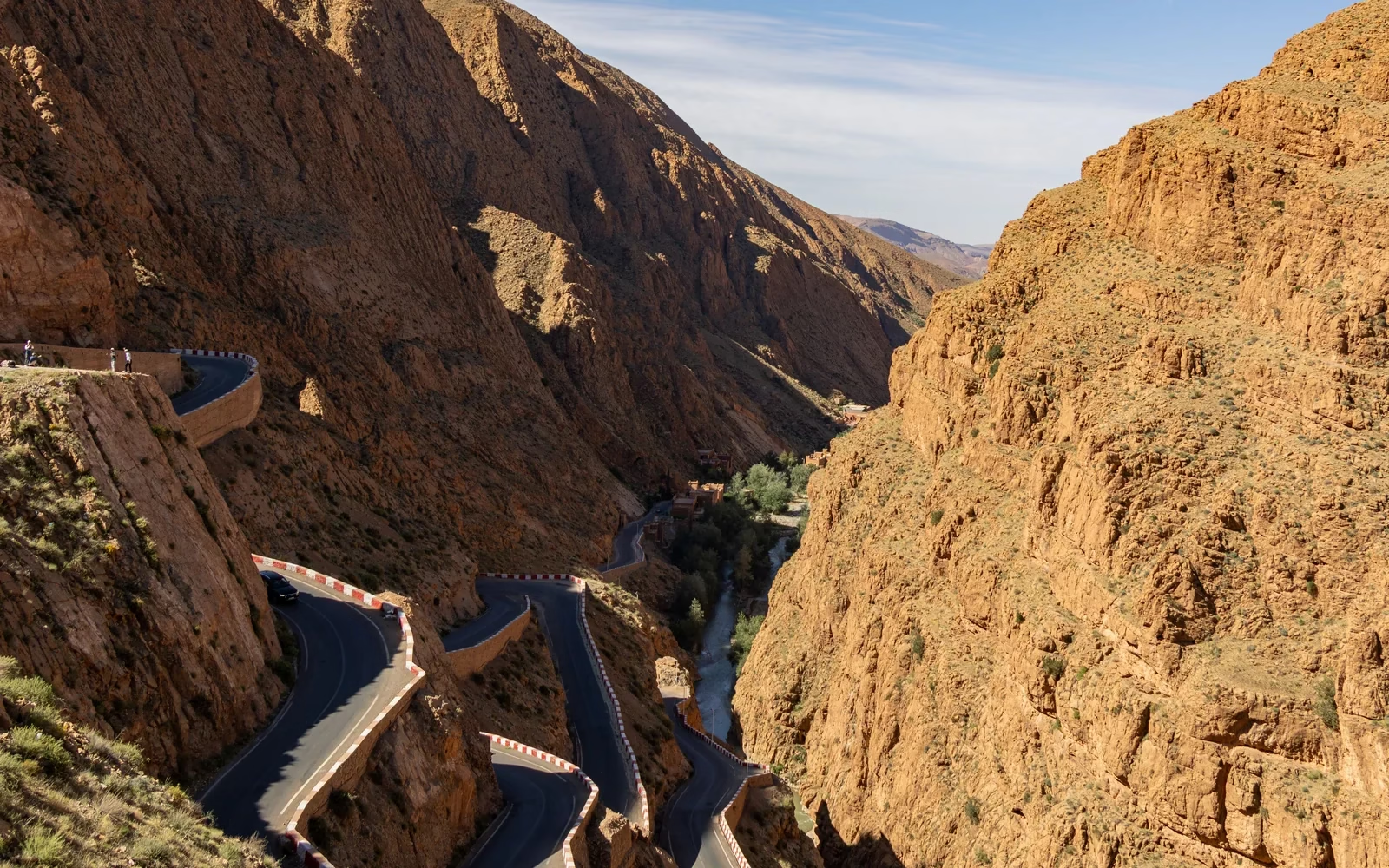
The upper gorge landscape
Beyond the familiar viewpoints, the road and river pass through changing rock walls and settlements. A short additional drive can help you understand that Dadès is a long inhabited valley, not one canyon viewpoint.
Decide your turnaround point with the driver in advance. Longer high-mountain continuations need their own route planning and current road checks; they are not automatic shortcuts to the next destination.
Earthen architecture and a village meal
Kasbah-style buildings and older houses show how construction responds to local materials and climate. A hosted visit to a property that welcomes guests can add context beyond photographing a facade.
Ask permission before entering and avoid unstable ruins. A prearranged guesthouse lunch also creates time to learn about the valley without making private family visits an assumed part of the itinerary.
One night versus two
One night works as a break between Marrakech and the desert, but may leave only a short walk or viewpoint stop. Two nights provide a full day for one substantial outing and a relaxed afternoon.
On that full day, take a morning village or rock-formation walk, return for lunch, then drive to the bends if conditions suit. Avoid scheduling a long canyon hike and a long onward transfer on the same day.
The national tourism office includes Dadès in its overview of Morocco’s walking regions. Select a local route based on current conditions rather than assuming every advertised trail is easy.
Getting there and choosing a guesthouse
Boumalne Dadès is the practical gateway from the main east–west road. Public transport to town does not automatically take you to a guesthouse farther up the valley; arrange that final leg and local excursions separately.
Stay near town for straightforward onward travel, or farther into the valley for scenery and nearby walks. Confirm the property’s map location, heating, stairs, meal service, and whether it can arrange a qualified walking guide.
Weather, food, and practical preparation
Spring and fall generally offer comfortable walking. Summer requires early starts and shade breaks, while winter nights can be cold; check our Morocco seasonal guide before combining mountains and desert.
Avoid narrow canyons and riverbeds when heavy rain is possible, including upstream. Ask locally about the route that morning, carry water, and wear footwear suitable for loose stone.
Expect home-style tagines, couscous, bread, and seasonal produce rather than a guaranteed menu of unique Dadès dishes. Arrange meals and dietary needs in advance at remote properties.
Onward to Todra, Merzouga, or Ouarzazate
Todra is a separate valley reached via Tinghir; the Rose Valley and Skoura lie toward Ouarzazate. Our four-day Marrakech to Fes tour overnights in Dadès. Request an extra night explicitly if you want a full hiking day.
Frequently asked questions
Are Dadès and Todra the same gorge?
No. They are separate valleys with different access roads. Plan transport between them rather than expecting one continuous walking route.
Do I need to hike to enjoy Dadès?
No. Viewpoints, a short village walk, and a comfortable guesthouse stay can be enough; ask for an itinerary that matches your mobility.
Does an overnight tour stop include the famous bends?
Not necessarily. Arrival time, accommodation location, and road conditions matter; confirm that specific excursion before booking.