

Imagine Morocco · Destination guide
Chefchaouen Travel Guide: Blue Medina Walks and Time in the Rif
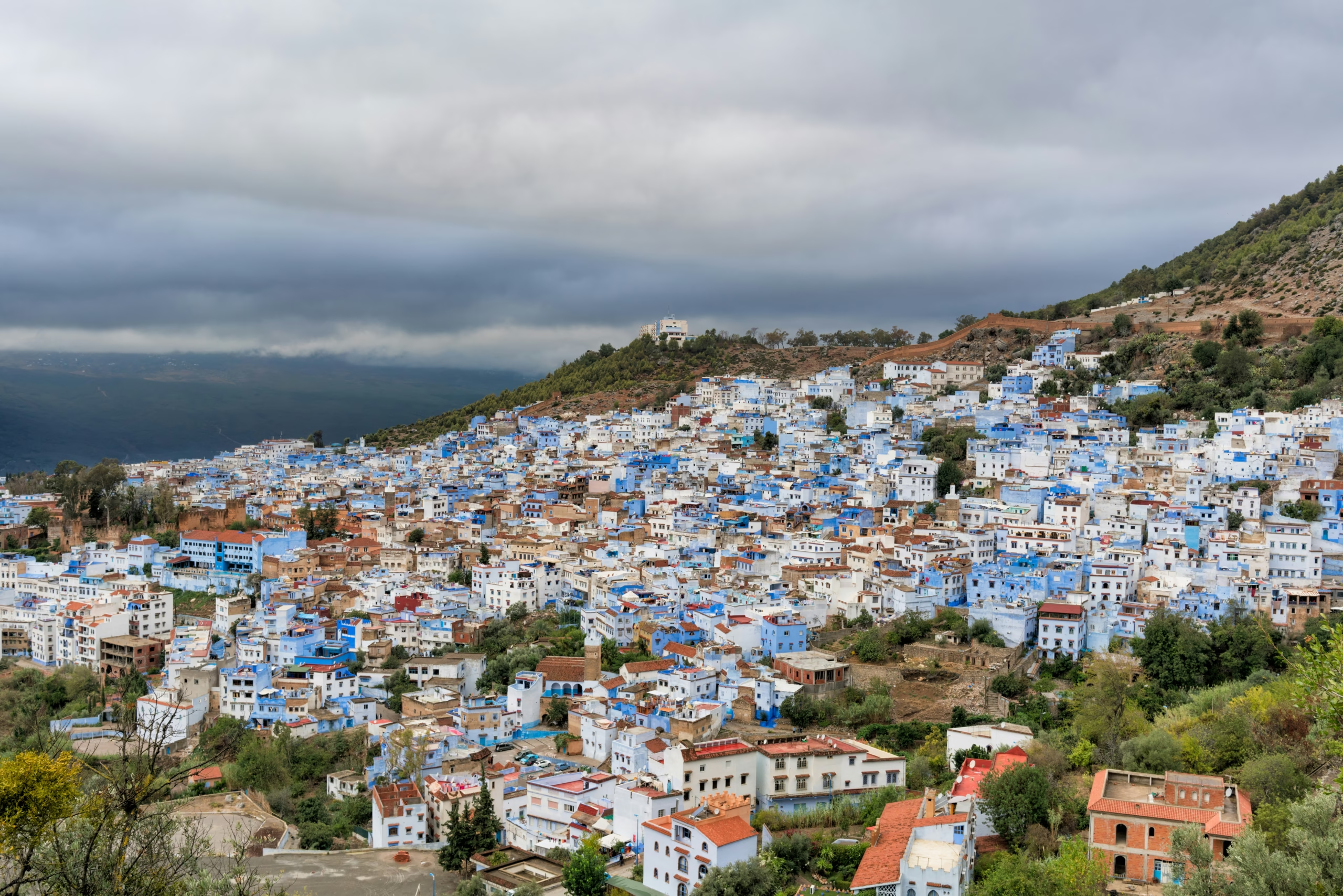
Chefchaouen and the Rif foothills · Imagine Morocco image library
Chefchaouen is a hillside town for slow walks, small architectural details, and views toward the Rif Mountains. Its blue medina is compact enough for a short visit, but staying overnight gives you more freedom to enjoy it outside the busiest excursion hours.
At a glance
| Main appeal | Blue medina, kasbah and Rif views |
|---|---|
| Suggested time | 1 full day; 2 nights for a relaxed visit |
| Suitable season | Spring and fall |
| How to explore | Walk; expect slopes and frequent steps |
Best things to see and do in Chefchaouen
The blue medina
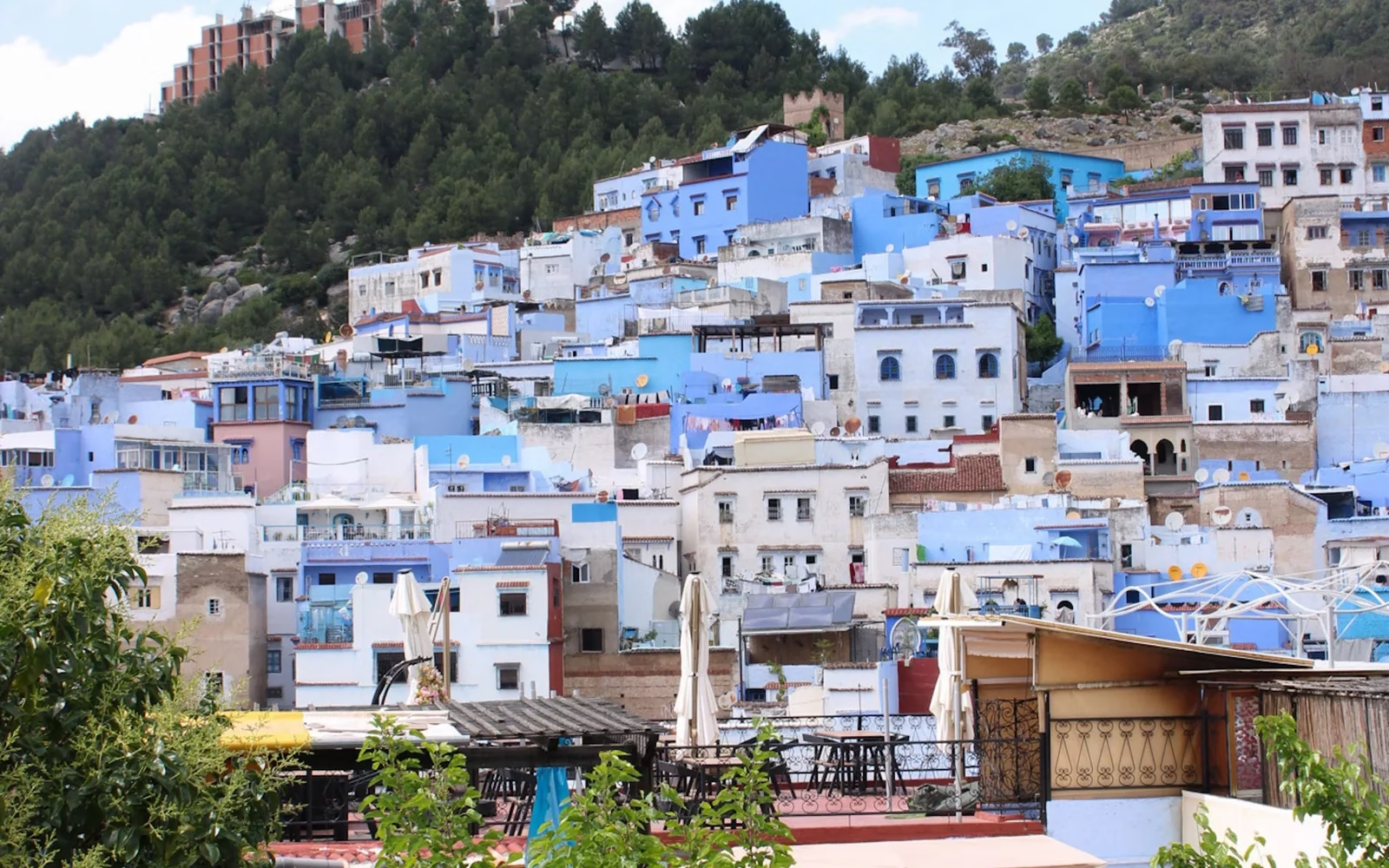
Explore beyond a single photographed staircase to find small shops, fountains, painted doorways, and changing shades of blue. The pleasure is in walking slowly rather than following a strict list of photo locations.
Start early for softer light and quieter lanes. Many attractive doorways belong to homes: leave access clear, ask before photographing people, and check any charge before entering a staged photo courtyard.
Plaza Uta el-Hammam
The main square is a practical orientation point, with café seating and views toward the kasbah and Grand Mosque. It works well for a rest when the uphill lanes become tiring.
The mosque should be appreciated from outside by non-Muslim visitors. Read a menu before sitting down, and choose a table for the view or shade rather than assuming every café offers the same experience.
The kasbah and its garden
Inside the old town, the kasbah introduces a different palette of earth-colored walls and greenery. It helps place Chefchaouen in a historical setting beyond its painted streets.
The national tourism office’s Chefchaouen guide identifies its garden and heritage displays. Check which rooms and viewpoints are accessible when you arrive; tower stairs need not be part of every visit.
Ras el-Maa
At the eastern edge of the medina, the spring and flowing water provide a natural pause after walking through town. The setting also helps explain why water matters to a mountain settlement.
Treat it as a shared local space rather than a photo set. Combine it with the eastern lanes, and do not add an uphill hike simply because you have reached the edge of town.
The Spanish Mosque viewpoint
The hillside above Ras el-Maa offers a wider view of the blue town and surrounding slopes. The attraction is the panorama, especially when the light softens later in the day.
Wear shoes with grip and assess the climb against your own mobility. Carry water and return with daylight to spare; a sunset photograph is not worth an uncomfortable descent in the dark.
A separate day in the Rif
The surrounding mountains offer a different reason to stay longer, with Akchour among the well-known excursion areas. A countryside day gives the trip more variety than another round of the same medina photographs.
Arrange transport and choose a walk according to weather, trail conditions, and fitness. Waterfalls and narrow trails are not a casual addition to an already full city day; use a local mountain guide for unfamiliar routes.
A realistic visit and where to stay
One full day covers the medina, square, kasbah, and Ras el-Maa, with the hillside viewpoint optional. Spend two nights to avoid squeezing everything between long road journeys; add another night if you want a mountain day.
Walk the western and central lanes in the morning, pause for lunch, then explore east toward Ras el-Maa. Return to the square for dinner rather than planning several separate taxi journeys.
A central medina stay gives easy sightseeing access but can involve steep luggage carries. Accommodation near a vehicle-accessible gate suits heavier luggage; confirm actual stairs and pickup arrangements before booking.
Arrival, weather, and food
Chefchaouen has no railway station. Arrive by coach or road transfer from Tangier, Tetouan, or Fes, checking the service and return options for your date; take a local taxi from the coach station if needed.
Spring and fall generally favor walking. Summer weekends can be busy and warm, while winter rain makes stone lanes slippery; bring a layer for mountain evenings.
Try local fresh cheese with bread and olives, and look for seasonal regional produce. Tagines and couscous are familiar nationwide dishes rather than specialties unique to the blue town.
Continue through northern Morocco
Tetouan and Tangier pair well with Chefchaouen; Fes is an onward road journey. Our eight-day route from Tangier to Marrakech includes Tetouan and a Chefchaouen overnight. Compare how much time to allow in Morocco before adding the desert to a northern trip.
Frequently asked questions
Is Chefchaouen only worth visiting for photos?
No. The kasbah, mountain setting, cafés, and slow medina walks suit travelers who enjoy a smaller town.
Is it an easy day trip from Fes?
It is possible, but requires a substantial road journey in each direction. An overnight makes the visit less dependent on a short sightseeing window.
Is the medina accessible without stairs?
Many routes involve steps and slopes. Request a specific accommodation-access description and agree on a shorter walking plan if mobility is limited.