

Imagine Morocco · Destination guide
Casablanca Travel Guide: Architecture, Oceanfront, and a One-Day Plan
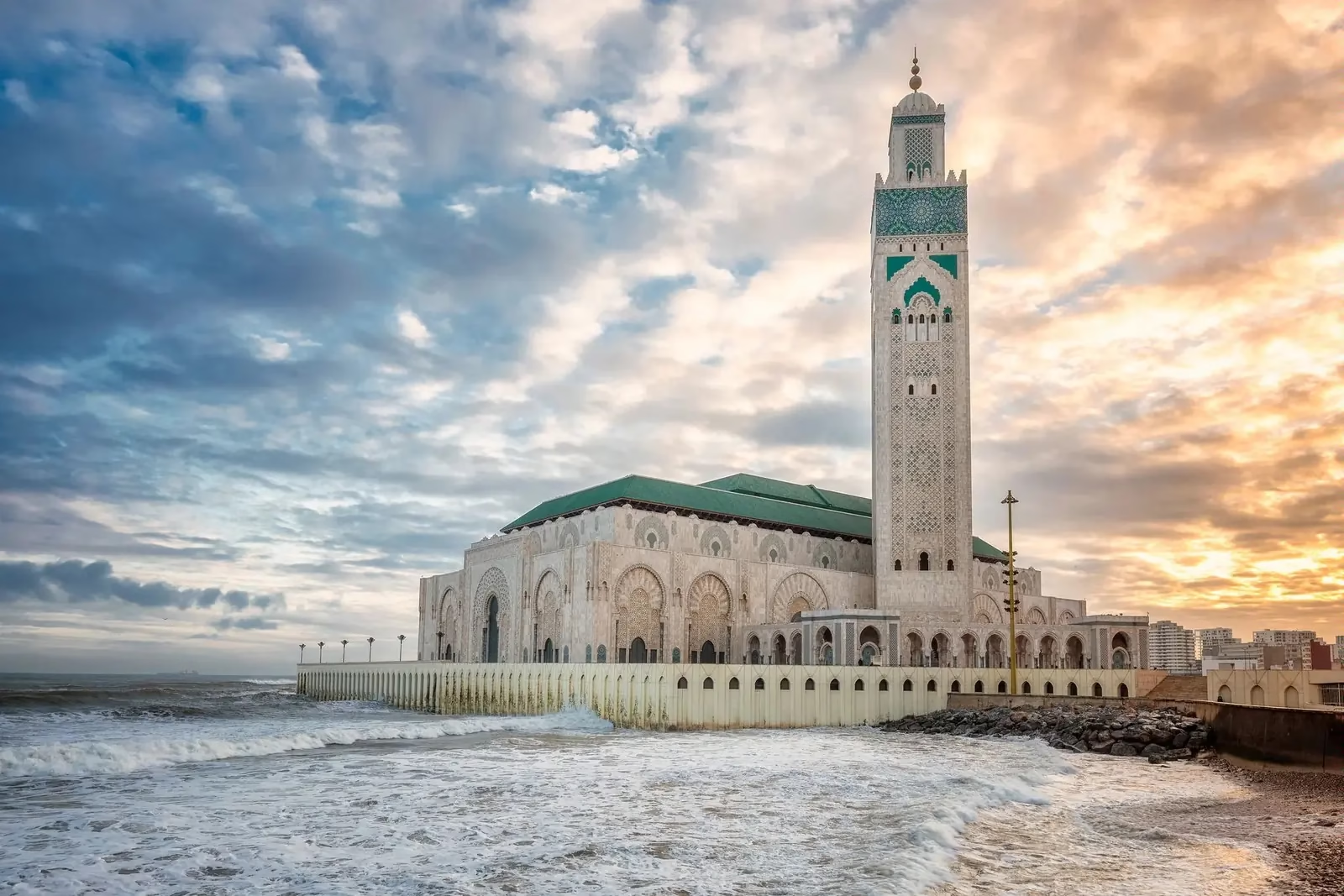
Hassan II Mosque, Casablanca · Imagine Morocco image library
Casablanca is a large working city whose main attractions span modern architecture, religious craftsmanship, and Atlantic life. It is a worthwhile stop for architecture lovers and travelers arriving through its airport, but its spread-out neighborhoods require more transport planning than a compact medina.
At a glance
| Main appeal | Hassan II Mosque, Art Deco and Atlantic neighborhoods |
|---|---|
| Suggested time | 1 full day; 1–2 nights around flights |
| Suitable season | Spring and fall; mild coastal conditions year-round |
| How to explore | Walk within districts; taxis or tram between them |
Best things to see and do in Casablanca
Hassan II Mosque
The oceanfront setting and richly worked interiors make this the main reason many visitors stop in Casablanca. An organized visitor session is the appropriate way for non-Muslim travelers to see inside.
Confirm your session before building the rest of the day around it. The foundation’s website was under maintenance when checked; avoid relying on older timetables. Cover shoulders and legs below the knees, and expect to remove your shoes inside.
The Art Deco center
Walk around Place Mohammed V and the central boulevards to see facades that combine early twentieth-century design with Moroccan details. Looking upward reveals balconies, geometric decoration, and changes in architectural style.
A focused architecture walk is more rewarding than trying to cross the entire center. Some notable buildings are workplaces, so enjoy their exteriors unless a public exhibition or visit is clearly offered.
The Habous quarter
Arcades, shops, bakeries, and planned streets give Habous a different feel from the older medina. It is a useful place to browse books, olives, and sweets without making shopping the whole day.
Take a taxi from the center and allow time for a café pause. Nearby ceremonial and administrative buildings may have restricted access; Habous remains worthwhile without an interior visit.
The old medina
Casablanca’s old medina is a lived-in commercial neighborhood near the port. Visit for everyday shopping streets and a contrast with the planned city outside, rather than expecting the scale or monuments of Fes.
Keep the walk short if you are already including Habous. A local guide can add context, but a clearly defined route from a known entrance is also practical.
Ain Diab and the Corniche
The oceanfront gives the day a different rhythm, with cafés, promenades, and places to sit facing the Atlantic. It works well after a morning of architectural sights.
Travel here by taxi rather than assuming it is adjacent to the mosque. Swimming conditions and beach facilities vary; a waterfront walk is the easiest option when you have limited time.
How much time to allow
One full day is enough for the mosque, central architecture, and either Habous or the Corniche at a comfortable pace. Two nights help if your arrival and departure cut into sightseeing time.
Start with your confirmed mosque session, continue to the central streets, and take a lunch break. Choose Habous for shops and food or Ain Diab for an oceanfront afternoon; add the other district only with a second day.
Airport, trains, and local transport
Mohammed V Airport is outside the city. Use its rail connection or an arranged road transfer, allowing for your hotel’s location rather than treating airport arrival as arrival downtown.
Casa-Voyageurs is important for intercity services; Casa-Port is useful for the central area on suitable routes. Check ONCF’s route and timetable information before choosing a station. Taxis connect dispersed sights, while the tram is useful when its route matches your plans.
Season, food, and where to stay
Spring and fall offer comfortable sightseeing, and the coast usually moderates summer heat. Winter rain and ocean wind can affect a walking day, so keep an indoor or café alternative.
Stay downtown for architecture and restaurants, near Casa-Voyageurs for an early train, or in Ain Diab for oceanfront leisure. An airport hotel suits a flight connection but is less convenient for city exploration.
Try grilled fish or seafood, checking whether prices are by portion or weight. Habous bakeries are useful for almond pastries; tagines and couscous are nationwide options. Our Morocco travel budget guide helps compare transport and accommodation choices.
Where Casablanca fits into a longer trip
Rabat is a logical next stop along the rail corridor. The seven-day Casablanca to Marrakech tour visits Rabat before continuing toward Chefchaouen, Fes, and the Sahara; add time if you want a slower city-focused trip.
Frequently asked questions
Can non-Muslims enter Hassan II Mosque?
Visitor tours allow access, subject to the mosque’s arrangements. Confirm the current session and dress requirements directly before visiting.
Is a short airport layover enough for sightseeing?
Do not assume it is. Immigration, transfers, traffic, and check-in requirements may leave little usable time; an overnight stop is easier to plan.
Should I choose Casablanca or Marrakech?
Choose Casablanca for modern architecture and an Atlantic city stop. Marrakech offers a more concentrated medina, palace, and garden experience.