

Information last updated: September 12, 2026.
Planning a trip for World Cup 2030 in Morocco? Morocco will co-host the tournament with Spain and Portugal, giving supporters the opportunity to combine football with Marrakech, Fes, Chefchaouen, the Sahara Desert and the Atlantic coast. The first decision is not which desert camp to book: it is how much time you can leave around your matches.
This guide explains the six Moroccan cities included in the bid, their principal stadiums, transport choices, accommodation areas and realistic itinerary ideas. Host-country selection is confirmed; individual fixtures, final venue arrangements and ticket-sale information need separate FIFA confirmation.
World Cup 2030 in Morocco: What Travelers Need to Know
FIFA formally appointed Morocco, Portugal and Spain on December 11, 2024. The centenary arrangement also includes one match each in Argentina, Paraguay and Uruguay. Those South American matches do not mean supporters need to visit six countries: build your trip around the games you actually intend to attend.
FIFA’s published tournament overview describes an intended June-July 2030 timeline. Its illustrative dates should not be confused with a final Moroccan fixture list. This guide therefore does not assign matches, teams, kick-off times or a final to any Moroccan stadium.
Confirmed: the three main host countries and the centenary-match arrangement.
Bid framework: six principal Moroccan venue cities and a combination of existing stadiums and the new Hassan II stadium project.
Still to verify before booking: your match dates and locations, ticket-sale arrangements, final stadium configurations, match-day transport and any tournament-specific entry procedures.
Start with a flexible route and refine it after fixtures are available. The Morocco Trip Planner can help you explore a route based on your arrival city, trip length and interests; it is not a FIFA fixture or ticket-booking tool.
Morocco 2030 World Cup Host Cities
The six Moroccan cities included in the joint bid are Casablanca, Rabat, Tangier, Marrakech, Agadir and Fes. Morocco’s government sports portal describes the six-venue Moroccan component of the joint bid. Treat this as the planning framework, not a guarantee of which round or team will play in each city.
Casablanca
Morocco’s largest city is a practical international arrival point, with Mohammed V International Airport and onward rail connections. Its appeal for a football trip is geographical: Casablanca and Rabat can form a manageable two-city base before you continue north or inland.
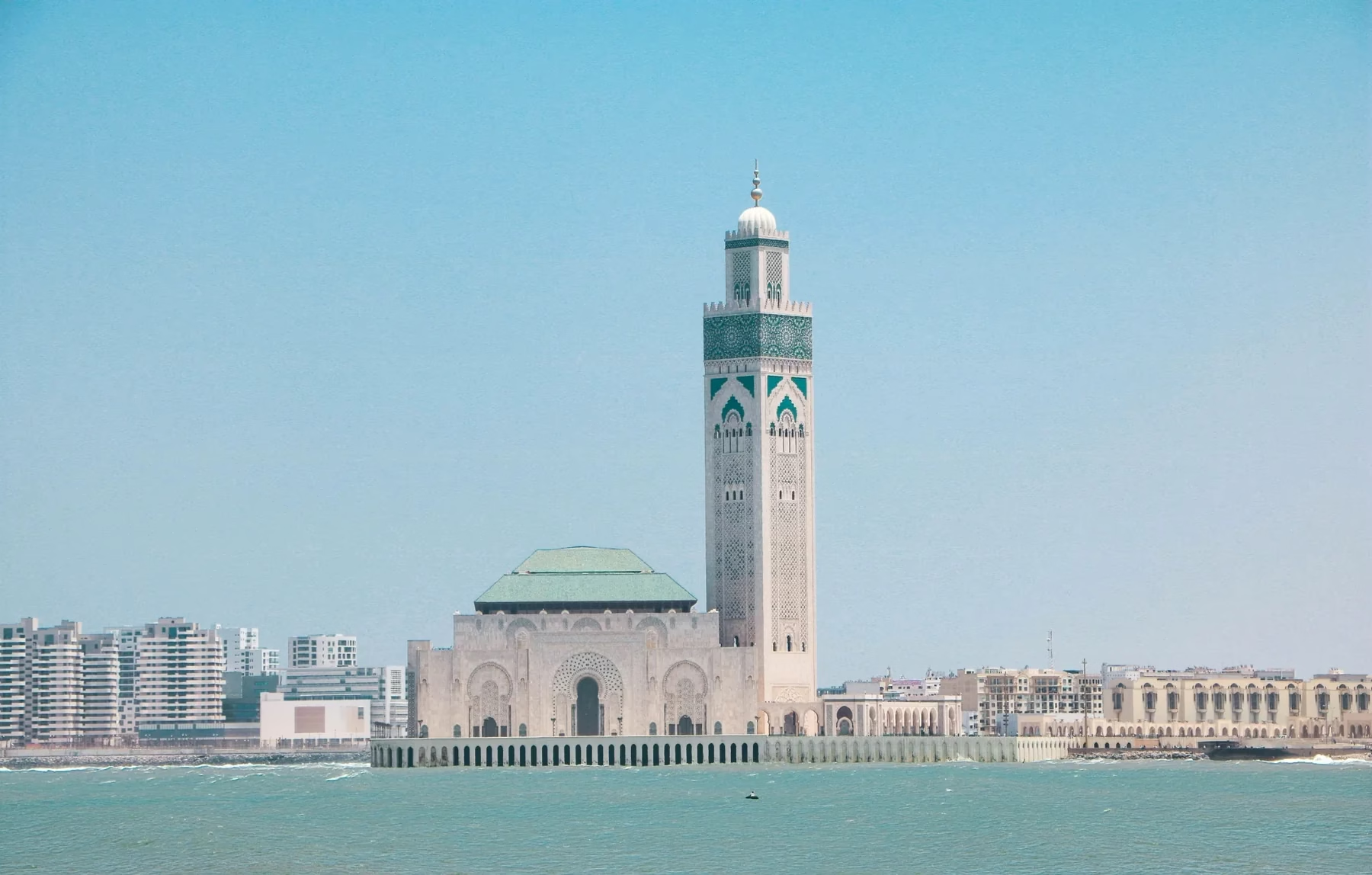
Between matches, leave time for the Hassan II Mosque area, the Corniche and the city’s architecture, rather than treating Casablanca only as an airport transfer. The proposed World Cup stadium is Grand Stade Hassan II in the Casablanca/Benslimane area, not the centrally located Mohammed V Complex. A hotel advertised as being in Casablanca should not automatically be considered close to the new venue.
For a longer journey ending in Marrakech, the 6-day Casablanca to Marrakech tour is a route example to adapt, not six spare days into which extra matches can simply be inserted. Add nights wherever football makes your schedule less flexible.
Rabat
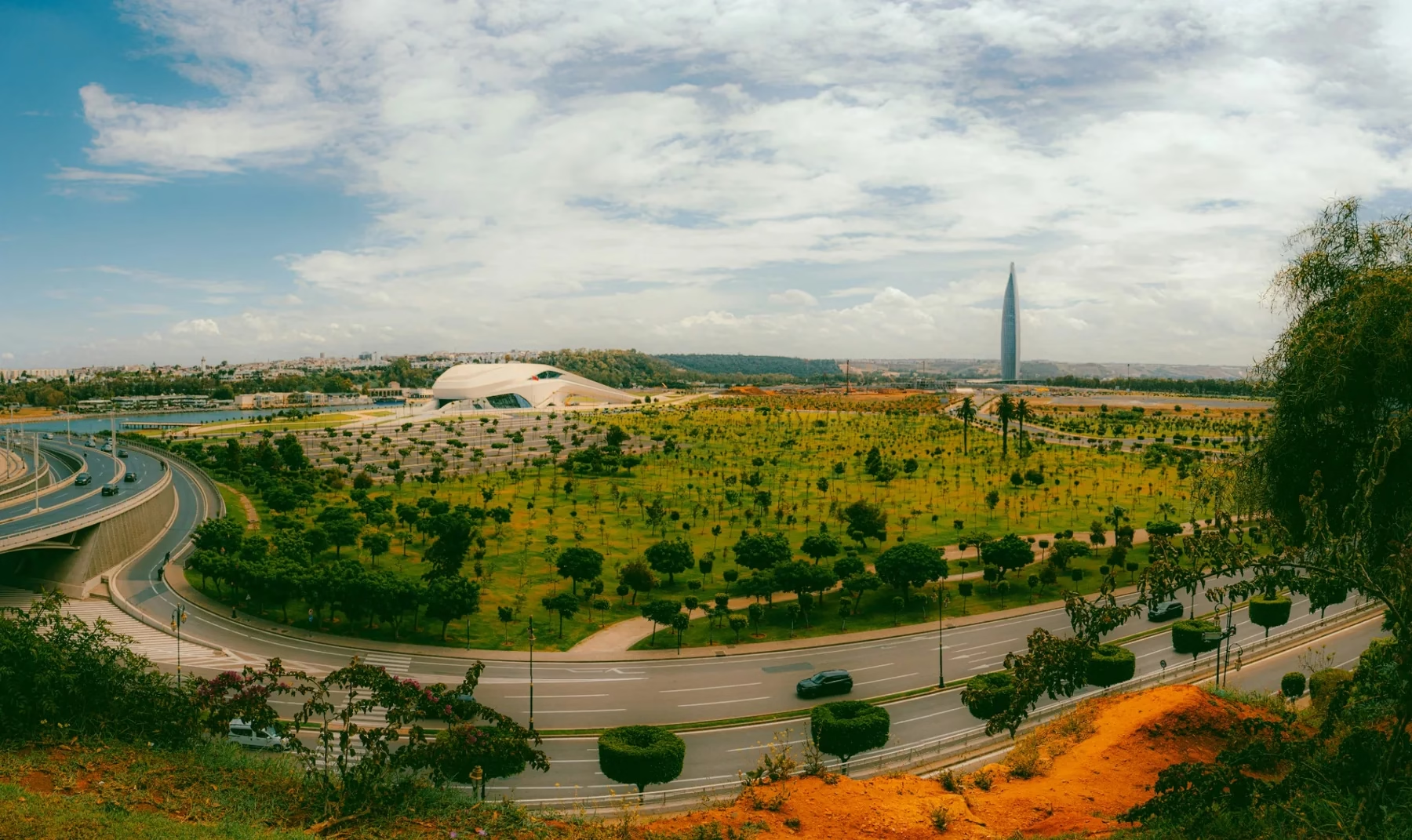
Morocco’s capital pairs Prince Moulay Abdellah Stadium with sightseeing that does not require a cross-country excursion. Hassan Tower, the Mohammed V Mausoleum and the Kasbah of the Udayas are useful priorities for a non-match day. The official Rabat destination guide provides background on the city’s heritage.
Rabat’s rail links make it a logical partner to Casablanca. Staying in one city and visiting the other can reduce hotel changes, but do not assume an ordinary train timetable will meet a late kick-off. Decide where to sleep after checking the last suitable service and the journey from the stadium to the station.
Tangier
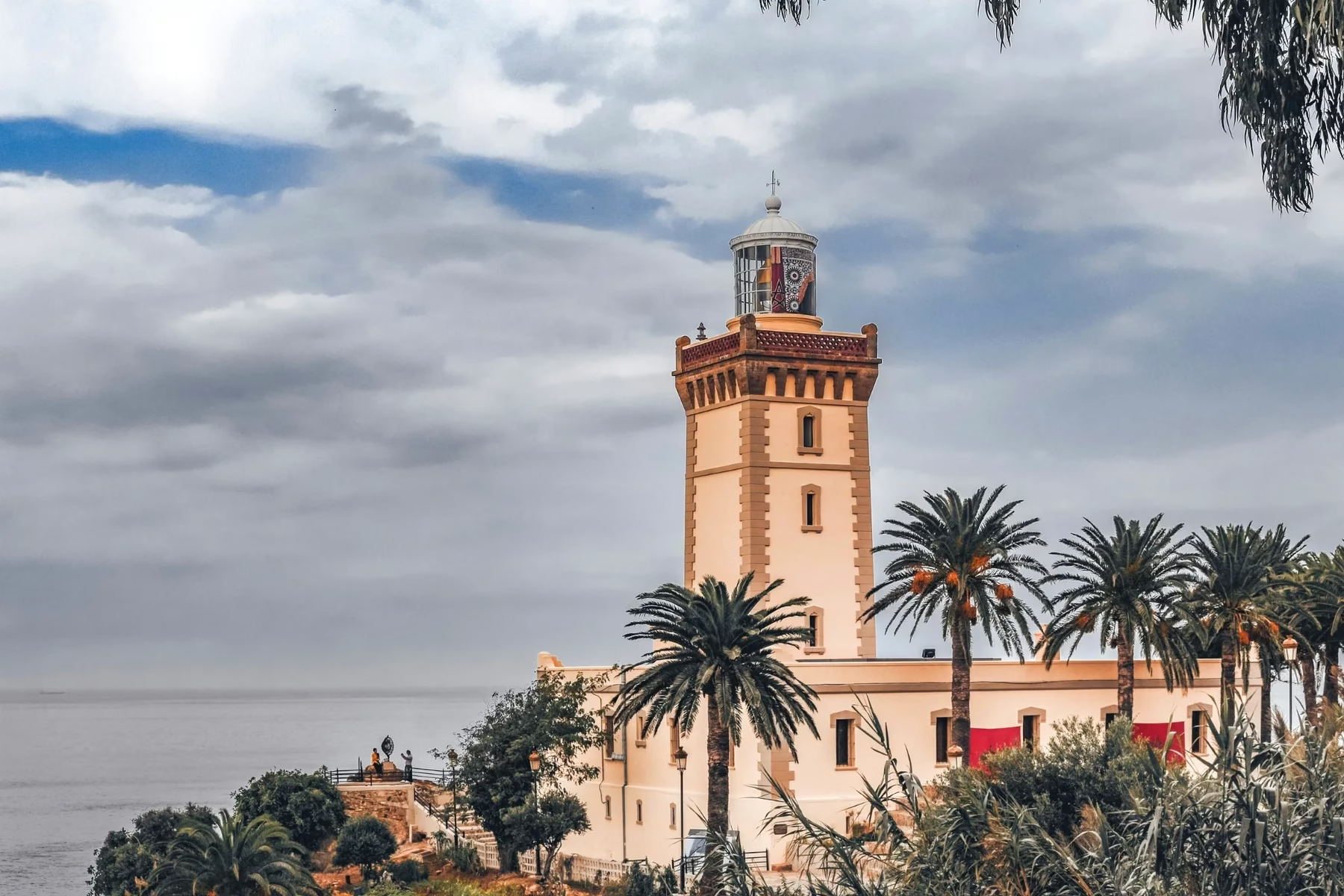
Tangier brings together northern Morocco, Al Boraq rail connections and access to travel between Morocco and Spain. Its principal bid venue is the Grand Stadium of Tangier, also known as Grand Stade de Tanger. The medina, kasbah and Cape Spartel give you options without leaving the region; see the official Tangier guide for destination background.
Chefchaouen is a natural road-based extension when you have an overnight gap. With considerably more time, continue through Fes toward Marrakech. Our 5-day Tangier to Marrakech tour illustrates that direction of travel, but it is a fast-paced route. Match days and recovery time should extend it, not replace its sightseeing days.
Marrakech
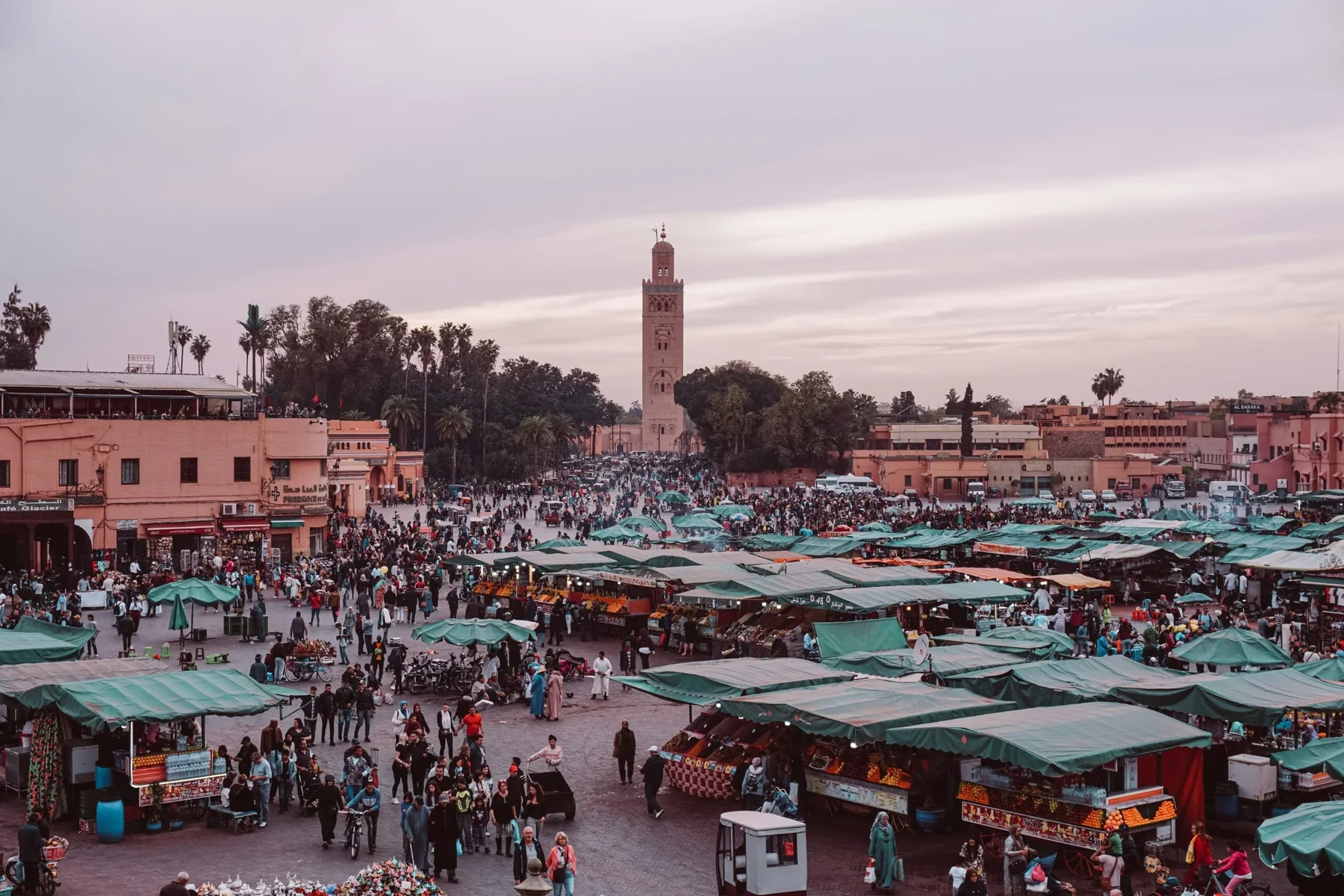
Marrakech is especially useful when you want your World Cup trip to feel like a holiday rather than a series of transfers. Marrakech Menara Airport, a broad choice of hotels and riads, and the city’s southern location make it a strong starting or finishing point. Grand Stade de Marrakech is the principal stadium in the bid.
Give the medina more than a rushed afternoon. You can explore the souks, spend an evening around Jemaa el-Fna and leave another day for gardens, food or a slower walk through a different quarter. The Moroccan National Tourist Office’s Marrakech medina guide explains the main cultural setting.
Choose accommodation according to both sightseeing and match-day access. A medina riad offers a different experience from a hotel with straightforward vehicle access in a modern district. Beyond the city, the Atlas Mountains and Essaouira suit shorter extensions; Ait Ben Haddou, Dades and Merzouga belong in a multi-day road itinerary. Do not treat the Sahara as a Marrakech day trip.
Agadir
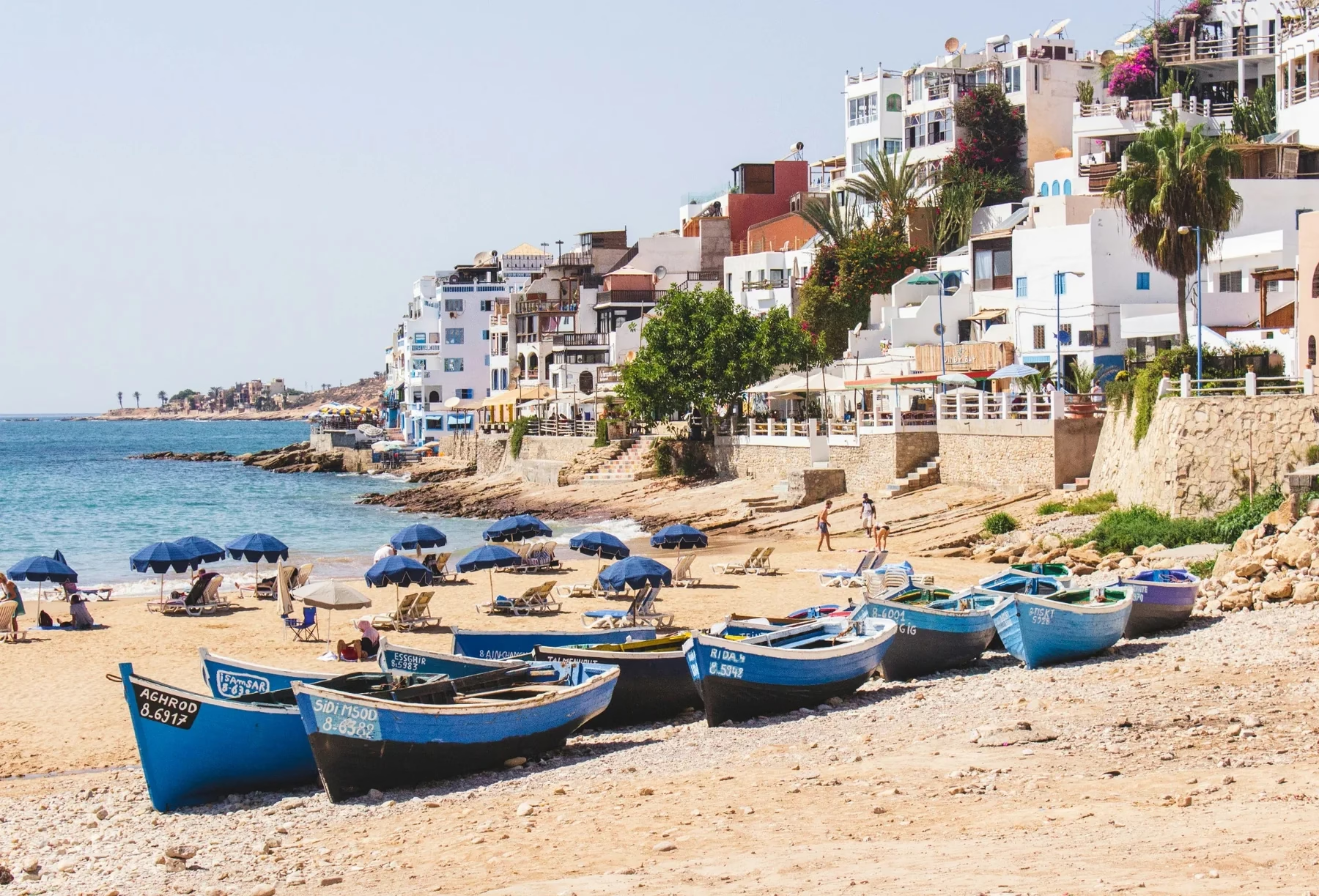
Agadir offers a different rhythm: Atlantic-front hotels, beach time and coastal trips around a match at Grand Stade d’Agadir, also called Stade Adrar. Agadir Al Massira Airport is its air gateway. The official Agadir-Taghazout guide highlights the seafront and surrounding coast.
This is a sensible base for travelers who prefer a few nights in one hotel rather than daily packing. Taghazout can add a coastal stay, while Marrakech works as a separate inland stop. Allow a proper transfer day when changing regions; a beach hotel is not necessarily convenient for a late stadium return.
Fes
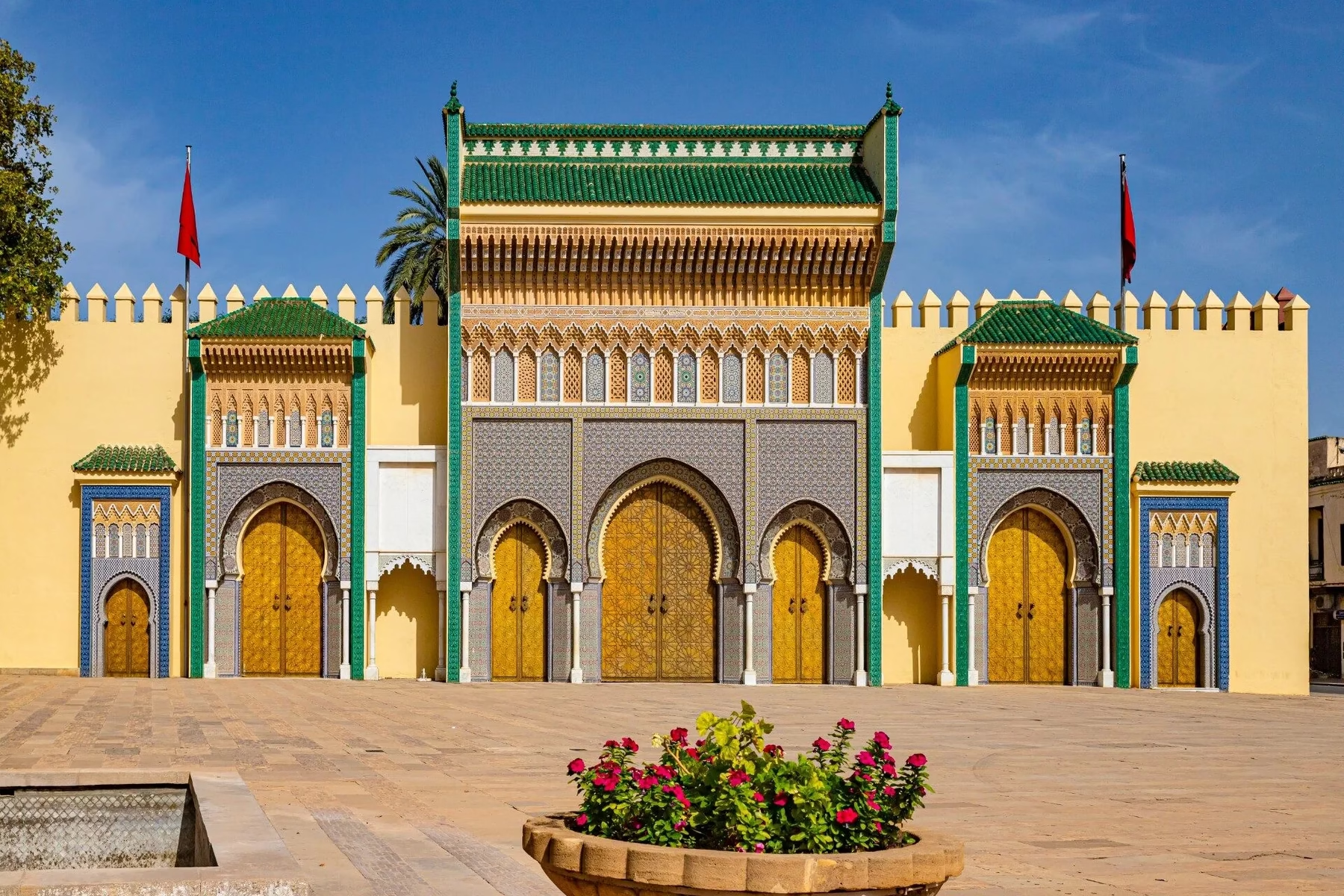
Fes is the strongest choice here for travelers who want an extended medina visit alongside football. Its principal bid venue is the Grand Stadium of Fes, also described as the Complexe Sportif de Fes. Fes Saiss Airport and conventional rail connections support a city-based visit; the official Fes guide introduces its medina and craft heritage.
Stay long enough to explore rather than arriving late and leaving immediately. Fes also connects naturally with a road journey through the Middle Atlas toward Merzouga, continuing to Marrakech instead of returning the same way. The 5-day Fes to Marrakech itinerary is one option to adapt when your next match or departure is in southern Morocco.
Browse Morocco’s World Cup Cities
Use this comparison to choose a base, not to infer confirmed match allocations. Airport names follow ONDA’s airport network. Side trips are suggestions to assess against your available days.
| City | Main/proposed stadium | Best known for | Transport gateway | Good side trips | Best traveler fit |
|---|---|---|---|---|---|
| Casablanca | Grand Stade Hassan II; new project in the Benslimane area | Hassan II Mosque, architecture, Atlantic setting | Mohammed V Airport; Casablanca rail stations | Rabat; longer onward circuits | International arrivals and multi-city trips |
| Rabat | Prince Moulay Abdellah Stadium | Capital-city heritage, Udayas, Hassan Tower | Rabat-Sale Airport; Rabat Agdal station | Casablanca; Sale | A focused cultural stay with rail access |
| Tangier | Grand Stadium of Tangier | Medina, kasbah, northern coast | Ibn Battouta Airport; Al Boraq; regional ferry ports | Cape Spartel; Chefchaouen with extra time | Morocco-Spain combinations |
| Marrakech | Grand Stadium of Marrakech | Souks, Jemaa el-Fna, riads | Menara Airport; Marrakech railway station | Atlas Mountains; Essaouira; multi-day Sahara routes | Football plus a varied southern holiday |
| Agadir | Grand Stadium of Agadir / Stade Adrar | Beach stays and Atlantic coast | Al Massira Airport; road connections | Taghazout; Marrakech as a separate stay | A slower hotel-based trip |
| Fes | Grand Stadium / Complexe Sportif de Fes | Medina, architecture and crafts | Saiss Airport; Fes railway station | Middle Atlas; multi-day Merzouga route | Culture and one-way desert itineraries |
Morocco’s 2030 World Cup Stadiums
The six principal venues below belong to Morocco’s World Cup planning framework. Capacity needs a date and a context. CAF’s published figures differ between some tournament lists and stadium profiles. For the existing venues, the dated references below are background information, not certified September 2026 operating capacities or final 2030 saleable seating.
Unless another source is identified, capacity references come from CAF’s January 27, 2025 host-venue announcement. Recheck the eventual FIFA stadium guide before selecting seats or accommodation.
Grand Stade Hassan II – Casablanca/Benslimane
Status: new stadium project under construction, not an operating stadium to visit. Planned capacity: 115,000, according to project architect Populous. The project is in the Casablanca/Benslimane area and is distinct from Casablanca’s Mohammed V Complex.
Its scale is important to Morocco’s bid, but it is not a confirmed World Cup final venue. For accommodation, compare the full journey between your hotel, stadium and onward transport. A Casablanca city-center stay may work better for sightseeing, while a property closer to the venue may suit a short match-focused visit. Neither choice guarantees easy access until traffic and transport arrangements are published.
Prince Moulay Abdellah Stadium – Rabat
Status: the rebuilt stadium was inaugurated on September 5, 2025. Morocco’s public facilities agency, ANEP, reports more than 68,000 seats. That is a source-specific opening reference, not the final World Cup seating plan.
For a mixed football-and-culture stay, compare central Rabat and accommodation with convenient access to Rabat Agdal station. Plan the separate stadium transfer: arriving by intercity train does not place you at your turnstile. Keep Hassan Tower and the Udayas for a non-match morning rather than crowding them into your arrival window.
Grand Stadium of Tangier
Capacity reference: 75,600 in CAF’s January 2025 list. It is an existing major venue used for AFCON 2025, rather than a new stadium awaiting its first tournament. Any later works and its final 2030 configuration require fresh confirmation.
A central Tangier hotel can balance sightseeing with onward rail or ferry travel, but check the actual transfer to the stadium. A station-area hotel may suit frequent rail journeys. Do not choose a property purely because it is described as near the port: confirm which port and which station your journey uses.
Grand Stadium of Marrakech
Capacity reference: 41,245 in CAF’s January 2025 list; this is not a prediction of its 2030 capacity. The existing stadium hosted AFCON 2025. Future works, public access and World Cup transport should be checked separately.
Choose between a medina riad and a hotel with simpler vehicle access according to your priorities. Confirm the riad’s actual pickup point before a match-day transfer. Marrakech works particularly well for supporters who want several nights in one place, with the city and an Atlas outing on different days.
Grand Stadium of Agadir
Capacity reference: 41,144 in CAF’s January 2025 list. Also called Stade Adrar, this existing AFCON 2025 venue should not be confused with a beachfront attraction. Its final World Cup layout and access plan are still separate planning questions.
A seafront hotel or a longer coastal stay can be appealing between games, but investigate the full stadium journey and return pickup. Travelers staying around Taghazout should plan that additional road segment rather than assuming the stadium is part of the resort area.
Grand Stadium of Fes
Capacity reference: 35,468 in CAF’s January 2025 list, not a verified final 2030 figure. The existing complex was part of AFCON 2025; later renovations and tournament-specific seating must be checked with official organizers.
A medina riad suits a cultural stay, while accommodation in the newer city may simplify vehicle access. Ask about the walk between your door and the pickup point. Fes is also a sensible place to begin a southbound road itinerary after your last local match, provided the next fixed commitment leaves enough time.
Other Major Football Stadiums in Morocco
These names appear in Moroccan football and AFCON coverage, but they should not be added automatically to the six principal World Cup venues. CAF’s AFCON venue guide describes several of these facilities.
Mohammed V Complex – Casablanca
This established Casablanca football venue is different from the new Grand Stade Hassan II. A match ticket, hotel search or stadium photograph labeled Mohammed V should not be treated as referring to the Benslimane project.
Moulay El Hassan Stadium – Rabat
Moulay El Hassan is another Rabat venue associated with AFCON 2025. Its name is easily confused with Prince Moulay Abdellah, so use the exact venue named on an official ticket.
Rabat Olympic Stadium
The Olympic stadium is a separate facility within Rabat’s wider sporting infrastructure. Do not assume that directions, gates or accessibility information for it also apply to the main Prince Moulay Abdellah stadium.
Al-Medina Stadium – Rabat
Al-Medina appears in CAF’s January 2026 match information. That establishes its use in that tournament, not its selection for 2030. Follow the eventual FIFA venue naming rather than assuming different tournament lists are interchangeable.
How to Travel Between Morocco’s World Cup Host Cities
Choose transport in two stages: first between cities, then between your accommodation and the stadium. A fast intercity journey can still involve station queues, local traffic, a walk to the entrance and security checks. Build the complete journey, not just the advertised train or flight time.
Train
ONCF’s published Al Boraq network connects Tangier, Kenitra, Rabat Agdal and Casablanca Voyageurs. Conventional services and connections extend travel toward Fes and Marrakech. Do not describe every Moroccan rail journey as high-speed.
The Kenitra-Marrakech high-speed extension is an infrastructure project, not a service this guide assumes is already running. For Agadir, compare available flights and road transport rather than building a 2030 itinerary around an unverified direct train. Confirm actual timetables, station names, reservations and late-evening options after fixtures are released.
Private Driver
A private vehicle is useful when your route leaves the main rail corridor: Chefchaouen, Atlas villages, Ait Ben Haddou, Dades and Merzouga involve different logistics from a straightforward city-to-city train trip. It also allows you to organize luggage and sightseeing stops as part of a transfer.
Agree on the route, vehicle, luggage capacity and pickup locations beforehand. A private driver does not remove road restrictions or guarantee access to a stadium perimeter. Arrange a return meeting point and a way to contact each other if crowds prevent pickup at the original location.
Domestic Flights
Flights may be useful when a longer overland transfer would consume a large part of your free time. Compare the complete airport-to-hotel journey, baggage allowance and connection risk, not just time in the air. Do not assume a current domestic route or frequency will operate unchanged in 2030.
Car Rental
A rental car can suit a self-directed road trip, but it may be unnecessary when your whole itinerary follows rail-linked cities. Before choosing it, compare parking, hotel access, unfamiliar driving and the need to collect the car after matches.
Check the rental company’s license, insurance and deposit conditions. For a one-way route, confirm the permitted return location and any fee. Cross-border use and ferry transport require explicit rental-company approval and the relevant border paperwork; do not assume a Morocco rental can continue into Spain.
Traveling Between Morocco and Spain
Compare flights with a ferry route that fits your actual cities. The Tanger Med passenger-port operator lists ferry connections with Spain, including Algeciras. Tanger Med and Tangier Ville are different ports, so check the terminal printed on your reservation before booking transfers.
A crossing also involves check-in, border procedures and onward ground travel. Avoid planning a border crossing and an important match on a tightly connected same-day schedule. This guide does not assume special World Cup ferries or a future fixed crossing timetable.
Where Should You Stay During the 2030 World Cup in Morocco?
The best place to stay depends on how many nights you have and what happens after the match. A stadium-area hotel may help a short football-focused visit, but a central hotel may be more useful for a longer holiday. Until official access plans are available, a nearby address alone does not establish an easy walking route.
Casablanca: compare city-center sightseeing and rail access against the eventual transfer to the Hassan II stadium site. Do not mistake accommodation near Mohammed V Complex for accommodation near Grand Stade Hassan II.
Rabat: central neighborhoods suit heritage visits; proximity to an appropriate railway station may matter more when you are continuing to Casablanca or Tangier. Verify the post-match return separately.
Tangier: choose the medina or central waterfront for a city stay, or prioritize station access when rail travel is the main constraint. Confirm vehicle access and luggage handling for accommodation inside the old town.
Marrakech: riads offer a courtyard-house setting, while hotels in areas such as Gueliz or Hivernage may offer more direct vehicle access. Ask about the actual pickup point, stairs, cooling and late check-in rather than deciding from photographs alone.
Agadir: a seafront hotel favors beach time; a Taghazout stay makes the coast a larger part of the trip but adds another transport consideration. Check the match-day transfer before choosing a resort farther from the city.
Fes: choose a medina riad for historic surroundings or a newer-city hotel for simpler car access. Travelers with mobility needs should verify the full route from the street to the room.
Demand could be high, but exact 2030 hotel prices cannot responsibly be predicted here. Consider flexible reservations once your match plans become clearer. Read cancellation deadlines, minimum-stay rules and what happens if you change cities; avoid constructing a complicated non-refundable route around a hoped-for fixture.
What to Do Between World Cup Matches in Morocco
Use the location of your next match to decide what to add. The most rewarding free day is often spent properly in the city where you already are, not reaching the farthest attraction on a map.
Visit Marrakech
Split the medina, souks and Jemaa el-Fna across different parts of your stay. Reserve a non-match day for a longer outing. A relaxed evening meal after sightseeing is more useful than a schedule that leaves you choosing between the stadium and the city you came to see.
Explore Fes
Allow a dedicated medina day, particularly when architecture and crafts matter to you. A local guide can help you organize an efficient walk around your interests. Keep this separate from a long arrival transfer so the historic city does not become only a place to sleep.
Visit Chefchaouen
The blue medina and Rif setting of Chefchaouen fit most naturally into a northern route. Consider an overnight visit from Tangier or on the way toward Fes. It is not a sensible addition to one spare day in Marrakech.
Experience the Sahara Desert
Merzouga belongs in a dedicated road itinerary with enough time for the journey and the return to your next match city. A camp stay and a dune visit are different experiences from simply reaching the region after a long drive. See the Sahara section below before deciding whether your gap is long enough.
Explore Ait Ben Haddou and the Dades Valley
UNESCO describes Ait Ben Haddou as a traditional earthen ksar. It can be part of the road journey between Marrakech and the southeast, with Dades adding valley scenery farther along the route. Plan these as meaningful stops, not photographs squeezed between two match deadlines.
Visit the Atlas Mountains
From Marrakech, choose a mountain outing that matches your available day and walking ability. A village visit, a gentle walk and a demanding trek are not interchangeable. Confirm road, trail and weather conditions locally, and keep the plan flexible when your football schedule is fixed.
Spend Time on Morocco’s Atlantic Coast
Agadir and the surrounding coast suit a longer hotel-based break; Casablanca and Rabat let you add coastal time without abandoning an urban route. Choose a place that fits the direction you are already traveling rather than crossing the country solely for another beach.
Visit Essaouira
Essaouira combines an Atlantic setting with a historic medina and a slower pace. It is a useful extension from Marrakech or part of a coastal itinerary. Consider two nights when time allows, particularly when you want a break from transfers; do not combine it with a rushed Sahara detour in the same short gap.
Can You Visit the Sahara During the 2030 World Cup?
Yes, when the gap is long enough and the seasonal conditions suit you. Count the complete route from your current city to your next match city, not just the desert night. Our planning recommendation is to return to that next city at least the day before an important match; this is a buffer, not an official tournament rule.
From Marrakech: a multi-day journey can connect the Atlas crossing, Ait Ben Haddou, Dades and Merzouga. Returning to Marrakech requires a different time calculation from continuing to Fes. The 6-day Sahara tour from Marrakech is a starting point for discussing a less compressed journey, with match buffers added separately.
From Fes: a southbound route through the Middle Atlas toward Merzouga can continue to Dades and Marrakech. This is particularly useful when your next match or international departure is in Marrakech, because the desert becomes part of the transfer rather than an extra out-and-back trip.
From Casablanca or Tangier: allow additional days to reach the desert gateway and your eventual destination. These are better starting points for a longer Morocco circuit than for a short Sahara escape between closely spaced matches.
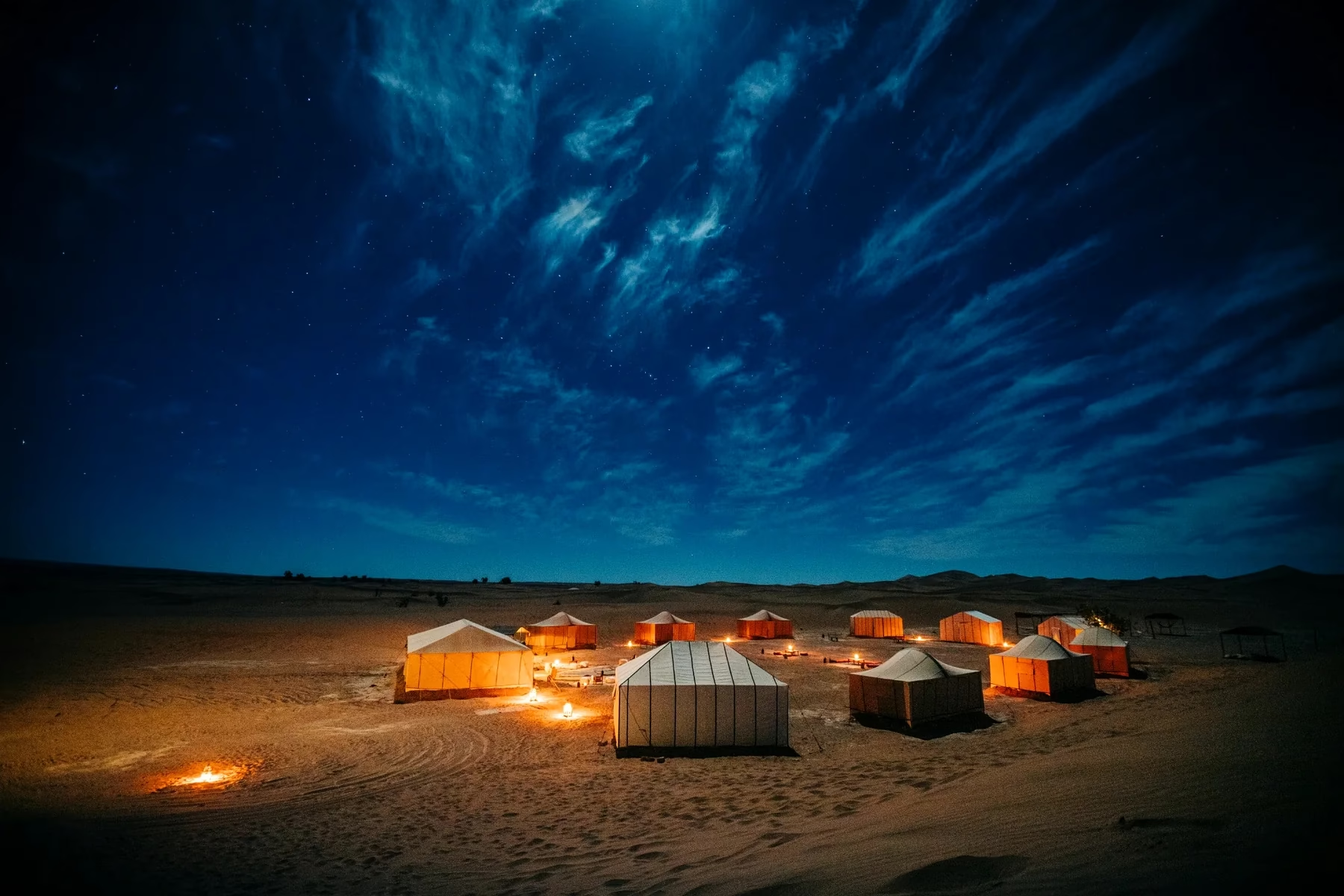
Ask about camel trekking versus a 4×4 camp transfer, the distance between the transfer point and your camp, bathroom arrangements and luggage storage. A vehicle transfer may suit travelers who do not want to ride a camel, but it does not automatically make a camp wheelchair-accessible.
If the tournament follows FIFA’s intended summer window, heat deserves special attention. Confirm sleeping-room cooling, vehicle air-conditioning and the timing of outdoor activities rather than assuming a tent will be comfortable overnight. Be prepared to choose the coast or a city stay instead. Our guide to Morocco’s seasons provides a broader planning comparison.
Morocco World Cup 2030 Itinerary Ideas
These are route suggestions, not match schedules. Free days include transfers and the recommended return buffer; match days are not spare sightseeing days. When you are still choosing trip length, read how many days you need in Morocco alongside your eventual fixture list.
2-3 Free Days
Stay local or within one region. From Casablanca or Rabat, explore both cities and return to your match base without adding distant destinations. From Marrakech, choose the city plus an Atlas outing, or an Essaouira overnight only when the return leaves a clear buffer.
From Tangier, an overnight in Chefchaouen can work with sensible transfer planning. From Agadir, use the time for the coast. From Fes, favor the medina and a nearby outing. We do not recommend forcing Merzouga into this short gap.
4-5 Free Days
From Marrakech, a simple example is one city day, two nights in Essaouira and a return day before the next match. From Tangier, combine Tangier and Chefchaouen; continue to Fes only if your next fixed commitment is there or the return fits comfortably.
From Casablanca, a Rabat-and-Fes combination may be more useful than a desert dash. From Agadir, divide your time between the city and nearby coast, or transfer to Marrakech if the next match is there. Choose one coherent region rather than collecting stops.
5-6 Free Days
A one-way Sahara journey becomes more practical when it connects two cities you already need to visit. For example, a six-day Fes-to-Marrakech gap could use day one for the southbound drive to Merzouga, day two around the desert, day three toward Dades, day four through Ait Ben Haddou to Marrakech, and days five and six for city time and contingency.
The first day remains a long road day. Travelers who prefer shorter drives can split it and use one of the additional days, or omit the desert entirely. For the reverse direction, a 5-day Marrakech to Fes desert route can be adapted when Fes is your next destination; allow a separate buffer before the match.
7-10 Free Days
You can build a substantial one-way route, but seven days and ten days are not the same trip. With seven, choose either a northern cultural route or a focused Fes-Merzouga-Marrakech journey. With nine or ten, a Casablanca arrival can connect Rabat, Fes, the desert and Marrakech with more room for full sightseeing days.
The 9-day Casablanca to Marrakech tour is one route to assess against your fixtures. Do not assume its sightseeing program includes additional match days. Remove a stop or add nights when the football schedule interrupts the journey.
10+ Free Days
Use extra time for longer stays before adding every famous destination. A 14-day sightseeing example, excluding match days, could run: day one Casablanca; day two Rabat; day three Tangier; days four and five Chefchaouen and onward to Fes; day six Fes; day seven the Middle Atlas toward Merzouga; day eight the desert region; day nine Dades; day ten Ait Ben Haddou and Marrakech; days eleven and twelve Marrakech; and days thirteen and fourteen Essaouira.
This example finishes in Essaouira. Add the necessary return transfer and buffer if your flight or next match is in Marrakech or another city. With only ten days, omit Tangier or Essaouira rather than compressing all fourteen days. Our 10-day tour from Casablanca provides another starting route to customize around your priorities.
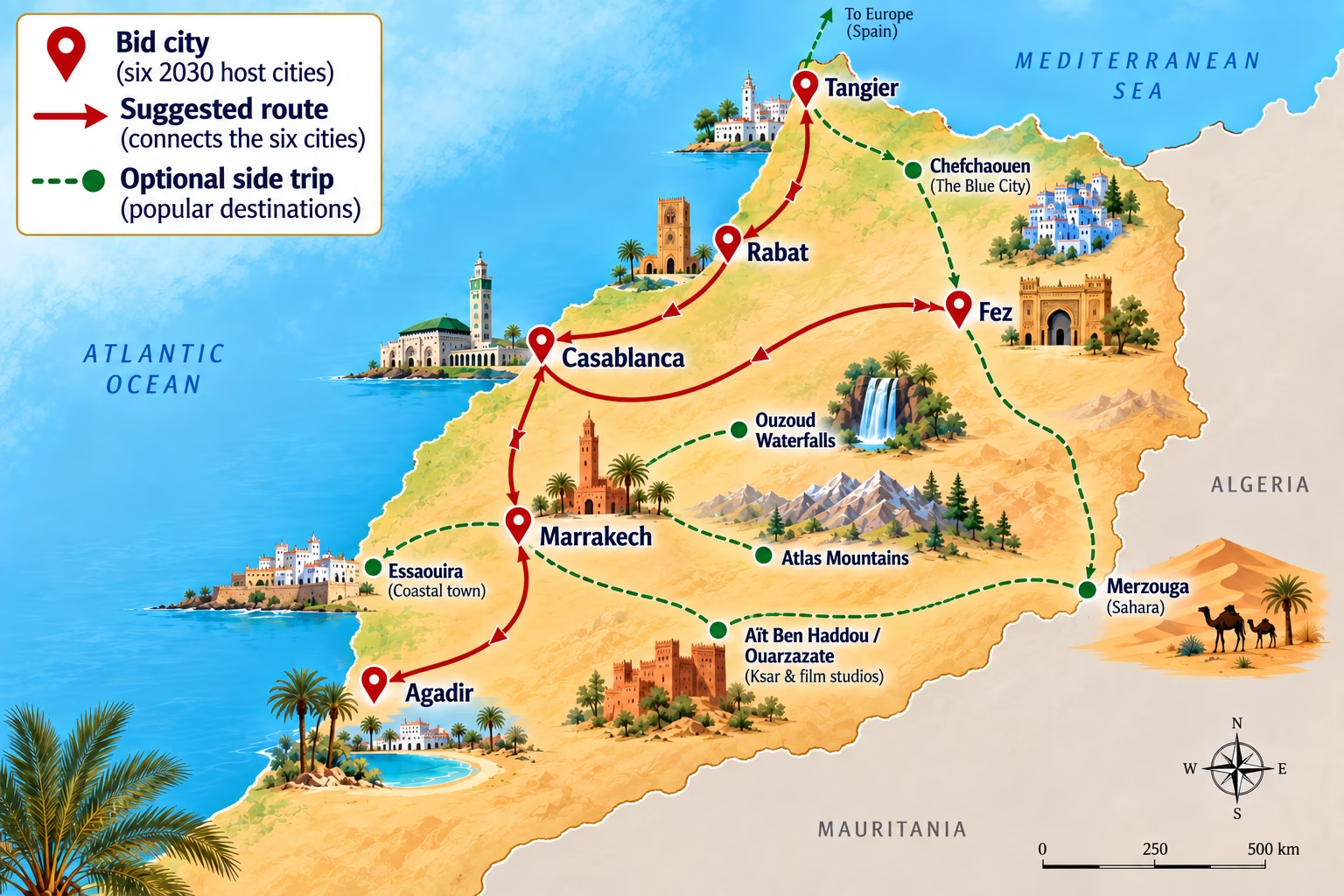
Combining Morocco, Spain and Portugal for World Cup 2030
Plan the three countries as connected travel regions, not a sequence of return trips to the same airport. A northern Morocco stay may combine naturally with southern Spain by ferry, while a flight can be more sensible when your actual match cities are farther apart. Portugal should be included according to its confirmed fixtures and your onward flights, not just because it is another host.
Compare open-jaw flights, meaning arrival in one city and departure from another. Build in time for airport or port procedures, baggage collection and the journey to your accommodation. Separate tickets need particular care because a delayed first journey may leave the next booking unprotected.
Check Morocco’s entry requirements separately from those for Spain and Portugal. Do not assume one host-country permission covers all three. Travelers coming from the United States or Canada may also find our Morocco travel guide for North American visitors useful for the wider arrival-planning questions.
World Cup 2030 Morocco Tickets
No official 2030 ticket-sale opening date was verified for this September 12, 2026 update. Start with FIFA’s official ticket information and follow the channels FIFA authorizes for the tournament. Do not use an unrelated tournament’s sale dates, ticket app or entry process as a substitute.
Be cautious about sellers claiming guaranteed seats, a guaranteed final venue or early access without a verifiable FIFA authorization. Check exactly what a travel package includes: arranging a private itinerary is different from supplying official match admission. Imagine Morocco’s travel planning described here does not promise World Cup tickets.
This section needs a fresh check when FIFA announces sales phases, purchasing rules, any official resale process and hospitality arrangements.
Entry Requirements and Visas for Morocco
Entry rules depend on your passport nationality, travel document and circumstances, and they can change before 2030. The following is a current planning reference, not a guarantee of admission or a prediction of World Cup rules. Confirm requirements with Moroccan consular authorities and your own government’s advice before making final arrangements.
United States: the U.S. State Department states that a tourist visa is not required for stays of 90 days or less.
Canada: Canadian government guidance states that a tourist visa is not required for stays of less than 90 days. Check the permitted duration and all document conditions for your own trip.
United Kingdom: UK government entry guidance allows visa-free tourism for up to 90 days for the passport holders covered by that guidance.
Australia: Smartraveller says a tourist visa is generally not required for stays of less than 90 days.
European Union: check the rules for your individual passport nationality rather than treating EU residence as citizenship. For example, France’s official Morocco entry guidance requires French travelers to carry a passport valid for their planned stay; a national identity card alone is not sufficient. Do not extrapolate one country’s passport rules to every traveler living in the EU.
Verify passport validity, required supporting documents, children’s travel documents and transit-country conditions. Where an electronic application is relevant, use the official Acces Maroc portal to check eligibility. This guide does not assume there will be a special World Cup visa, fan ID or automatic entry permission attached to a match ticket.
Accessibility at Morocco’s World Cup Stadiums
A stadium’s general accessibility features do not establish the final World Cup ticketing and assistance arrangements. Check FIFA and the official venue information for accessible seating, companion tickets, step-free entrances, toilets, assistance procedures and any documentation requested for a particular ticket category.
Confirm the whole journey, not just the seat: airport or station assistance, an appropriate vehicle, the permitted drop-off point, the route through security and the return after the match. For hotels and riads, ask for specific details about entrances, lifts, bathroom layout and the route from the street.
This guide does not certify that every venue, riad or desert camp is accessible. Travelers should obtain direct confirmation of the facilities they need before making non-refundable bookings.
World Cup 2030 Morocco Travel Tips
Build around confirmed fixtures. Put your matches, arrival and departure on the calendar first. Then add sightseeing, keeping long transfers away from match-day deadlines.
Group nearby places. Casablanca and Rabat are a useful pairing; Tangier and Chefchaouen form a northern combination; Marrakech and the Atlas or Essaouira make a focused southern break. The Sahara needs a different time allowance.
Plan the return, not only the arrival. Check where you will be collected after a match, how you will contact your driver or hotel, and what happens if a match finishes later than expected.
Book with flexibility where possible. Review cancellation terms and separate guaranteed arrangements from requests. Keep copies of reservations and official ticket instructions accessible.
Check climate and comfort. Match dates, inland versus coastal locations, accommodation cooling and your tolerance for long road days all affect the itinerary. Do not assume that a route suited to spring will feel the same during a summer tournament.
Respect local customs and use reliable providers. Dress considerately in cultural settings, ask before closely photographing people, and follow venue security instructions. Review current government travel advice and appropriate travel insurance before departure.
Planning a Private Morocco Trip Around Your World Cup Matches
Imagine Morocco can help design a private and customizable Morocco itinerary around your confirmed match dates. The starting point is your arrival city, departure city, available free days and preferred pace, not a fixed list of destinations that everyone must visit.
That might mean Casablanca to Marrakech, Tangier through Chefchaouen and Fes, Fes through Merzouga to Marrakech, a Marrakech-based Sahara journey or a longer circuit with the coast. Add full sightseeing days where they matter and remove detours when football makes the timetable too tight.
Share your confirmed fixtures and any accessibility, room or transport requirements before the route is finalized. Tour arrangements remain separate from FIFA match-ticket purchases unless a specific, verified arrangement is explicitly stated.
Frequently Asked Questions
How many stadiums will host the 2030 FIFA World Cup in Morocco?
The joint bid includes six principal Moroccan stadiums. Treat that as the bid framework, not a final allocation of matches or rounds. Consult the eventual FIFA venue and fixture information before booking around one stadium.
Which Moroccan cities will host World Cup 2030 matches?
The six Moroccan cities included in the bid are Casablanca, Rabat, Tangier, Marrakech, Agadir and Fes. The match schedule for each city must be checked separately when FIFA publishes it.
When will the 2030 FIFA World Cup take place in Morocco?
FIFA’s published planning outline points to June and July 2030, with centenary matches in South America before the main tournament. An intended timeline is not a confirmed Moroccan fixture list, so do not rely on illustrative dates to book a particular match-city stay.
What is the largest stadium in Morocco?
Tangier is the largest existing venue in CAF’s January 2025 list, at 75,600 seats. Grand Stade Hassan II is designed for 115,000, but remains a construction project. These are dated and planned figures respectively, not a current certificate of operating capacity.
Will the World Cup final be played in Morocco?
No final-venue award was verified for this update. The Hassan II stadium project should not be described as the confirmed final venue. See the dated update below and wait for FIFA’s decision.
How can I buy tickets for World Cup matches in Morocco?
Use FIFA’s official ticket channels and any sellers FIFA explicitly authorizes. No official 2030 sale-opening date was verified for this update. Do not confuse a tour reservation with admission to a match.
What transportation options are available to reach the stadiums?
Depending on the city and the final access plan, you may combine intercity rail or flights with local transport, taxis or a private transfer. World Cup shuttle routes, parking and designated drop-off arrangements need official confirmation.
Are Morocco’s stadiums accessible for visitors with disabilities?
Check the final FIFA and venue guidance for the specific stadium and ticket category. Accessible seating alone does not confirm a step-free trip from your hotel. Verify assistance, entrances, toilets, companion arrangements and suitable transport.
Where can I find seat maps and gate information for each stadium?
Use the official FIFA ticketing information, your ticket instructions and the venue’s tournament guide when available. Older domestic-league or AFCON plans should not be assumed to match the 2030 seating and security layout.
Can I visit the stadiums outside major tournaments?
Policies vary by venue and can change during construction, renovation or event preparation. Contact the official stadium operator before traveling specifically for a tour. This guide does not promise walk-in visits or access to the Hassan II construction site.
Do I need a visa to visit Morocco for a football match?
It depends on your nationality and travel document. Current short-stay exemptions apply to many visitors, but a match ticket does not replace immigration requirements. Recheck Moroccan consular guidance before traveling in 2030.
Can I visit the Sahara between World Cup matches?
Yes, with sufficient time for the full route, suitable seasonal conditions and a buffer before the next match. Fes and Marrakech usually make more practical gateways than a short detour from Tangier or Casablanca.
How many days should I spend in Morocco during World Cup 2030?
Count match days and transfers first, then add the sightseeing time you actually want. Two or three free days favor one region; a week or more allows a wider route. A longer trip is useful only if the pace remains comfortable.
Can Imagine Morocco organize a private trip around my match dates?
Yes. Trips are private and customizable around confirmed matches, arrival and departure cities, available days and personal interests. Match tickets are a separate arrangement, not an automatic inclusion.
Latest Morocco 2030 Updates
September 11, 2026 – Final venue remains undecided: Associated Press reported FIFA’s response that its decision would come later. Claims by national officials are not a FIFA venue award.
March 19, 2026 – FIFA tournament overview: FIFA’s overview, linked near the start of this guide, describes the host arrangement and intended timeline. It does not provide a complete Moroccan city-by-city fixture list.
September 5, 2025 – Rabat stadium inauguration: ANEP’s official account, linked in the Rabat stadium section, records the inauguration of the rebuilt Prince Moulay Abdellah Stadium. That milestone does not establish its final 2030 match allocation.
April 24, 2025 – Kenitra-Marrakech high-speed rail works launched: the Moroccan government’s report published April 25 describes the project launch. Future service patterns and opening dates must be verified before they are used in an itinerary.
Next items to check are FIFA fixtures and ticket announcements, stadium completion or renovation notices, operational transport changes and official supporter information. Older milestones above are dated deliberately; they are not presented as new September 2026 announcements.
Official Resources
Football: use FIFA’s 2030 tournament hub, the FIFA overview and ticket page linked above for tournament information. CAF sources in this guide concern AFCON venue history; they do not confirm 2030 match assignments.
Travel logistics: consult the linked ONCF network information, ONDA airport directory and Tanger Med passenger-port guidance. Check the actual service for your date rather than assuming today’s schedules or infrastructure plans will apply.
Destinations and entry: the official Casablanca guide, the other linked Moroccan National Tourist Office city guides and official destination directory provide tourism background. Use the government travel pages and Acces Maroc portal in the entry section for nationality-specific checks. AP is identified separately as independent reporting, not an official tournament authority.
Coming to Morocco for the 2030 World Cup?
Once you know your match dates, Imagine Morocco can help create a private itinerary around them, whether your priorities are Marrakech, Fes, Chefchaouen, the Sahara or the Atlantic coast. Start with a suggested route, then adjust it around your confirmed football plans.