

Imagine Morocco · Destination guide
Volubilis Visitor Guide: Roman Ruins, Mosaics, and Planning Your Visit
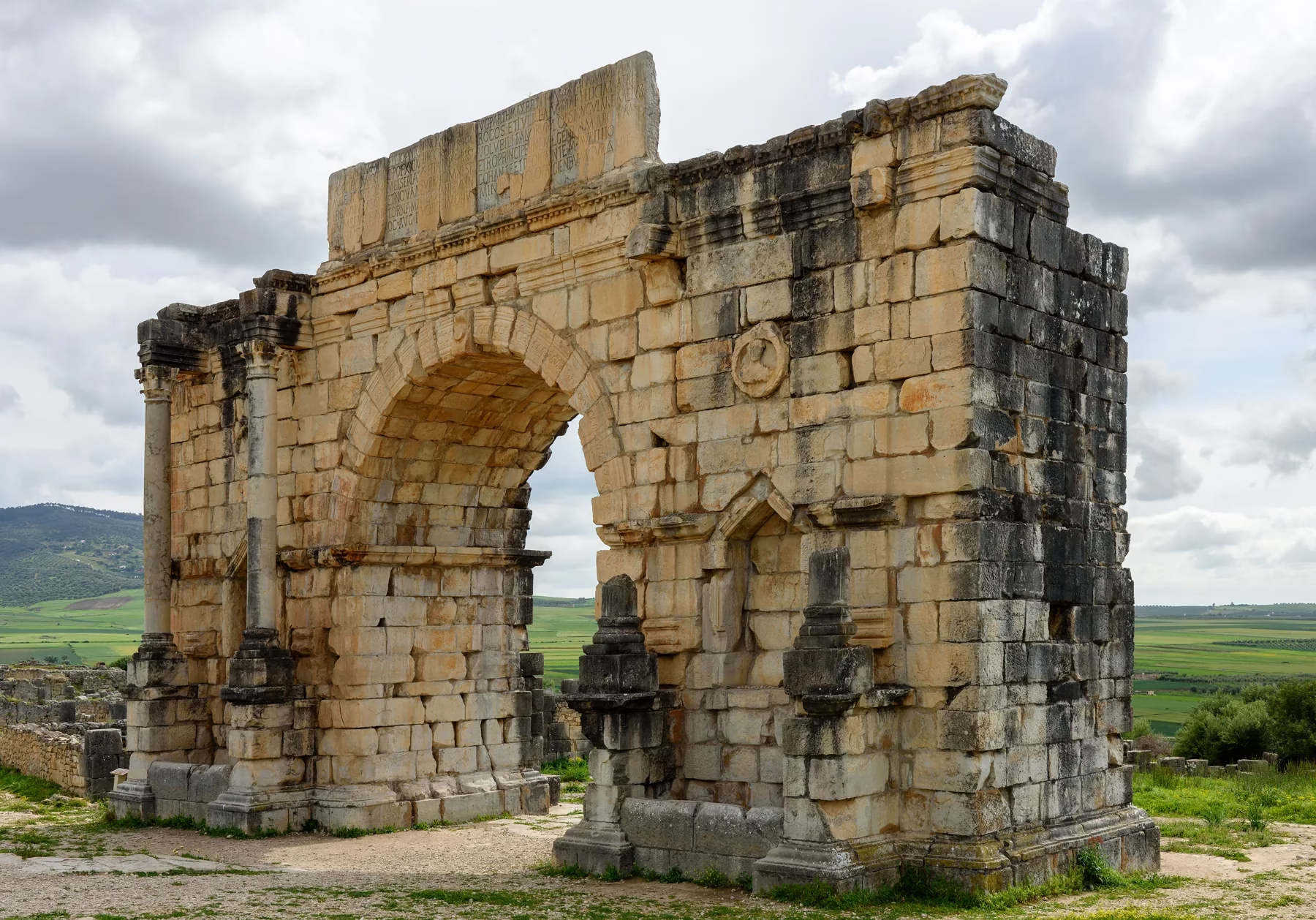
Arch of Caracalla · Photo: Mustang Joe / Wikimedia Commons · CC0. Resized and compressed.

Volubilis is an archaeological site in open countryside, best visited for its Roman-era streets, civic buildings, and surviving floor mosaics. It suits history enthusiasts, but a well-paced walk with clear explanations also works for first-time visitors who know little about the ancient city.
At a glance
| Main appeal | Roman town plan, civic monuments and mosaics |
|---|---|
| Suggested time | Allow 2–3 hours on site, plus transport |
| Suitable season | Spring and fall; early in hot weather |
| How to explore | Walk uneven paths; local guide useful |
What to look for at the ruins
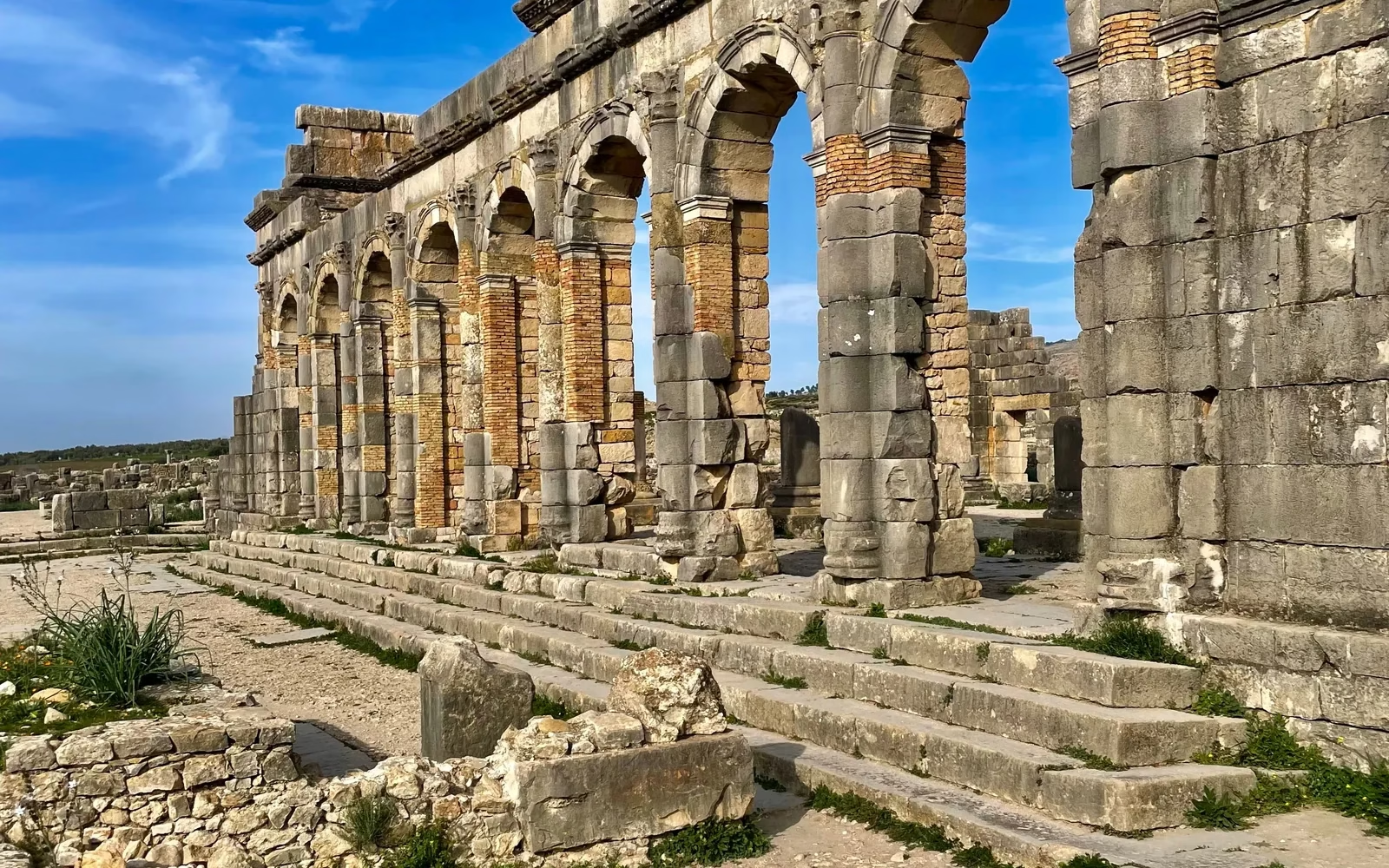
The forum, basilica, and Capitol
Begin with the civic center to understand how public life was organized. Columns, open spaces, and surviving building outlines make more sense when you imagine their functions rather than viewing each as an isolated ruin.
Use a map or guide to distinguish the structures. The UNESCO account of Volubilis also places the Roman remains within a longer history of settlement.
The triumphal arch and main street
The arch provides a recognizable landmark for reading the layout of the town. From this part of the site, look along the principal street and notice how houses and public spaces relate to it.
Pause for the wider view before concentrating on details. Early or late light can be attractive, but leave enough time to return to the exit before closing.
The house mosaics
Mosaics are among the most rewarding surviving features, bringing mythological scenes, decorative patterns, and private domestic spaces into focus. A guide can help explain imagery that is easy to overlook.
Follow barriers and current visitor routes, never stepping on a mosaic for a photograph. Conservation work can affect individual houses, so plan to enjoy the accessible examples rather than require one specific panel.
Homes, workshops, and the agricultural setting
The remains of houses and production areas help turn a grand Roman site into a place where people lived and worked. Look beyond the largest monuments to the relationship between rooms, streets, and the countryside.
Ask your guide to explain evidence for everyday activities, including olive processing. This can be more engaging than collecting names and dates, especially for younger visitors.
A simple route and enough time
Allow roughly two to three hours as a planning recommendation, adjusting for interest, heat, and walking speed. Start with the site orientation, continue to the civic buildings and arch, then visit accessible mosaic houses before returning toward the exit.
Do not count the road journey as part of this sightseeing allowance. If combining Volubilis with Meknes and Moulay Idriss, decide which stop matters most so the ruins do not become a hurried final stop.
Transport and nearby bases
Meknes is a convenient city base; Moulay Idriss offers a smaller nearby town, while Fes gives more accommodation choice with a longer excursion. There is no rail station at the ruins, so arrange road transport and your return pickup.
The regional tourism council’s Volubilis page provides site information. Confirm current admission and closing arrangements before leaving your base, particularly around holidays.
Our Fes excursion to Volubilis, Meknes, and Moulay Idriss groups these destinations in one day. Ask for more archaeological time if you prefer a detailed visit.
Weather, food, and practical preparation
Spring and fall usually offer easier walking than summer midday. The site is exposed, and winter rain can make paths muddy; carry water, a hat, sun protection, and shoes suitable for rough ground.
Arrange lunch in Moulay Idriss or Meknes instead of depending on a particular café being available at the ruins. Olives, bread, seasonal produce, and Moroccan tagines suit the surrounding agricultural region; there is no distinctive “Volubilis dish.”
A licensed site guide is useful for mosaics and the town plan; agree on language, duration, and fee before starting. Our Morocco preparation guide covers practical questions about cash, clothing, and transport.
Frequently asked questions
Can I visit Volubilis without a guide?
Yes. A guide adds context, while independent visitors should allow time to read site interpretation and use a map.
Is Volubilis suitable for limited mobility?
Uneven surfaces, distances, and exposed paths can be difficult. Ask about the currently accessible route before committing to a full-site visit.
Should I sleep at Volubilis?
Most visitors use Meknes, Moulay Idriss, or Fes as a base. Choose according to your onward route and preferred town atmosphere.
Can I walk on the mosaics?
No. Stay on designated visitor paths and respect barriers, even when a surface looks durable.