
The most useful things to know before traveling to Morocco are practical: how your entry requirements apply, how far your route takes you, where you will need cash and what your accommodation actually includes. Settle those details first, and it becomes easier to choose a trip that fits your time and comfort.
These Morocco travel FAQs bring the main preparations into one place, from airport arrival and food choices to riad access and desert nights. Jump to the topic you need; each answer starts with the point that helps you decide what to do.
Travel information reviewed October 13, 2026. Recheck linked official guidance before departure.
Morocco travel tips · 01
Planning Your First Trip to Morocco
Is Morocco a good choice for a first visit to North Africa?
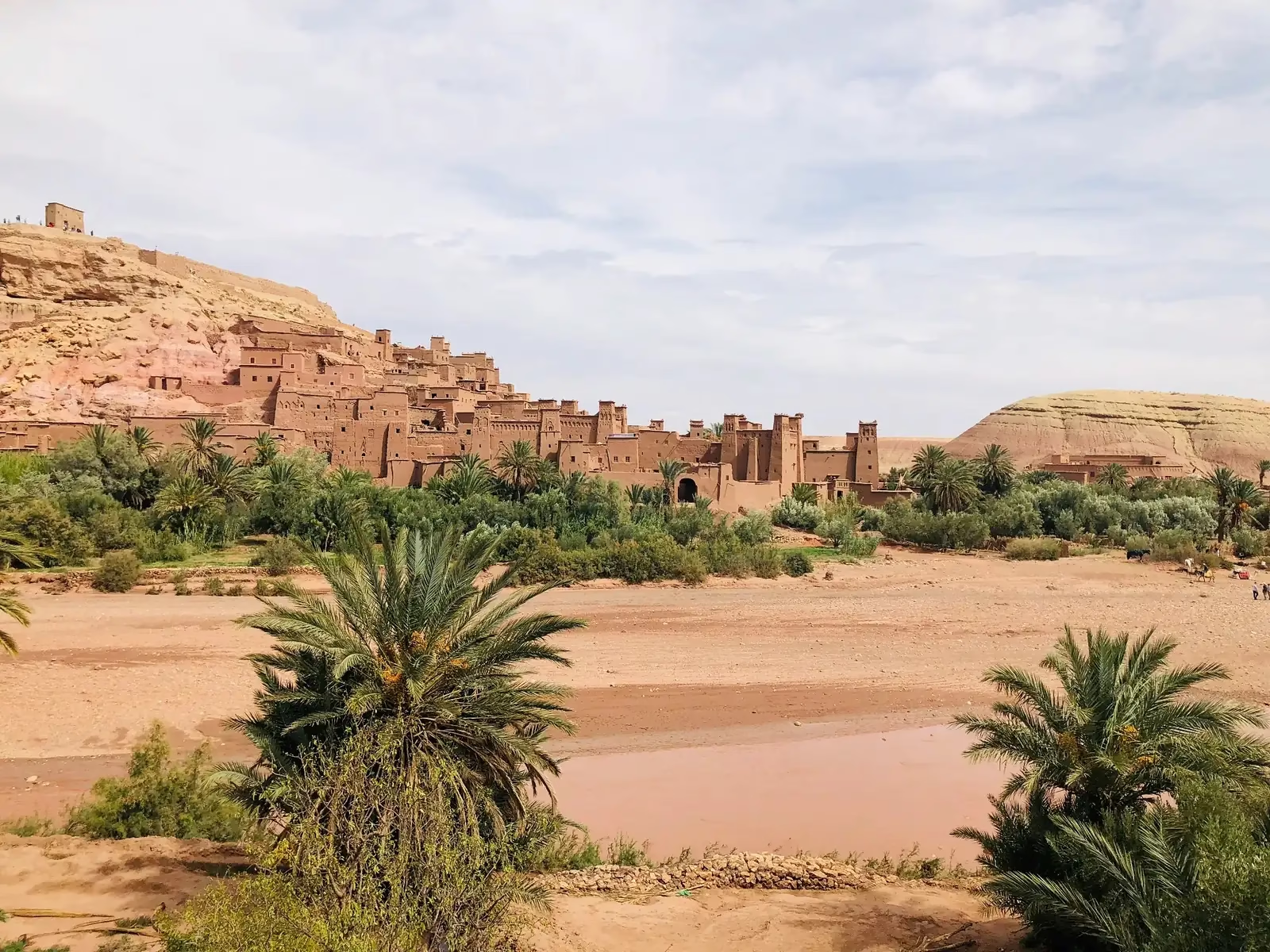
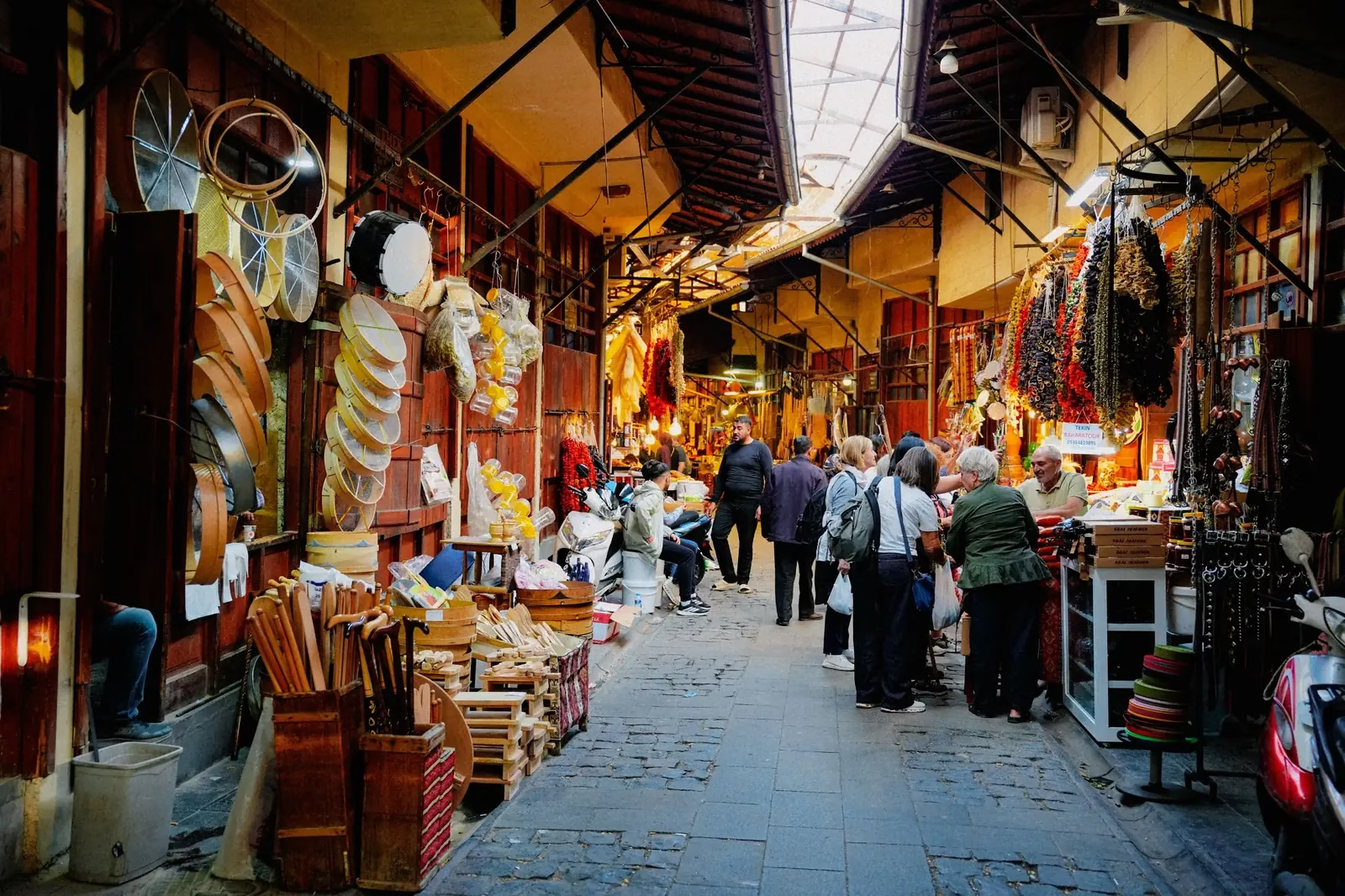
Yes, if you enjoy historic cities, regional food and varied landscapes—and plan a pace that suits you. A first trip can focus on Marrakech and nearby countryside or connect several regions. Expect busy medinas, where narrow lanes are shared with people, carts and sometimes scooters; quieter stays help balance city sightseeing.
When is the best time to visit Morocco?
Spring and fall are useful starting points for a trip combining cities, mountains and desert. Summer favors a coast-focused itinerary if you dislike intense inland heat; winter calls for warmer layers and flexible mountain travel. These are seasonal patterns, not forecasts. Compare destinations in our month-by-month Morocco guide.
How many days do I need for a first trip?
Plan around seven to ten days for a varied first trip, or keep a shorter stay within one region. Count usable sightseeing days rather than calendar dates: a late arrival contributes little. Adding both Chefchaouen and the Sahara increases travel time. Our guide to how many days you need compares realistic options. Our 9-day Casablanca to Marrakech tour offers an example of how to organize a longer route.
How much should I budget?
Build your budget from accommodation, transport, meals and activities, then add flights, insurance and a reserve. Solo private rooms, a private vehicle and remote desert transfers can change the total substantially. Use our Morocco travel budget guide for dated examples, and obtain quotes for your actual dates before booking.
Which places should I prioritize?
Choose the experiences you most want before adding cities. Marrakech or Fes can anchor a culture-focused trip; Essaouira adds coastal time; Merzouga requires a deliberate journey inland. For a short visit, choose one base and nearby outings. For a longer route, group destinations geographically and leave room to enjoy each overnight stop.
Is Morocco suitable for families with children?
Yes, with a route designed around your children’s ages, stamina and needs. Ask for suitable child seats, realistic driving days, family-room layouts and opportunities to rest. Confirm pool supervision, stair access and food arrangements directly. A desert trip may appeal to older children, while younger children can benefit from fewer hotel changes.
Should I travel independently or book a private tour?
Independent travel suits travelers comfortable organizing transport and navigating unfamiliar cities; a private tour can simplify a route with remote stops or specific needs. Compare the flexibility, total cost and daily driving involved. A mixed approach also works: explore cities independently, then arrange transport or a guided excursion for the mountain or desert section.
Should I fly into Marrakech, Casablanca, Fes or Tangier?
Choose the airport that fits your route as well as your airfare. Marrakech suits southern routes and Essaouira; Fes works for its medina and an onward desert journey; Tangier suits the north; Casablanca can anchor a broader itinerary. Compare the transfer costs and usable arrival time before choosing the cheapest flight. If you arrive in the north, explore our 5-day Tangier to Marrakech tour.
Can I arrive in one city and leave from another?
Yes—an open-jaw flight itinerary can reduce backtracking. Compare its total price with a return flight plus the time and transport needed to return to your starting point. Confirm any rental-car one-way fee or tour drop-off charge, and keep the final night within a practical journey of your departure airport.
Morocco travel tips · 02
Passports, entry rules and airport arrival
Do I need a visa for Morocco?
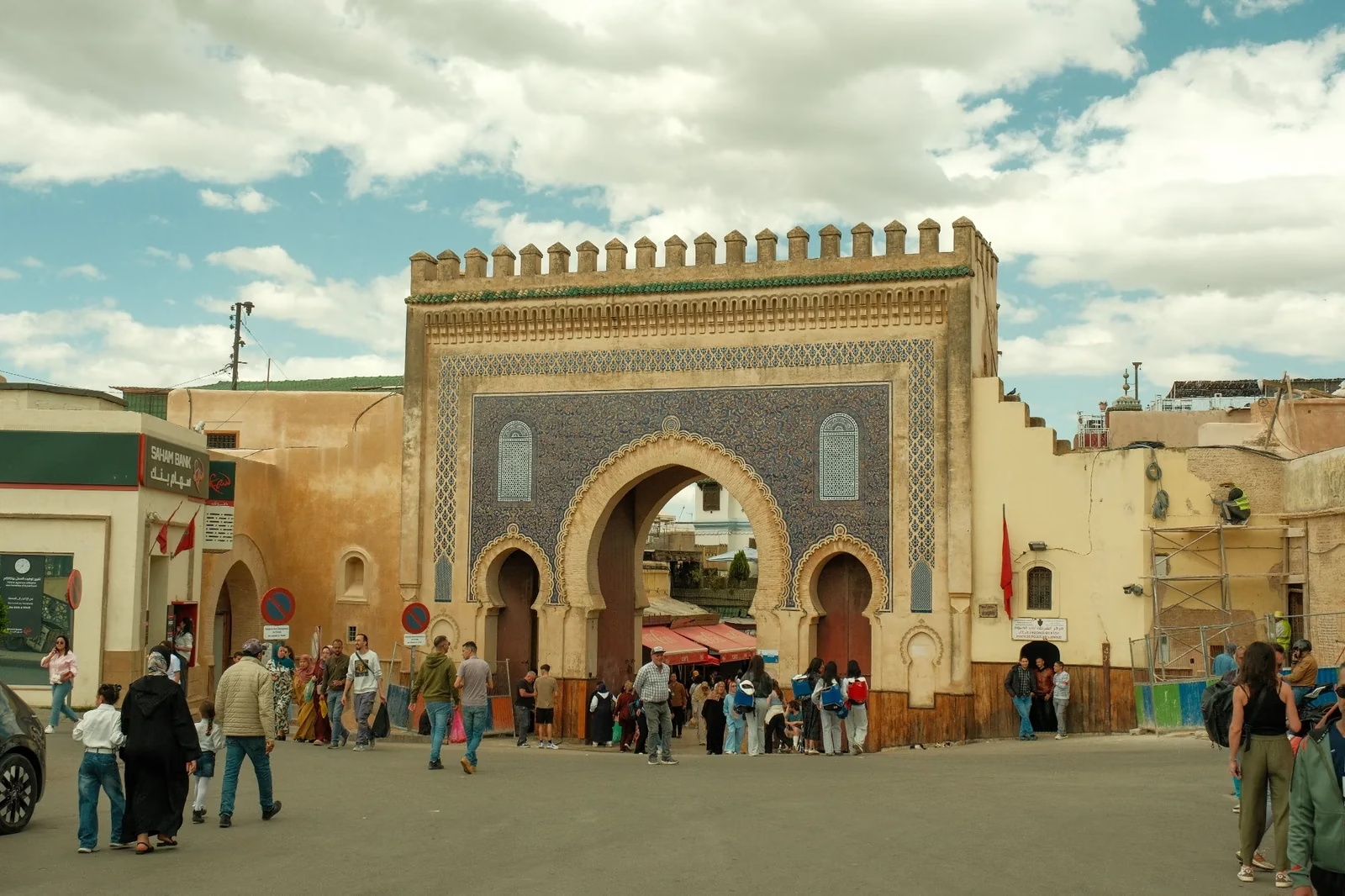
That depends on your passport and purpose of travel. U.S. citizens visiting as tourists generally do not need a visa for stays of 90 days or less; other travelers should check their own eligibility. Start with the Moroccan tourism authority’s entry guidance and its official Accès Maroc link. Do not assume eligibility from where you live.
How long must my passport be valid?
Check the guidance for your nationality before booking: official pages do not all state the same minimum. The U.S. State Department currently lists six months at entry; UK guidance lists three months after arrival. Confirm with your Moroccan consulate and airline if your passport is close to expiry, including transit-country rules.
What documents should I have ready?
Keep your passport, any required visa or authorization, first accommodation address and onward travel booking accessible. Save offline copies of reservations and insurance separately from the originals. Border staff may ask about your stay; requirements depend on your circumstances. Before leaving the immigration desk, check that your passport has received an entry stamp.
Do children need additional documents?
Children need their own required travel documents, and additional consent or custody evidence may be relevant when traveling with one parent or another adult. Ask the airline and Moroccan consulate about your exact family circumstances, especially dual nationality or different surnames. Carry suitable supporting documents rather than assuming an adult’s entry permission covers a child.
What should I expect when I land?
Expect passport control, baggage collection and customs before you meet an outside driver. Keep your accommodation details handy and allow a flexible arrival afternoon: immigration and baggage delays vary. If you need assistance moving through the airport, arrange it through your airline ahead of travel rather than relying on a companion’s help alone.
How do I arrange an airport transfer and meeting point?
Request the exact meeting location, name on the sign, driver or dispatcher contact and total fare in writing. Share the flight number, arrival date and accommodation address. For a medina riad, confirm where the vehicle stops and who escorts you through the final lanes; a map pin alone may be insufficient.
What if my flight is delayed?
Notify your transfer provider as soon as your arrival changes, even if they track flights. Confirm the waiting allowance, late-arrival fees and what happens after a cancellation or next-day rebooking. Keep a way to contact both the driver and accommodation; a prepaid transfer does not automatically mean unlimited waiting.
Should I get cash or a SIM at the airport?
Getting enough dirhams for immediate needs and arranging mobile data on arrival can make the first transfer easier. Compare displayed exchange terms and data packages before paying. If you already have a working eSIM or roaming plan, you can leave phone shopping until later. Keep the transfer meeting time in mind.
Are there customs restrictions I should check?
Yes—cash, certain equipment, medicines and goods may require declarations or prior permission. Consult Moroccan Customs before packing unusual items or substantial cash. Do not bring a drone without confirming authorization requirements. Keep exchange receipts and check dirham import/export rules before departure rather than relying on an old blog’s allowance.
Morocco travel tips · 03
Money in Morocco: Cash, Cards and Tipping
What currency is used in Morocco?
The Moroccan dirham, abbreviated MAD or DH, is the local currency. Use it as your reference when comparing menus, taxi fares and purchases. Ask whether a quoted tour price is in dirhams, euros or dollars, and confirm the agreed payment currency before calculating what you owe.
How much cash should I carry, especially before the desert?
Carry enough for your next cash-only expenses plus a modest reserve, rather than your entire trip budget. Before leaving a major town for a remote stay, check which meals, activities and balances need cash. Keep money in separate secure places, with small notes accessible for minor purchases and tips.
Should I exchange money or use ATMs?
Either can work; compare the final dirhams received after fees. Use established exchange offices or bank ATMs, keep receipts and check your bank’s withdrawal charges and limits before departure. When offered a conversion into your home currency, compare it carefully with paying in MAD and letting your card issuer handle conversion.
Can I pay by card, euros or U.S. dollars?
Cards are useful at many hotels and larger businesses, but cash remains important for smaller purchases. Foreign-currency acceptance is discretionary, so do not rely on dollars or euros for everyday spending. If a business accepts them, agree on the exchange rate and change first. Keep a backup payment method separate from your main card.
What should I budget for meals and drinks?
Budget according to where and how you expect to eat: a neighborhood café, riad dinner and upscale restaurant serve different budgets. Read menus before ordering and check whether drinks, bread or extras are included. Our food and daily-spending examples provide a starting point; current menus are the better guide to a specific meal.
Who should I tip, and how much?
Consider tips for helpful service from restaurant staff, porters, guides and drivers; the appropriate amount depends on the service, duration and your budget. There is no single amount covering every situation. Check for a service charge and ask whether a suggested tour tip is per traveler or per group. Agree the actual service price separately.
Where is bargaining appropriate?
Bargaining is common in some souk stalls and craft shops, while posted-price stores, restaurants and ticket offices generally work differently. Ask the price, compare quality and make an offer only if you are interested. You can leave politely if it does not suit your budget; accepting tea does not require a purchase.
Morocco travel tips · 04
What to Wear in Morocco and What to Pack
What should women wear, and must they cover their hair?
Loose clothing that covers shoulders and knees is a useful comfort-and-etiquette choice for medinas and smaller communities. Women visitors do not generally need to cover their hair in ordinary public places. This is practical cultural guidance, not a claim of a nationwide tourist dress law; religious venues can set their own entry rules.
Can tourists wear shorts in Morocco?
Shorts are seen in tourist areas, but longer clothing can feel more appropriate in conservative settings and offers sun protection. Choose by setting: resort poolwear belongs at the pool or beach, while town sightseeing calls for ordinary clothes. For religious visits, check the venue’s specific rules rather than relying on what other visitors wear.
What should I wear at religious sites?
Follow the site’s stated dress rules and first confirm whether visitors may enter. At Hassan II Mosque, clothing must cover shoulders and torso and extend below the knees; shorts and sleeveless clothing are not permitted. Shoes come off for the visit. Do not assume every mosque follows a tourist admission program.
What should I pack for summer versus winter?
Pack for the places on your route, not a single forecast for Morocco. In summer, prioritize breathable clothing, sun protection and a light layer for cooler evenings. Winter calls for warm layers, a jacket and rain protection; mountain and desert nights can be cold. Check destination forecasts shortly before packing.
What should I wear in the desert and on a camel ride?
Wear comfortable long pants, secure footwear and layers you can add after sunset. Bring sunglasses, sun protection and a scarf for windblown sand; keep your hands free with a small day bag. Avoid planning a camel ride around clothing alone if you have back, balance or mobility concerns—discuss an alternative transfer.
Do I need hiking boots?
Comfortable shoes with reliable grip are enough for ordinary city sightseeing and many easy outings. Technical or mountainous walks require footwear suited to the terrain and conditions; ask your guide for a route-specific kit list. Break shoes in before departure, and do not treat an Atlas summit trek like a casual village walk.
Should I bring a suitcase or a backpack?
Either works if you can manage it over your route’s stairs and uneven lanes. A compact suitcase suits vehicle-based travel; a backpack leaves hands free but can be tiring to carry. Confirm vehicle space and riad access, and bring a separate small bag if your camp transfer has luggage limits.
What plug adapter do I need for Morocco?
Bring an adapter compatible with Morocco’s Type C and E sockets; the supply is 220V at 50Hz. An adapter changes the plug shape, not the voltage. Check each device’s label: a 100–240V charger is different from a 120V-only hair appliance. See Electrical Safety First’s Morocco guidance.
Which personal essentials should I bring?
Pack your usual toiletries, sun protection, tissues, hand sanitizer and any personal products you do not want to search for during the trip. Carry essential medicines in your hand luggage after verifying entry rules. A small power bank, reusable bag and offline copies of documents are useful; follow airline rules for batteries and liquids.
Morocco travel tips · 05
Food, water and health preparations
Can I drink tap water or use it for brushing my teeth?
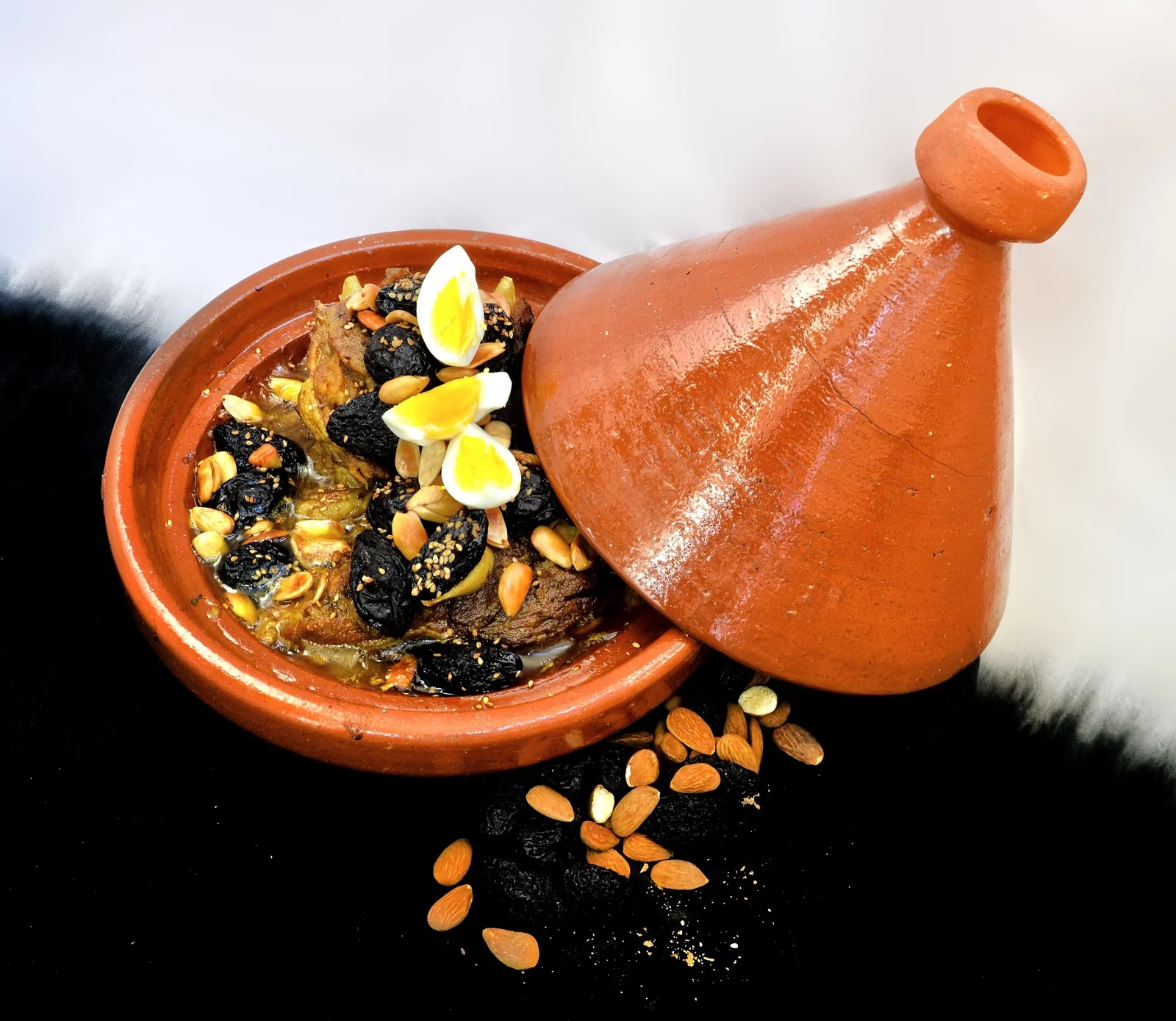
Choose factory-sealed bottled water or properly treated water when you cannot establish that the supply is safe. Use the same approach for brushing your teeth and avoid swallowing shower water. The CDC’s water advice applies particularly when treatment and storage are uncertain.
What about ice and avoiding stomach illness?
Use ice only when you know it was made from safe water. Wash hands before eating, favor thoroughly cooked food served hot and peel fruit yourself. Avoid food left lukewarm and unpasteurized dairy. These precautions reduce risk but cannot guarantee you will avoid illness.
How should I choose street-food vendors?
Choose food cooked thoroughly in front of you and served hot, with clean utensils and clear separation between raw and ready-to-eat items. A busy stall alone is not proof of safe handling. Skip anything that appears poorly stored, and be particularly cautious if you have a health condition that increases foodborne-illness risk.
Is vegetarian or vegan food available?
Yes, but clarify ingredients rather than relying on a dish’s name. Ask whether vegetable tagines, soups or couscous contain meat stock, butter or other animal ingredients. Tell riads and remote camps in advance so they can plan beyond a last-minute substitution. Explain whether your request is vegetarian or fully vegan.
Can serious allergies or gluten-free diets be accommodated?
Sometimes, but a promise of a suitable dish is not the same as a kitchen that can prevent cross-contact. Explain the exact restriction in advance, ideally with a translated allergy card, and ask about ingredients, utensils and preparation space. For celiac disease or severe allergies, agree a workable plan with your clinician and hosts before booking.
Do I need vaccinations or other health preparation?
Review routine vaccinations and destination-specific advice before departure, ideally several weeks ahead. The CDC’s Morocco page covers recommendations that depend on age, health and activities. Entry certificates are a separate question and may depend on where you have traveled. Avoid contact with stray animals and seek prompt medical care after a bite or scratch.
Can I bring prescription medicine?
Check the rules for the specific medicine and quantity with the Moroccan consulate before travel, especially controlled drugs. Keep it in original labeled packaging with a prescription and, when appropriate, a clinician’s letter. These documents do not override restrictions. Read the U.S. State Department’s medicine guidance and arrange permitted supplies in advance.
How can I find medical assistance?
Ask your accommodation and insurer’s assistance line for an appropriate clinic or hospital; remote itineraries need more advance planning. In an emergency, UK official guidance lists 150 for an ambulance. Share your precise location, seek nearby help if you cannot connect, and contact your insurer as soon as practical.
What should I check in travel insurance?
Check medical treatment and evacuation, existing health conditions, cancellation terms and the activities you actually plan. Camel rides, mountain trekking and quad biking may have conditions or exclusions. Ask about excesses, upfront payment and the emergency contact procedure. A policy title such as “adventure cover” is not enough to establish that a specific activity is covered.
Morocco travel tips · 06
Safety and everyday situations
What should tourists know about safety?
Plan for ordinary travel risks and review current official advice before departure. Protect valuables in crowds, avoid demonstrations and keep emergency contacts offline. The U.S. Morocco advisory explains broader security concerns. A familiar tourist route is not a guarantee of safety; your destination, timing and behavior all matter.
What should solo female travelers consider?
Plan your arrival, accommodation access and evening transport in advance, particularly when visiting an unfamiliar neighborhood. Choose lodging with recent detailed reviews and reachable staff. If attention becomes uncomfortable, move toward a staffed business and ask for help; you do not owe anyone a conversation. A guide can support sightseeing without requiring a fully escorted trip.
What should LGBTQ+ travelers check?
Check Morocco’s laws and current LGBTQ+ travel advice before deciding how to travel. Same-sex sexual relations are illegal; public affection and dating apps can create legal and privacy risks. Read the official safety guidance and discuss room arrangements privately with your accommodation.
Is it advisable to walk around medinas at night?
It depends on the area, route and hour. Ask your accommodation about the walk you intend to take, use busy well-lit routes and arrange an escort or transport when uncertain. Save the riad’s phone number and nearest vehicle-accessible landmark. An unfamiliar shortcut is rarely worth taking just to save a few minutes.
How should I handle unsolicited directions or persistent sellers?
A calm “No, thank you” is enough when you do not want help or a purchase. If you need directions, ask your accommodation or a staffed shop, and agree any paid assistance before accepting it. Avoid an argument; continue toward a familiar public place. Many offers are ordinary commerce, but consent and a clear price matter.
How do I agree on a taxi fare?
Before getting in, ask whether the ride uses a meter or an agreed fare and clarify the total for your group, including luggage or other extras. Airport arrangements may differ from city rides. If the terms are unclear, use another licensed taxi or ask your accommodation to arrange a transfer.
What if I lose my passport or phone?
For a missing passport, contact your consulate and obtain a local police report; replacement-document and exit procedures need official guidance. For a phone, lock it remotely if possible, contact your mobile provider and secure sensitive accounts. Keep backup access codes and travel contacts separately so losing one device does not lock you out of everything.
Morocco travel tips · 07
Moroccan Customs, Etiquette and Travel During Ramadan
What greetings and polite habits are useful?
Start with a greeting before asking a question, keep your tone friendly and follow your host’s lead on handshakes. A little Darija, Moroccan Arabic, can help even when the conversation continues in English. In homes, ask about shoes and seating rather than assuming the same customs apply everywhere.
Should I ask before photographing people?
Yes—ask permission before making someone the subject of your photograph, especially children. If a performer or activity involves payment, agree it before taking pictures. Respect a refusal. Avoid photographing sensitive official or security sites; U.S. travel guidance highlights restrictions around such locations.
Can non-Muslims visit mosques?
Most Moroccan mosques do not admit non-Muslim visitors, so check before entering. Casablanca’s Hassan II Mosque offers official guided visits. Use its current schedule and rules, which can change around worship and Ramadan. Historic madrasas open as attractions are different from active mosques.
What changes during Ramadan?
Opening hours and meals can shift; arrange daytime food and transfers ahead. Be discreet about eating or drinking around people who are fasting. Confirm dates and local time shortly before travel: Morocco’s clock changes around Ramadan can affect plans. See official Ramadan advice.
Can tourists buy and drink alcohol in Morocco?
Alcohol is available at licensed venues, but many restaurants and riads do not serve it. Confirm directly if it matters to your plans, especially during Ramadan. Public drinking can lead to arrest; follow official guidance on alcohol laws.
What should couples know about affection and shared rooms?
Keep public affection discreet. Foreign visiting couples are generally treated differently from Moroccan nationals under local rules, but nationality and accommodation circumstances matter. If either partner is Moroccan, confirm requirements before booking. Read the official explanation of local laws.
What if I am offered tea or invited into a home?
You can accept or politely decline; hospitality does not create a purchase obligation. If you accept a home invitation, follow the host’s lead and ask before photographing private spaces. State dietary needs clearly. In a shop, enjoy a conversation only if you want to, and say directly if you are just browsing.
Which simple Darija phrases should I learn?
Start with a greeting and a polite refusal: “Salam” means hello, “shukran” means thank you, “afak” means please, and “la, shukran” means no, thank you. “Bshhal?” asks how much. Pronunciation and spelling vary; a friendly greeting matters more than perfection. Keep a translation app available for important details.
Morocco travel tips · 08
Riads, hotels and room comfort
What is a riad, and how is it different from a hotel?
A riad is traditionally a house built around an interior garden or courtyard; many now operate as guesthouses. It can offer a smaller-scale stay within a medina, while a hotel may provide easier vehicle access or more facilities. The label alone does not establish room size, service level, accessibility or quiet.
Can a vehicle reach my riad, and who carries my luggage?
Some medina accommodations require a final walk from the nearest accessible street. Ask for the distance, surface, stairs and meeting landmark, plus whether staff or a porter will help. Confirm any porter charge beforehand. This matters particularly for late arrivals, large suitcases, children and travelers who cannot comfortably walk with luggage.
Should I expect stairs or an elevator?
Ask explicitly: a historic building may have narrow stairs and no elevator. A ground-floor bedroom can still involve entrance steps or a rooftop breakfast area. If access matters, request photos, measurements and a description of the route from the street to the bedroom, bathroom and dining space before paying.
What should I confirm about heating, AC and noise?
Confirm that heating or air conditioning serves your specific room and is available during your dates. Ask about window position, courtyard noise, street activity and any nearby building work. A rooftop terrace or pool does not indicate indoor temperature control. Light sleepers may prefer a room away from shared breakfast and seating areas.
Are towels, toiletries and hairdryers always provided?
No—facilities vary by property and room category. Check the current listing or ask directly about towels, toiletries, hairdryers and laundry. For a camp, separately confirm bathroom arrangements and hot water. Carry essential personal products yourself rather than treating an accommodation label as a complete amenities list.
Can dietary needs and accessible rooms be arranged?
Often some arrangements are possible, but describe your needs precisely before booking. Ask about the actual room, bathroom, entrance and meal preparation instead of accepting “accessible” or “special diets available” without detail. Have the property confirm agreed arrangements in writing and reconfirm before arrival, especially if another property may be substituted.
Morocco travel tips · 09
Getting Around Morocco: Trains, Buses and Private Drivers
Where can I travel by train?
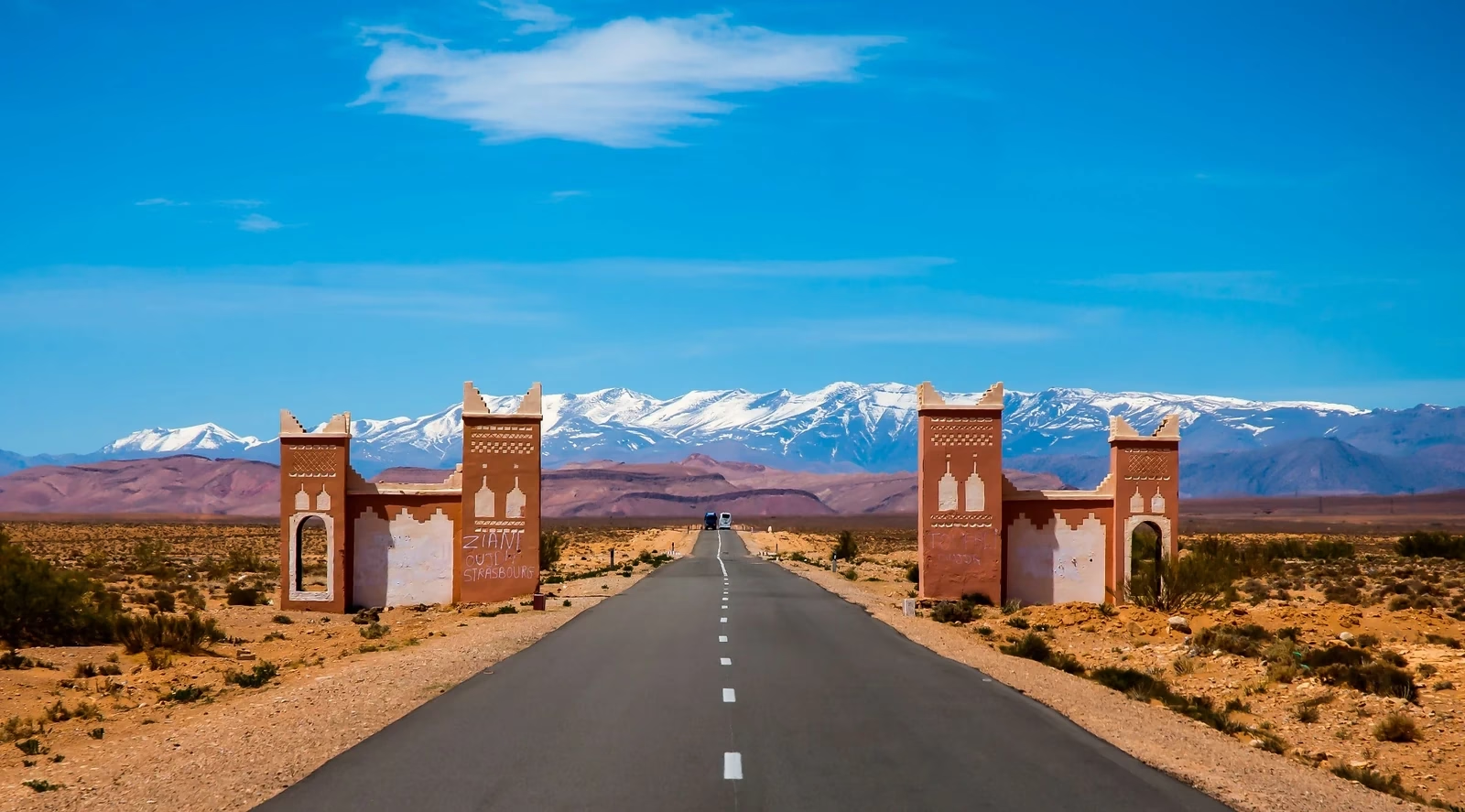
Trains connect major cities including Tangier, Rabat, Casablanca, Fes and Marrakech, with the service and any connection depending on the journey. Check routes and tickets with ONCF. A journey sold with a coach connection is not a train all the way; destinations such as Merzouga require road transport.
When do buses, a rental car or a private driver make sense?
Coaches suit many independent intercity journeys; a rental car adds flexibility if you are comfortable driving; a private driver can simplify stops and remote routes. Compare travel time, luggage handling, parking and total cost. The Moroccan tourism authority’s transport overview explains the main options.
Is driving in Morocco suitable for me?
It depends on your confidence with unfamiliar roads, city traffic and mountain driving. Check current license requirements, insurance, deposit terms and the rental company’s restrictions before booking. Avoid building a route around driving after dark in unfamiliar rural areas. If the driver would miss much of the scenery or feel stressed, compare a train-and-transfer plan.
What is the difference between a driver and a sightseeing guide?
A driver handles road transport; a sightseeing guide provides interpretation and leads visits. Some arrangements combine roles, but you should not assume your vehicle booking includes guided monuments or medina walks. Ask who accompanies each visit, in which language, for how long, and whether guiding and admission tickets are separately charged.
How much time should I allow between destinations?
Plan the full travel day, not just the map’s driving estimate. Add breaks, town traffic, photo stops, sightseeing and hotel access. Fes–Merzouga and Merzouga–Marrakech deserve particular attention in a route review. Ask for expected departure and arrival windows, and avoid putting an essential flight immediately after a long remote transfer.
Are mountain roads winding, and are rest stops available?
Yes, Atlas routes can be winding, and sightseeing makes some days longer than their distance suggests. Ask your driver to plan suitable toilet, lunch and rest stops, including any accessibility needs. Carry tissues and hand sanitizer. If you experience motion sickness, discuss suitable prevention with a pharmacist or clinician before the journey.
Should I reserve trains and attractions ahead?
Reserve when a particular departure or timed visit is important to your route, especially around holidays or a tight connection. Confirm terms before paying and use the operator’s current booking information. Leave some unscheduled time for ordinary sightseeing; booking every hour makes it harder to adapt to weather, fatigue or a delayed arrival.
How early should I arrive for my departing flight?
Use your airline’s instruction; around three hours before an international departure is a sensible planning starting point, not a guaranteed minimum. Add the journey from your accommodation separately. Recheck terminal, check-in deadline and boarding-pass requirements, and allow extra time if your riad requires a walk to meet the transfer.
Morocco travel tips · 10
Choose the right desert trip
How do Agafay, Zagora and Merzouga differ?
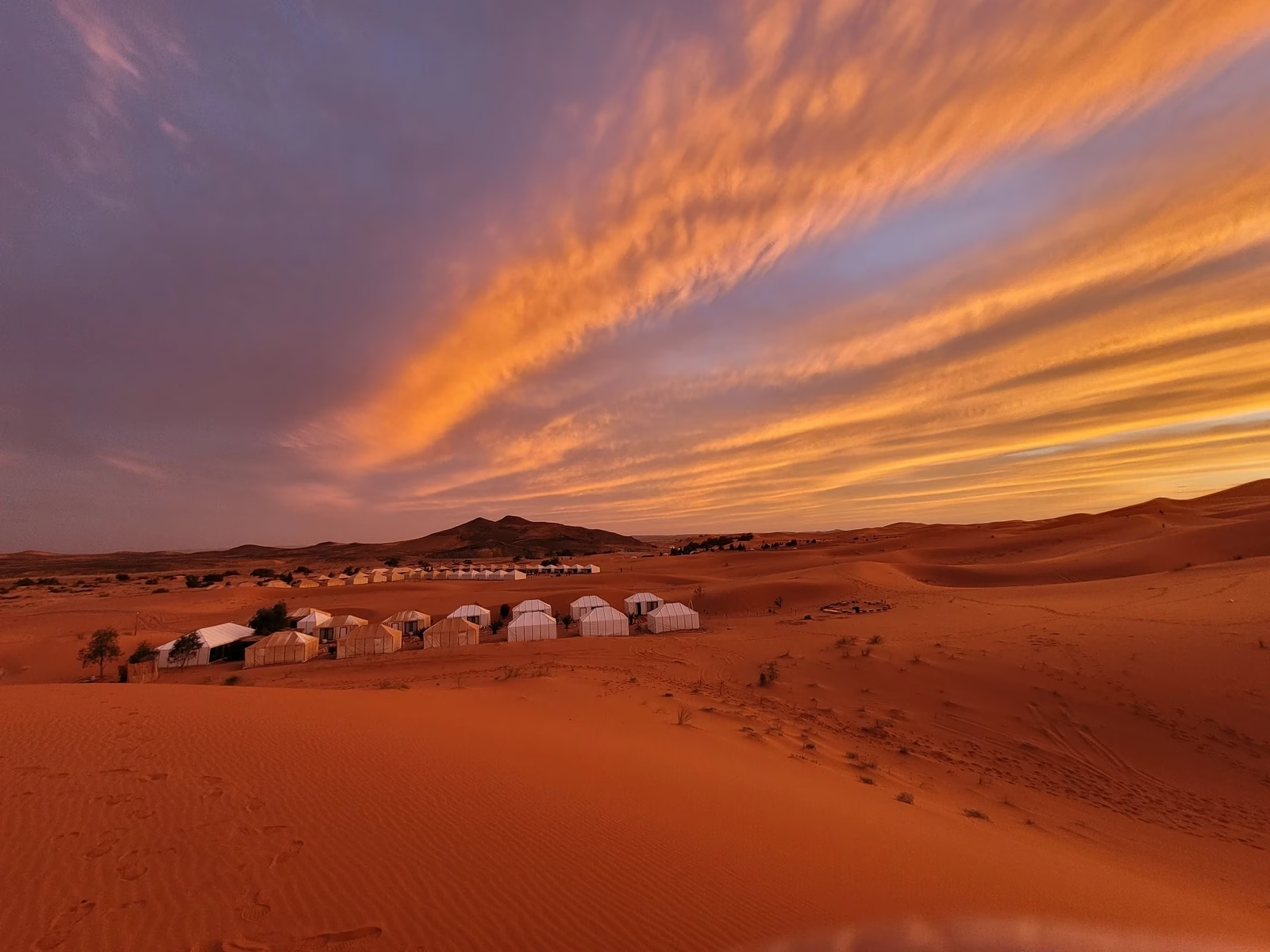
Agafay is a rocky landscape near Marrakech, not the Sahara’s sand dunes. Zagora is a southern gateway where the exact camp and onward route determine the scenery; Erg Chigaga is a separate journey beyond M’Hamid. Merzouga sits beside Erg Chebbi’s dunes. Ask where you actually sleep rather than booking from the word “desert” alone.
Is the Sahara worth the journey for my available time?
It can be if the dunes are a priority and you accept the road time. If you have only a brief city break, nearby landscapes may fit better. Look at hours in the vehicle alongside hours near the dunes. A trip that arrives for sunset and leaves after breakfast provides only a short desert stay.
Is a 3-day or 4-day Morocco desert tour better?
Four days can ease a desert journey, but only if the extra day is allocated usefully. Compare whether it adds time around Merzouga or splits a long return drive. Three days can suit travelers comfortable with an active pace; it leaves less flexibility for delays, tiredness and spontaneous stops.
Is one night in the desert enough?
One night can give you sunset, an evening at camp and sunrise, depending on arrival time and weather. Two nights in the Merzouga area allow more time to rest or explore; they need not both be in a tent. Ask what the intervening day includes, rather than assuming a second night comes with activities.
Should I start from Marrakech or Fes?
Start where your wider itinerary works best. Fes and Marrakech can be connected through Merzouga, but both approaches still involve substantial road travel. Marrakech routes commonly include the Atlas and southern valleys; a Fes departure approaches from the north. A one-way journey can avoid retracing your route if your flights allow it. See our 3-day Marrakech to Fes desert tour for an example of a one-way journey through Merzouga.
How hot or cold can the desert feel?
Desert conditions vary sharply by season and time of day. Summer heat can make midday outdoor activities uncomfortable or unsuitable, while winter nights call for substantial layers. Wind may affect camel rides and transfers. Check the Merzouga forecast close to travel and ask how the operator adjusts activities if conditions are unfavorable.
Do camps have private bathrooms, hot water, heating or AC?
Some do, but none of those features should be assumed. Ask whether the bathroom is inside your tent, how hot water is supplied, which heating or cooling system is provided and when it operates. Request details for your exact camp and tent category, plus what happens if an advertised facility is unavailable.
Can I reach camp without riding a camel?
Many itineraries can arrange a vehicle transfer, but confirm the vehicle, route, price and accessibility before booking. A 4×4 journey can still be bumpy and may require stepping into a high vehicle. Ask whether camel riding is optional, especially for children or anyone with pregnancy, back, balance or mobility concerns.
Where does my luggage go during the camel ride?
That depends on the operator: larger bags may travel separately or remain in storage while you carry an overnight bag. Ask who handles them, where they are kept and when you regain access. Keep documents, essential medicines and fragile valuables with you, and confirm bag-size limits before leaving your previous accommodation.
Can I charge my phone and get reception at camp?
Possibly, but charging availability and mobile reception vary by camp, power system and network. Ask whether outlets are in the tent or only in common areas and whether electricity runs overnight. Bring a charged power bank, download essential information and warn anyone expecting an urgent reply that you may be offline.
What should families and travelers with limited mobility confirm?
Confirm vehicle access, walking distances on sand, steps, bathroom layout, bed height and assistance before booking. Ask about child restraints for transfers, realistic activity duration and the nearest suitable medical care. Photos of a comfortable tent do not show the journey to it. Share specific needs so the operator can assess the whole experience.
What is the difference between standard and luxury camps?
Treat those labels as marketing descriptions until you see the actual facilities and arrangements. Compare tent occupancy, bathroom privacy, bedding, temperature control, meal details, location and transfers. Ask for current photos of the booked category. A higher price or the word “luxury” alone does not establish a uniform comfort standard.
Morocco travel tips · 11
Phones, language and staying connected
Do I need a local SIM or eSIM, and must my phone be unlocked?
You need a workable data plan, whether local service, an eSIM or international roaming. For another provider’s SIM or eSIM, check that your phone is unlocked and compatible. Compare data allowance, coverage, validity and whether calls are included; some travel eSIMs provide data only. Bring identification when purchasing a local plan.
Is Wi-Fi available, including in remote areas?
Wi-Fi is common in visitor accommodation, but speed and coverage vary; remote camps and mountain stays need separate confirmation. Do not plan an essential work call around “Wi-Fi available” alone. Ask about the connection in your room, and keep a mobile backup where coverage allows. Download documents before leaving a reliable connection.
Should I download offline maps?
Yes—save city maps, accommodation addresses and route details before travel. Pin the riad’s nearest vehicle-accessible entrance as well as the building itself. Offline maps help when signal drops, but small medina lanes can still be confusing. Keep a phone number and written directions for the final approach.
Can I get by speaking English?
English can work in many tourism settings, but availability varies by person and place. Learn a few Darija greetings and save useful written phrases; French can also be helpful. Confirm your guide’s language before paying. Use clear written communication for allergies, payment terms and meeting points rather than relying on a casual conversation.
Morocco travel tips · 12
Booking details and final preparations
What should I ask before booking a tour?
Ask for a dated day-by-day itinerary with overnight stops, expected driving, vehicle arrangements, group size and accommodation categories. Identify which visits are guided, what free time remains and whether shopping stops are optional. Explain your priorities and limits early; “customizable” is only useful when the agreed changes appear in your quote.
What is usually included or excluded?
There is no universal package. Compare transport, fuel, accommodation, meals, guides, entry fees and desert activities individually. Lunches, drinks, tips and optional activities may be separate, but only the written quote establishes that. Confirm whether the price is per person or total, which currency applies and whether taxes or payment charges are included.
What should I confirm about rooms, meals and guides?
Confirm bed configuration, room occupancy, bathroom privacy, included meals and any dietary arrangements. Ask which cities have a local guide, the language and visit length. If accommodations are described as “or similar,” request the substitution criteria and how you will be informed. Families should verify actual sleeping arrangements rather than relying on a room label.
What should I check about deposits and cancellation terms?
Read the payment schedule, refund deadlines, cancellation charges and rules for itinerary changes before sending money. Ask what happens if a flight delay changes your arrival or an accommodation becomes unavailable. Confirm the payee and retain receipts. Imagine Morocco’s terms should come from your actual written quotation, not assumptions based on this general guide.
How far ahead should I arrange my trip?
Start earlier when your dates, room choices, guide language or accessibility needs are inflexible. School breaks, holiday periods and major events can constrain the options that fit your needs. Check availability before buying nonrefundable extras. A last-minute trip may still be possible, but it gives you fewer opportunities to compare suitable arrangements.
What should I reconfirm shortly before arrival?
Reconfirm flight details, pickup location, emergency contact, first accommodation and outstanding payments. Check official entry advice and destination forecasts again. Remind hosts about agreed diets, child seats or access needs, and download documents and maps. Verify local time around clock changes so your phone, flight booking and transfer instructions agree.
Morocco Travel Checklist: Before You Leave
- Verify passport validity, visas or authorizations, transit rules and children’s documents.
- Review official travel and health advice; arrange insurance and permitted medicines.
- Check usable days, long transfers and the final journey to your departure airport.
- Save the airport meeting point, riad directions and emergency contacts offline.
- Confirm rooms, camp facilities, child seats, dietary requirements and access needs.
- Read the written inclusions, payment schedule and cancellation terms.
- Prepare dirhams for immediate expenses, a backup card and a working data plan.
- Pack for each region’s forecast, including layers, suitable shoes and an adapter.