

Imagine Morocco · Destination guide
Fes Travel Guide: Medina Highlights and a Practical Two-Day Plan
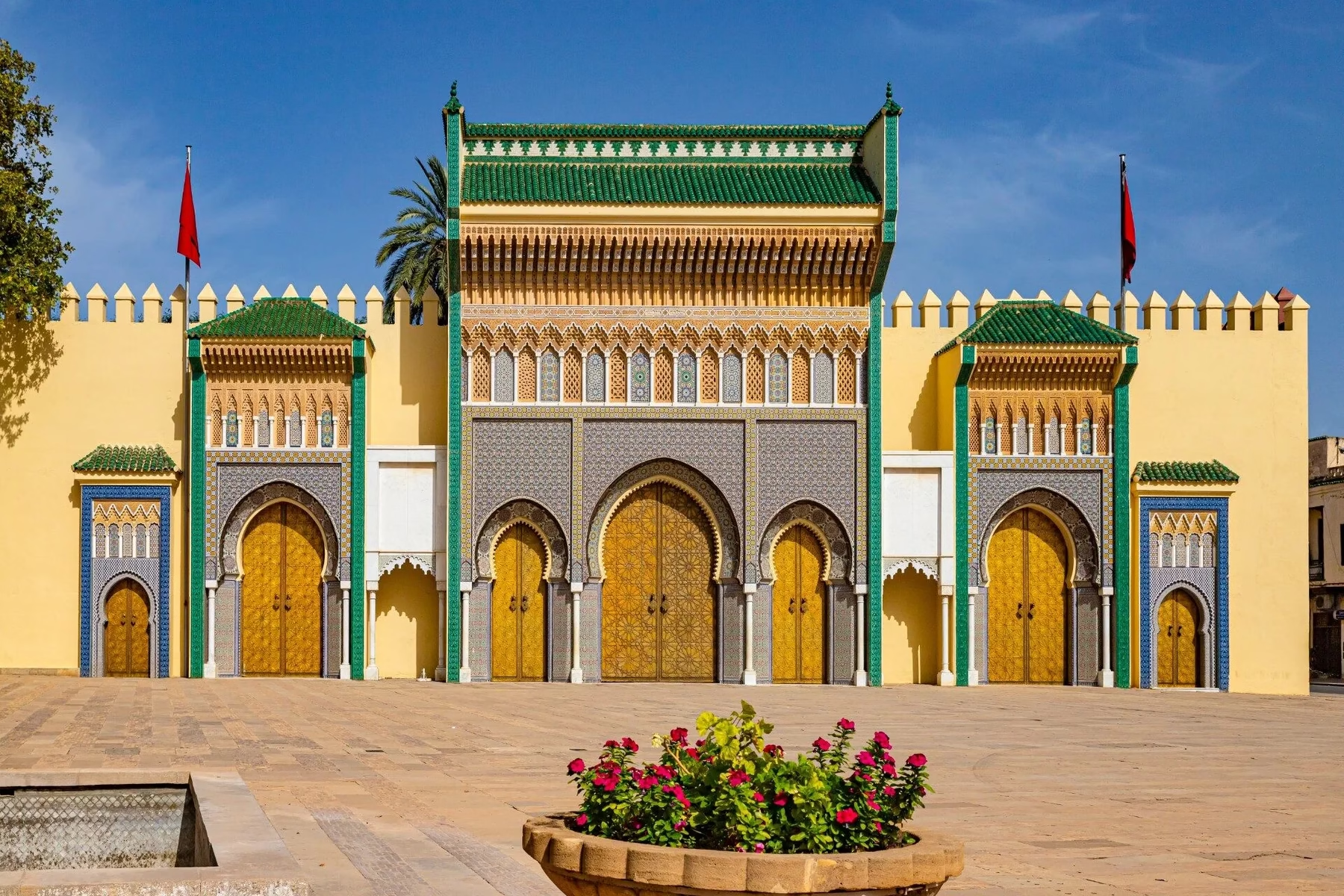
Royal Palace gates, Fes · Imagine Morocco image library
Fes rewards visitors interested in craft, architecture, and the daily workings of a historic city. Its appeal lies as much in the streets between monuments as in the monuments themselves, so allow time for a guided introduction and an unhurried return walk.
At a glance
| Main appeal | Historic medina, craft workshops and Fassi food |
|---|---|
| Suggested time | 2 full days; 3 nights if arriving late |
| Suitable season | Spring and fall |
| How to explore | Medina on foot; taxis between outer districts |
Best things to see and do in Fes
Bab Boujloud and the main medina lanes
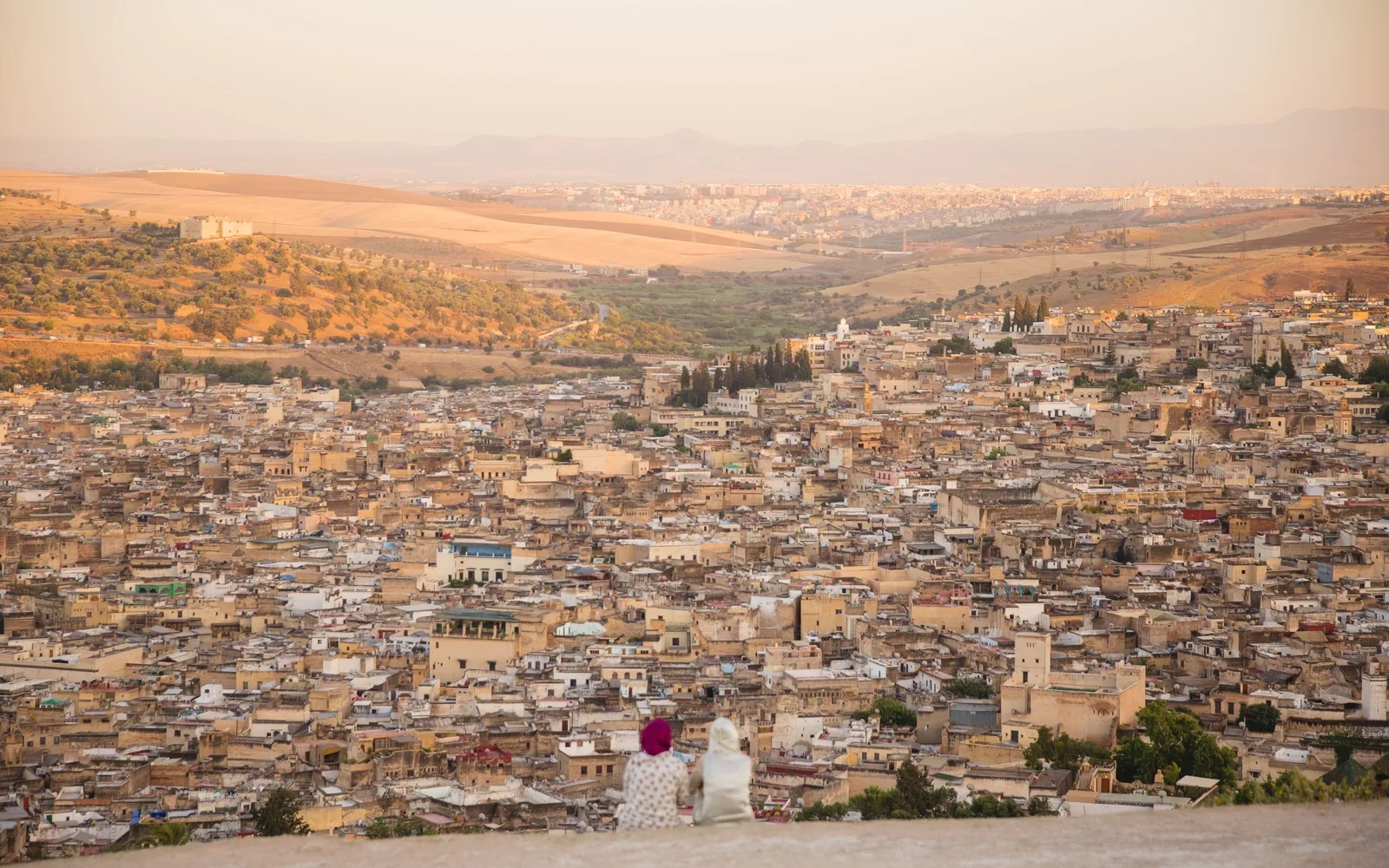
Bab Boujloud makes a useful starting point for Fes el-Bali. From here, follow the main lanes into markets where food stalls, workshops, and everyday errands share limited space.
The UNESCO description of the Medina of Fez explains its historic importance. Save a few landmarks offline and give porters and loaded animals room to pass; a map alone rarely explains every narrow junction.
Bou Inania and Al Attarine madrasas
These historic schools offer detailed tilework, carved plaster, and woodwork on a smaller scale than the surrounding city. Bou Inania fits the western entrance area; Al Attarine belongs with the deeper medina.
Choose one if time is short. Checking access locally before setting out is more useful than building your day around an old ticket price or opening schedule.
Nejjarine and the woodcraft museum
The restored trading inn around Nejjarine places craft objects within a building connected to the medina’s commercial past. Its courtyard gives you a chance to look carefully at the architecture away from the flow of the lanes.
Group it with the nearby fountain and surrounding workshops. Museum visits also provide a useful change of pace when everyone in your group has different levels of shopping interest.
Seffarine Square and the Quaraouiyine area
Metalworking around Seffarine gives the old city a working soundtrack. Watch from a respectful distance and ask before photographing craftspeople or stepping inside a workshop.
Continue through the streets around Al Quaraouiyine for context on Fes’s religious and scholarly life. Non-Muslim visitors should plan exterior views of the mosque, not assume that a city tour includes entry.
Chouara tannery viewpoints
Terraces above the tanning vats show a labor-intensive craft that remains part of the city’s economy. The colors and activity vary, and the smell can be strong.
Viewpoints are often reached through leather shops. Agree on any viewing charge before entering, make clear whether you want to shop, and remember that accepting an explanation does not require buying a bag.
Jnan Sbil and Fes el-Jdid
Jnan Sbil provides a green break from dense medina lanes. Farther west, Fes el-Jdid and the Royal Palace gates introduce another part of the city’s history.
See the palace from outside and explore the former Jewish quarter with context from a guide if it interests you. Keep this district for a second outing rather than adding it to an already long cross-medina walk.
How to organize two days
Give Fes two full days. On day one, start at Bab Boujloud, see Bou Inania, and continue toward Nejjarine, Al Attarine, and Seffarine with a lunch break; add the tannery only if your energy allows.
Use day two for missed craft stops, Jnan Sbil, and Fes el-Jdid. A taxi between districts saves retracing the entire medina, while a third day opens space for an excursion.
Arrival, season, and choosing a base
Fes has an airport and intercity rail connections. The station is in the newer city, so arrange a taxi to the appropriate medina gate and ask your riad for a meeting point.
Spring and fall favor walking; summer demands early starts and shaded breaks, and winter rooms can feel cold. Stay near Bab Boujloud for straightforward orientation or choose a deeper medina riad for atmosphere, after checking luggage access and stairs.
Food and practical advice
Try Fassi pastilla, a savory filling in fine pastry often finished with sweet spices, and ask which version is served. Bread, olives, and seasonal salads make useful accompaniments; couscous and tagines are Moroccan staples rather than exclusive Fes dishes.
Book a licensed guide for history and navigation, stating your shopping preferences in advance. Our first-trip preparation guide covers cash, clothing, and riad logistics.
Beyond Fes
Meknes and Volubilis make a logical countryside excursion. The Fes day trip to Volubilis also covers Meknes and Moulay Idriss; it is a separate day from your Fes medina visit.
Frequently asked questions
Do I need a guide in Fes?
A guide is helpful for a first visit and architectural context. It is not necessary for every walk, especially once you know your accommodation’s main access route.
Are the tanneries a museum?
No. They are workplaces viewed from surrounding terraces; shop access, charges, and sales approaches differ.
Is Fes easy with limited mobility?
Medina slopes, uneven surfaces, and riad stairs can be difficult. Discuss the exact walking route and room access before booking.